Well, that’s unexpected: Samsung will team up with its fiercest Chinese rival to produce next gen NAND flash

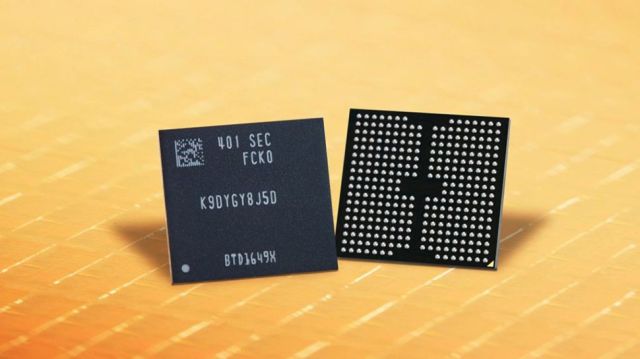
- Samsung has signed an agreement with China’s YMTC to use its hybrid bonding tech
- The move will prevent infringement claims in production of 400-layer NAND
- US-China trade tensions may also have influenced the agreement
Samsung Electronics has signed a contract with Yangtze Memory Technologies Co. (YMTC) which will allow it to use the Chinese semiconductor company’s bonding technology in the production of its 400-layer NAND flash memory.
Founded in 2016 and headquartered in Wuhan, China, YMTC is a subsidiary of Tsinghua Unigroup, which is backed by the Chinese government. It focuses on 3D NAND flash memory, a critical component in storage devices like SSDs, smartphones, and data centers, and most famously developed Xtacking technology, a proprietary architecture that improves NAND flash performance and density.
According to Korea’s ChosunBiz news site, Samsung likely entered into the agreement to avoid a patent dispute related to this “hybrid bonding,” which will be an essential process in the mass production of 400-layer NAND memory.
You may like
US-China trade war a factor?
“YMTC registered the hybrid bonding patent and was the first to apply the relevant technology in the manufacturing process of NAND flash memory. Although YMTC significantly trails behind global memory semiconductor corporations such as Samsung Electronics and SK Hynix in terms of market share, it is quickly catching up with South Korean firms, recently starting mass production of 294-layer NAND flash memory,” the site explains.
It is believed the agreement will protect both firms from violating each other’s patents. YMTC sued Micron in a U.S. court last year, alleging infringement of its NAND tech.
ChosunBiz quotes a semiconductor industry insider as saying, “In the memory semiconductor industry, companies sign licensing agreements in advance to avoid patent disputes ahead of next-generation product development and manufacturing. While such agreements are a common practice in the industry, concerns are growing over the rapid narrowing of the technology gap between China and leading companies, as Samsung, the top player in the NAND flash memory market, is now using patents from a Chinese firm.”
eeNews Analog points out that there could be more to the agreement than just wanting to avoid infringement. “It may also reflect that a US-China trade war may impact YMTC’s ability to sell memory components outside China and that a licensing or cross-licensing arrangement for various technologies could benefit YMTC,” the site writes.
ChosunBiz’s article doesn’t mention SK Hynix, Samsung’s South Korean memory rival, but it’s possible – likely even – that it too will have explored or entered into similar licensing agreements with YMTC to secure the hybrid bonding technology for its own NAND flash production.
You might also like
Samsung has signed an agreement with China’s YMTC to use its hybrid bonding tech The move will prevent infringement claims in production of 400-layer NAND US-China trade tensions may also have influenced the agreement Samsung Electronics has signed a contract with Yangtze Memory Technologies Co. (YMTC) which will allow it…
