Tesla starts production of Dojo supercomputer to train driverless cars

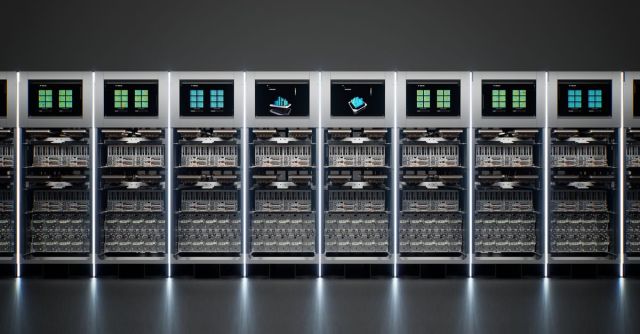
Tesla says it has started production of its Dojo supercomputer to train its fleet of autonomous vehicles.
In its second quarter earnings report for 2023, the company outlined “four main technology pillars” needed to “solve vehicle autonomy at scale: extremely large real-world dataset, neural net training, vehicle hardware and vehicle software.”
“We are developing each of these pillars in-house,” the company said in its report. “This month, we are taking a step towards faster and cheaper neural net training with the start of production of our Dojo training computer.”
The automaker already has a large Nvidia GPU-based supercomputer that is one of the most powerful in the world, but the new Dojo custom-built computer is using chips designed by Tesla. In 2019, Tesla CEO Elon Musk gave this “super powerful training computer” a name: Dojo.
Previously, Musk has claimed that Dojo will be capable of an exaflop, or 1 quintillion (1018) floating-point operations per second. That is an incredible amount of power. “To match what a one exaFLOP computer system can do in just one second, you’d have to perform one calculation every second for 31,688,765,000 years,” Network World wrote.
At Tesla’s AI Day in 2021, Dojo was still a work in progress. Executives revealed its first chip and training tiles, which would eventually develop into a full Dojo cluster or “exapod.” Tesla said it will combine 2 x 3 tiles in a tray and two trays in a computer cabinet for over 100 petaflops per cabinet. In a 10-cabinet system, Tesla’s Dojo exapod will break the barrier of the exaflop of compute.
A year later, at AI Day 2022, Tesla unveiled some progress on Dojo, including having a full system tray. At the time, the automaker spoke about having a full cluster by early 2023 — though now it looks like it will likely be early 2024.
Tesla says it has started production of its Dojo supercomputer to train its fleet of autonomous vehicles. In its second quarter earnings report for 2023, the company outlined “four main technology pillars” needed to “solve vehicle autonomy at scale: extremely large real-world dataset, neural net training, vehicle hardware and vehicle…
