Scientists design super-battery made with cheap, readily affordable chemical element, Na — Salt-based cell has surprisingly good energy density and charges in seconds

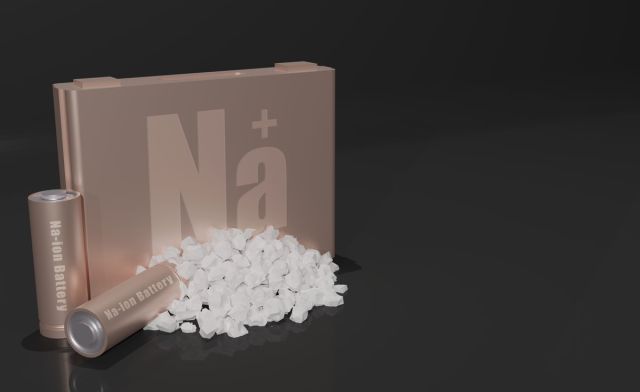
Researchers at the Korea Advanced Institute of Science and Technology (KAIST) have developed a high-performance, hybrid sodium-ion battery that charges rapidly and offers impressive energy density.
This revolutionary prototype uses sodium (Na), a chemical element over 1000 times more abundant and cheaper than lithium (Li), the main component of conventional batteries.
Generally, sodium-ion batteries face constraints such as lower power output, limited storage properties, and extended charging times. The innovative battery design, led by Professor Jeung Ku Kang of the Department of Materials Science and Engineering at KAIST, combats existing limitations of sodium-ion batteries by integrating the anode materials used in traditional batteries with the cathodes used for supercapacitors into a hybrid system. The result reportedly delivers high storage capacity and rapid charge-discharge rates.
Multiple possibilities
Developing the hybrid battery hinged upon improving the energy storage rate of battery-type anodes and boosting the relatively low capacity of supercapacitor-type cathode materials.
The research team at KAIST made use of two distinct metal-organic frameworks to create an optimized synthesis of hybrid batteries, culminating in anode material with improved kinetics and a high-capacity cathode material.
The fully assembled hybrid sodium-ion energy storage device reportedly surpasses the energy density of commercial lithium-ion batteries and matches the power density characteristics of supercapacitors. Professor Kang says this new battery, with an energy density of 247 Wh/kg and a power density of 34,748 W/kg, could be used across a range industries, including electric vehicles, smart electronics and aerospace technologies.
The findings of this research, co-authored by KAIST doctoral candidates Jong Hui Choi and Dong Won Kim, were published in the international journal Energy Storage Materials with the catchy title of “Low-crystallinity conductive multivalence iron sulfide-embedded S-doped anode and high-surface-area O-doped cathode of 3D porous N-rich graphitic carbon frameworks for high-performance sodium-ion hybrid energy storages.”
More from TechRadar Pro

Researchers at the Korea Advanced Institute of Science and Technology (KAIST) have developed a high-performance, hybrid sodium-ion battery that charges rapidly and offers impressive energy density. This revolutionary prototype uses sodium (Na), a chemical element over 1000 times more abundant and cheaper than lithium (Li), the main component of conventional…
