Samsung’s archrival becomes first chipmaker to launch 300+ layer TLC NAND flash memory; SK Hynix’s 321-layer 1-terabit TLC paves the way for more affordable 100TB+ SSDs

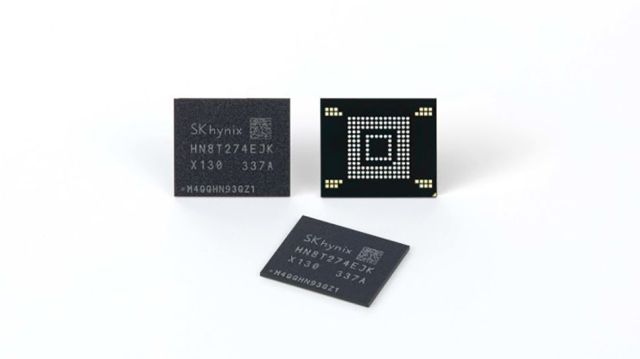
- SK Hynix’s 321-layer NAND targets AI-driven data storage needs
- 321-layer NAND flash improves data transfer speed by 12%
- AI storage demands drive innovation in high-capacity NAND solutions
Samsung and SK Hynix have continued their head-to-head battle in the NAND flash memory market with the latter taking the lead with a new launch.
SK Hynix, the world’s second-largest memory chipmaker, recently became the first to mass-produce triple-level cell (TLC) NAND flash with over 300 layers.
The company’s new 321-layer, 1-terabit TLC 4D NAND flash, announced recently, is set to revolutionize the data storage industry, paving the way for more affordable ultra-high-capacity solid-state drives (SSDs) that exceed 100TB in capacity.
SK Hynix 321-layer NAND
The NAND industry is racing to push the limits of data storage technology, and SK Hynix’s achievement is a major milestone.
After the launch of its 238-layer NAND flash last year, SK Hynix’s latest 321-layer NAND flash sets a new industry standard. The company plans to supply these chips to customers starting in the first half of 2025, targeting the booming artificial intelligence (AI) market, which demands high-performance, energy-efficient storage solutions.
The 321-layer NAND was made possible by SK Hynix’s “Three Plugs” process technology, which involves electrically connecting three plugs through an optimized follow-up step, significantly improving the speed, power efficiency, and overall performance of the chips.
SK Hynix also developed a low-stress material and introduced technology that automatically corrects alignment among the plugs to further optimize the manufacturing process.
The 321-layer product offers a 12% increase in data transfer speed and a 13% improvement in reading performance relative to the previous 238-layer NAND. Furthermore, it reduces power consumption by over 10%. With a 59% boost in productivity, SK Hynix’s new NAND offers an enhanced storage solution for AI data centers and on-device AI applications.
While SK Hynix has achieved this historic feat, its main competitor, Samsung, is not far behind. Samsung is reportedly working on a 400-layer NAND flash chip, which it plans to release by 2026.
The company’s roadmap includes developing bonding vertical NAND (BV NAND) technology, which will allow for even greater storage density and minimized heat buildup. Samsung’s long-term goal is to introduce NAND chips with over 1,000 layers by 2030, potentially breaking the 200TB storage barrier for AI-driven SSDs.
“SK Hynix is on track to advancing to the Full Stack Al Memory Provider by adding a perfect portfolio in the ultra-high performance NAND space on top of the DRAM business led by HBM,” noted Jungdal Choi, Head of NAND Development at SK Hynix.
Via KEDGlobal
You may also like
SK Hynix’s 321-layer NAND targets AI-driven data storage needs 321-layer NAND flash improves data transfer speed by 12% AI storage demands drive innovation in high-capacity NAND solutions Samsung and SK Hynix have continued their head-to-head battle in the NAND flash memory market with the latter taking the lead with a…
