Intel quietly adds Jaguar Shores to its Gaudi AI Accelerator roadmap as it seeks to compete more fiercely against AMD and Nvidia

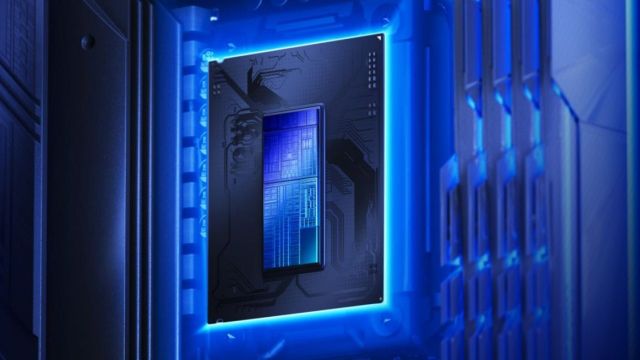
- Intel is betting big on Jaguar Shores to compete in AI
- Gaudi chips give Intel a shot at the AI inferencing market
- Intel hopes the 18A node will give it a manufacturing edge
Intel has been quietly building its AI chip portfolio, recently adding the Jaguar Shores AI accelerator to its roadmap in a significant move as it seeks to compete with the likes of Nvidia and AMD.
The Jaguar Shores AI accelerator, unveiled at the recent SC2024 supercomputing conference, is a key part of Intel’s strategy to stay competitive. Though details are scarce, Jaguar Shores is likely to be a successor to Falcon Shores, which is slated for release in 2025.
Jaguar Shores could be targeted at AI inference – an area where Intel hopes to make headway against Nvidia and AMD. It remains unclear whether Jaguar Shores will be a GPU or an ASIC, but Intel’s current product roadmap suggests that it could be a next-generation GPU designed for enterprise AI applications.
A struggle for market relevance
While Intel has lagged behind its competitors in AI training hardware, the company is now focusing on AI inference, leveraging its Gaudi chips and upcoming technologies like Falcon Shores and Jaguar Shores.
However, to regain its competitive edge, Intel will need to overcome several technical and organizational challenges.
Intel has faced multiple setbacks in the AI hardware space, notably in the GPU segment. The company’s previous attempt to develop a GPU, Rialto Bridge, was cancelled due to a lack of customer interest, leaving institutions like the Barcelona Supercomputer Centre in a difficult position.
Intel’s plans for the Falcon Shores GPU have been revised several times, originally intended as an integrated CPU-GPU product and now reimagined as a standalone GPU.
Intel has largely conceded the AI training market to Nvidia and AMD, with Nvidia dominating thanks to its GPUs and CUDA software stack. Intel CEO Pat Gelsinger acknowledged the company’s distant position in the AI race before his retirement, admitting that Intel currently ranks behind Nvidia, AWS, Google Cloud, and AMD.
Intel is banking on its upcoming 18A manufacturing node to give it an edge over rivals like TSMC. The 18A process, which incorporates new technologies such as RibbonFET transistors and backside power delivery, promises to improve chip efficiency and performance.
Via HPCwire
You may also like
Intel is betting big on Jaguar Shores to compete in AI Gaudi chips give Intel a shot at the AI inferencing market Intel hopes the 18A node will give it a manufacturing edge Intel has been quietly building its AI chip portfolio, recently adding the Jaguar Shores AI accelerator to…
