Occidental, the oil giant that has tried to fashion itself as a climate tech leader, is being real clear now about capturing carbon dioxide emissions, which it sees as the next big thing for fossil fuel production.
Carbon removal is the next big fossil fuel boom, oil company says

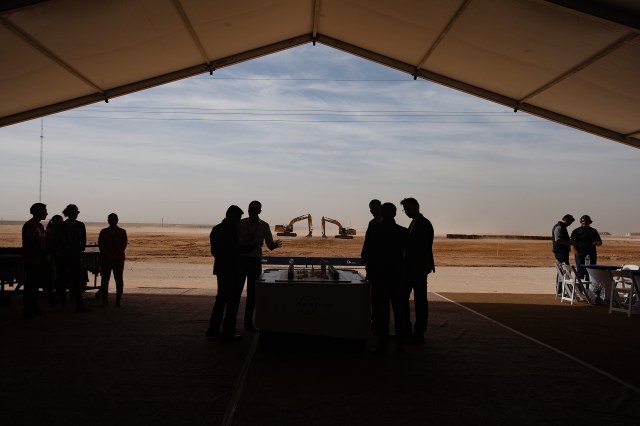
That shouldn’t be surprising coming from a petroleum company. But Occidental has built up an entire arm of its business purporting to fight climate change. It acquired the startup Carbon Engineering, a pioneer in the development of technologies that filter CO2 out of the air, back in 2023. Occidental subsidiary 1PointFive is building giant facilities in Texas using Carbon Engineering’s tech. Those projects got support from the Biden administration and from big companies, including Amazon and Microsoft, with their own climate goals to meet. Sucking carbon dioxide out of the air is supposed to get rid of the pollution causing climate change.
But that strategy, called direct air capture (DAC), doesn’t get at the root of the problem: extracting and burning fossil fuels is what produces that planet-heating pollution in the first place. What happens to that carbon once it’s captured is an even hairier question. DAC is sold as a climate solution because the captured carbon can be sequestered underground, keeping the greenhouse gas from building up in the atmosphere and raising global average temperatures.
“We believe the next round of technology that’s going to add significant barrels — 50 to 70 billion barrels of reserves — will be production that comes from the use of CO2 in enhanced oil recovery.”
But fossil fuel companies have historically used CO2 in a process called enhanced oil recovery, shooting carbon into depleting oil fields to force out hard-to-reach reserves. In an earnings call this week, Occidental described its DAC business as imperative to the company’s ability to produce more oil.
“We believe the next round of technology that’s going to add significant barrels — 50 to 70 billion barrels of reserves — will be production that comes from the use of CO2 in enhanced oil recovery,” Occidental president and CEO Vicki Hollub said on the call. This was in response to a question about how the company was thinking about its carbon-removal business with the change in administration this year — from one that prioritized action on climate change under Joe Biden to one that aims to “drill, baby, drill” under Donald Trump.
Hollub essentially characterized the use of captured carbon for enhanced oil recovery as the biggest boon for fossil fuels since fracking enabled the US shale revolution. “Taking CO2 out of the atmosphere is a technology that needs to work for the United States, and President Trump knows the business case for this,” Hollub said, adding that she’s had “several conversations” with Trump.
Occidental’s seen a slight slump in its enhanced oil production over the past few years, but company leadership thinks it can turn that around with the help of captured CO2. “There’s not enough organic CO2 in the country to be able to flood all the things that we’re going to need to flood to get that 50 to 70 billion barrels,” according to Hollub.
Direct air capture is still a prohibitively expensive endeavor, however, costing hundreds of dollars per ton of CO2 captured. Its future in the US could hinge on whether the Trump administration keeps Biden-era tax credits for the technology, which Hollub mentioned on the call. After all, the company doesn’t want to risk its DAC plants becoming stranded assets. Its first large DAC plant, called Stratos, is slated to come online this year in Texas, and the company has plans for an even bigger project at King Ranch that was awarded federal funding in 2023.
Microsoft struck a deal with 1PointFive last year for 500,000 metric tons of carbon dioxide removal. And Amazon agreed to pay for 250,000 metric tons of carbon removal from 1PointFive’s first forthcoming DAC plant. Both of those agreements, at least, include stipulations that the captured carbon be permanently sequestered without being used to produce more oil and gas.
But there’s another worrisome outcome with these kinds of deals. The DAC plants Occidental is building have to succeed for that CO2 to be sequestered. Other companies that purchase carbon-removal services budget that into their carbon accounting to meet their own climate goals. Time and money that could have been spent reducing greenhouse gas emissions by other means — say, by switching to cleaner energy sources — could be squandered on carbon-removal technologies that might never become commercially viable.
Occidental will still have its fossil fuel business to fall back on, even if DAC fails, however. And for now, it can profit off its oil and gas business, profit from cleaning up some of the CO2 pollution it creates, and then use the pollution it captures to produce even more fossil fuels.
Occidental, the oil giant that has tried to fashion itself as a climate tech leader, is being real clear now about capturing carbon dioxide emissions, which it sees as the next big thing for fossil fuel production. That shouldn’t be surprising coming from a petroleum company. But Occidental has built…
