Your iPhone 15 can’t run Apple Intelligence because of one key spec weakness

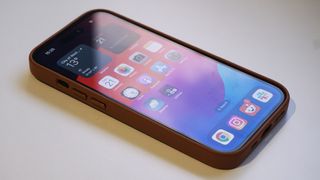
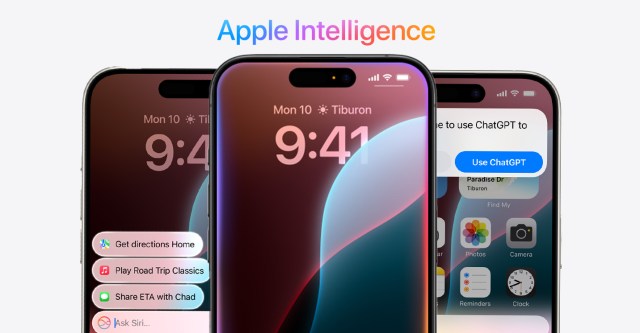
When Apple announced Apple Intelligence at WWDC 2024 it raised plenty of eyebrows by saying that the artificial intelligence (AI) system was not compatible with the latest iPhone 15 and iPhone 15 Plus phones. The company’s Pro phones will work with Apple Intelligence, but anyone who owns one of the entry-level models is going to miss out.
Now, we might know why. In a report posted on Medium, Apple analyst Ming-Chi Kuo has outlined a few factors that might have contributed towards Apple’s decision. Essentially, it all comes down to memory.
The iPhone 15 comes with an A16 Bionic chip that has 6GB of memory. The iPhone 15 Pro, meanwhile, has an A17 Pro chip with 8GB of memory. Apple Intelligence requires a device with either an A17 Pro or an M1 chip (at a minimum), and the M1 notably also packs in 8GB of memory.
From this, Kuo infers that Apple Intelligence must require 2GB of spare memory or less. With the A16 Bionic, most of that 6GB of memory is likely to be used up by other processes, leaving very little room for Apple Intelligence. With the A17 Pro and its 8GB of RAM, there’s a lot more wiggle room. Of course, that’s very convenient for Apple’s upgrade cycle, but it would also make technical sense.
Memory matters
That might sound a lot like speculation at this point, but Kuo backs up his claims with a few intriguing points. For one thing, Kuo notes that Apple Intelligence uses a 3-billion-parameter large language model (as detailed on Apple’s website) that, when compressed, needs approximately 0.7-1.5GB of spare memory. Again, this is something that the A16 Bionic might not be able to spare.
As well as that, the M1 chip actually has less processing power than the A16 Bionic (11 TOPS versus 17 TOPS). That suggests that processing power is not the key factor in Apple’s decision to cut off the A16 Bionic but permit the M1 chip – and that memory fits the bill instead.
Speaking of processing power, Kuo made an interesting comparison between Apple Intelligence and Microsoft’s AI-infused Copilot+ PCs. While Apple Intelligence requires a minimum of 11 TOPS of processing power, Copilot+ PCs need almost four times that, at 40 TOPS minimum. The implication is that Apple Intelligence is a lot more efficient than the AI models running on rival devices, hence its ability to run on-device on a range of iPhones as well as beefier Macs.
Cynics have suggested that Apple is simply setting its Apple Intelligence iPhone requirements high to force users into upgrading their devices, but that fails to explain why the company hasn’t also made owners of the four-year-old M1 chip upgrade, too. Instead, as Kuo’s analysis suggests, the reason might come down to the technical details of the chips involved. That might not provide much succor to users of the iPhone 15, but at least we now have a clearer idea of Apple’s thinking.
You might also like
When Apple announced Apple Intelligence at WWDC 2024 it raised plenty of eyebrows by saying that the artificial intelligence (AI) system was not compatible with the latest iPhone 15 and iPhone 15 Plus phones. The company’s Pro phones will work with Apple Intelligence, but anyone who owns one of the…
