Your free Internet is coming to an end and there’s nothing you can do about it

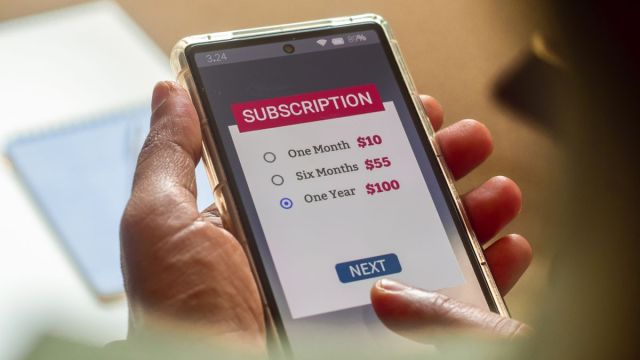
It’s a miracle that the free Internet lasted as long as it did. It’s been nearly 30 years of mostly unfettered, free content access to everything from magazine articles and newspapers to videos and recipes. The steady devolution of the online advertising business made free online content an economic equation that no one could solve.
If you need further evidence that your free internet is evaporating like snow on an early spring day, look at CNN.com. The popular online news platform, an arm of the still popular cable news network, is putting up a paywall.
It won’t block you from seeing all CNN.com posts but will limit the number you can see for free. It’s unclear if that will be a few a day or a dozen per month. However, once you hit the limit, CNN.com will prompt you to subscribe for $3.99 a month or $29.99 a year. That’s not a lot, and for all-you-can-eat access, some might consider it a bargain. Even so, it’ll be an adjustment, especially for those who’ve been accessing the site since it launched “on the World Wide Web” in August of 1995.
CNN.com is not alone in this. TechRadar competitor The Verge is reportedly considering a paywall and I can guarantee similar discussions are underway at every “free website”. Good content, everything from short news posts and long product reviews to essays and videos, is costly to make. If display ads (the ads that surround this post) aren’t paying the bills, possibly because too many of you use an ad blocker or fewer people are viewing your content and the ads because Google is delivering AI-generated content synopsis on search results, you have to find a new way to fund that content.
Other sources
Even without those forces, traditional media like CNN.com is struggling because a large segment of the online audience is getting their news elsewhere: usually YouTube or TikTok. It’s unlikely a two-minute TikTok has all the depth of a CNN.com or Washington Post piece, but that doesn’t matter. Gen Z trusts those sources and will usually turn there first.
Obviously, many of us still rely on these traditional OG websites for news and information and are not used to paying for the content. And, to be honest, we don’t usually willingly enter Paywall land.
There are strategies honed on platforms like The New York Times, The Atlantic, Business Insider, and others, where we find ways to see more than our share of free content. Usually, this involves opening another browser window in Private Browsing or Incognito Mode, which means you don’t carry the cookies that tell the website how many posts you’ve already viewed. This method usually only works for a single post, but there is satisfaction in reading that one extra story.
I know I’m the last person who should be doing this, and sometimes I wonder how I can be so cheap. The truth is, I already pay for a lot of content. I have subscriptions to The New York Times and The New Yorker. We also subscribe to our local newspaper.
Also, wasn’t the Internet supposed to be free?
Modeling subscriptions
Maybe not. The World Wide Web was launched for free almost by accident. When the Internet arrived, it had no interface. Then, some enterprising programmers built early web browsers that could translate Internet data via HTML into browsable and interlinked pages. (Yes, a massive oversimplification of what really happened.)
The Web grew so fast and spread so wide that no one even had time to figure out a decent economic model. We did understand the web offered content consumption and audience measurability in ways virtually impossible with traditional media. That was a bonanza for traditional advertisers who desperately wanted access to all those eyeballs.
And they got them in droves. However, the efficacy of these ads started sliding almost as soon as they started appearing. There were a lot of bad actors back then who thought it was OK not only to run online ads but also to make them pop-ups. Visiting some sites was like playing a game of whack-a-mole. Naturally, if you visited an adult site, you probably got what you deserved.
It’s been almost two decades of us knowing that a full-time free internet was unsustainable, but the reality is just now catching up with our consumption. Free was a dream we all had and it was a wonderful one while it lasted. Now we’re waking up on if not the wrong side of the bed, the costly side of the paywall.
You might also like
It’s a miracle that the free Internet lasted as long as it did. It’s been nearly 30 years of mostly unfettered, free content access to everything from magazine articles and newspapers to videos and recipes. The steady devolution of the online advertising business made free online content an economic equation…
