Windows could become a critical part of 5G and 6G rollout thanks to Japanese invention — transparent glass surface works as an antenna
5G networks have rapidly expanded worldwide, delivering faster speeds and reduced latency, however, due to the use of higher frequency bands, more base stations are required compared to 4G.
This need for increased infrastructure presents challenges, particularly in densely populated areas where site availability and installation costs are higher – such as Tokyo, the world’s most densely populated city, illustrates these challenges perfectly.
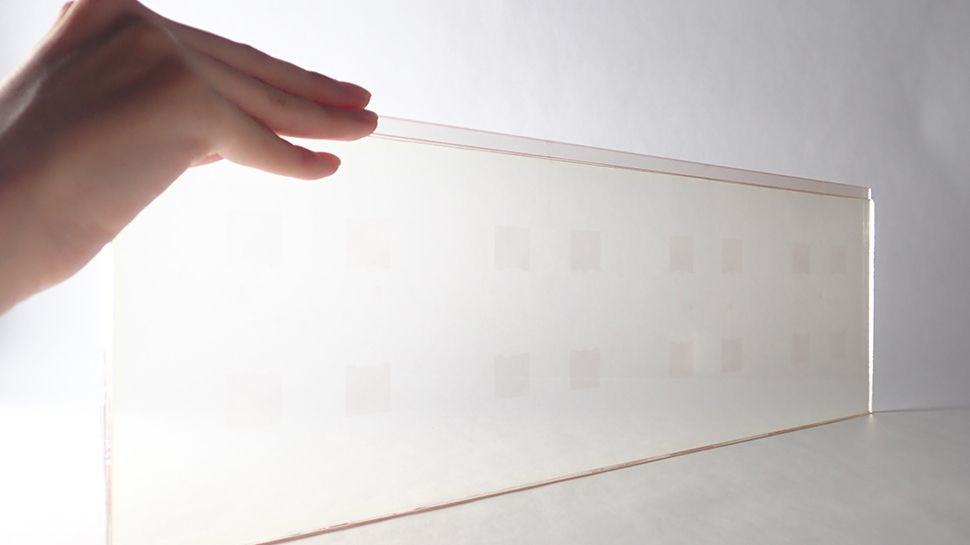
In 2018, NTT DOCOMO partnered with Japanese glassmaker AGC to address this issue by developing the world’s first glass antenna. Using AGC’s ATTOCH technology, the antenna can be installed inside existing windows, allowing buildings to seamlessly integrate into the mobile network without obstructing views or altering their appearance. It’s been improved over the years and is now fully 5G compatible.
WAVEANTENNA
The antenna is constructed using transparent conductive materials sandwiched between layers of glass, which enhances its durability while maintaining the transparent look of standard windows. The technology also features a Glass Interface Layer (GIL) that reduces signal attenuation and reflection, two common issues when signals pass through glass.
The WAVEANTENNA, as it’s known, supports 5G Sub6 frequencies, which are more effective at penetrating walls and barriers compared to millimeter waves. This makes it ideal for dense urban environments where 5G networks struggle with interference and signal loss.
Akinobu Ueda, from the Radio Access Network Engineering Department at Japanese comms giant NTT DOCOMO, explains: “It is difficult to get permission from building owners to install small cell base stations in the mid to lower floors of a building, as the base stations can spoil the scenery of an area. The same holds true for indoor installations. In addition to spoiling the interior design of a building, it’s difficult to create the ideal service area as attenuation occurs when signals pass through the building.”
Last month, JTower, a Tokyo-based company, installed the first WAVEANTENNA in the city’s Shinjuku district, marking an important milestone for the technology. The antennas have also been adapted for use in vehicles, helping to reduce dropped signals.
More from TechRadar Pro
5G networks have rapidly expanded worldwide, delivering faster speeds and reduced latency, however, due to the use of higher frequency bands, more base stations are required compared to 4G. This need for increased infrastructure presents challenges, particularly in densely populated areas where site availability and installation costs are higher –…
