It wasn’t long ago that shooting with a super high-resolution camera meant making serious sacrifices for the sake of all those megapixels. Enter the A7R VI.
We’re reaching peak camera with the Sony A7R VI

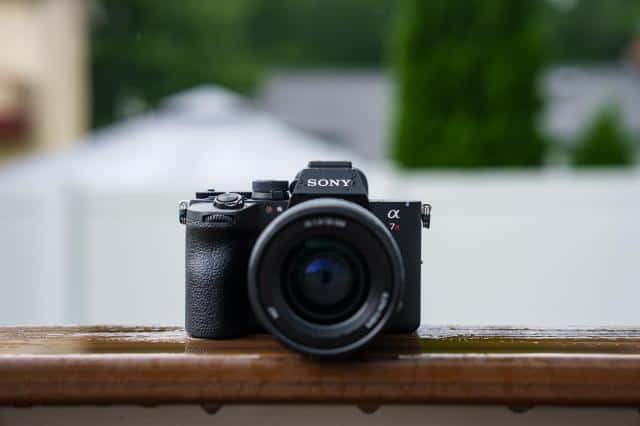
Sony’s latest flagship high-res camera is a 66.8-megapixel spec monster. In addition to its modest bump in resolution from the last-gen A7R V, it uses a new sensor and processor that unlock nearly any kind of shooting — from sports and action to usable 8K video. It’s a huge departure from years ago, when high-resolution cameras were slower, noisier, and more specialized as a result of all those megapixels.
The A7R VI’s fully stacked sensor and new Bionz XR2 processor allow it to shoot full-resolution bursts at up to 30 frames per second without any viewfinder blackout. And that faster sensor means there’s little downside to using the electronic shutter full time, meaning you get truly silent shooting for any moment you want to be stealthy. The A7R VI also has 8.5 stops of in-body image stabilization, dual USB-C ports (because why not), and Sony’s new AI-based autofocus system.
9
Verge Score
$4498
The Good
- Tons of resolution
- Stacked sensor allows blackout free, silent shooting up to 30fps
- The best continuous tracking autofocus
The Bad
- Ergonomics not as good as Sony A9 III or A1 II
- Can’t share batteries with older Sony bodies
The A7R V was pretty quick, shooting 60-megapixel images at up to 10 frames per second with its mechanical shutter, but the A7R VI pumps out its 9984 x 6656 resolution RAW files lightning-fast. And these files are huge. They average about 60 megabytes in lossless compressed RAW format, so that one-second burst of 30 shots can soak up 1.8GB. Wild.
I already use a pretty high-res Sony camera that shoots fast: the original A1. I pair it with the even faster but much lower-res A9 III for my wedding photo gigs. But even though I’m used to Sony’s speedy shooters, the A7R VI’s over-the-top resolution and flexibility really impressed me. In the past, super high-res cameras were reserved for studio work, but the A7R VI blows away any reservations over using a camera with 60-plus megapixels of resolution on just about anything: landscapes, sports, action, photojournalism, street photography, portraits, etc. It. Does. Everything.
1/12
I got to spend some time testing an A7R VI, and in that time I used it for casual snapshots, family weekend trips (including a mini safari), Verge product images, and a freelance wedding shoot (as the second photographer). I quickly realized that despite its new battery and ever-so-slightly revised grip around it, the A7R VI feels just like the A7R V — and therefore a whole lot like nearly any other A7 camera. The higher-end A1 II and A9 III still have slightly better ergonomics, but as I’ve said before, any of Sony’s cameras can still cramp my hands after long use.
The upside of the A7R VI’s sameness is that it should easily slot into a pro’s existing Sony system — it feels the same, it shoots the same, and the files process with the same predictable looks. The only real point of friction is dealing with the new NP-SA100 battery if you already own a bunch of the old NP-FZ100 ones (as I do). It’s a shame Sony’s new SA battery doesn’t boost the camera’s life beyond the CIPA-rated 600+ shots, but its added capacity allows the new processor to tap more power while maintaining parity with previous models.
1/22
Pretty much all current Sony Alpha cameras have exceptional autofocusing systems. They’re the best in the market, even if recent models from Canon and Nikon are mostly caught up. When I started shooting Sony cameras about five years ago, it drastically changed the way I use autofocus. I keep my cameras on continuous tracking mode nearly 100 percent of the time now, relying on subject and eye detection to make shooting much easier, especially in high-stress situations like a wedding. The A7R VI’s revised autofocus system is Sony’s latest and greatest, but to me it just felt a touch more “sticky” to a subject’s eye than what I’ve got on my last-gen cameras — nothing monumentally better.
The real draw for me was getting these huge 66.8-megapixel files and being able to shoot them as fast as I wanted, as quietly as I needed. The speedy, stacked sensor minimizes any rolling shutter anomalies to the point they’re not really noticeable, so I shot with the electronic shutter almost the entire time. I love this freedom, because I can shoot as much as I want during a wedding ceremony or a speech and not disturb the peace. And even when shooting product images for The Verge, having no mechanical shutter slapping up and down in the camera reduces vibrations just that extra bit more — so I can use even slower handheld shutter speeds. This is particularly helpful when photographing products in difficult lighting.
1/8
And if I want to be extra fast (or sometimes just lazy) all that resolution means I can crop horizontal files to vertical ones without sacrificing print quality — definitely no worry with web quality. Or while under pressure at a busy tech event, I can take one picture of a product and make multiple crops from it to show close-up details I didn’t get to capture further. (Yes, I have done this before. And no, I don’t prefer it.) I’ve already done these kinds of things with my Sony A1, but having more megapixels gives me even more leeway. And this is in a $4,500 camera, compared to the newer version of my camera, which currently costs $7,000.
This is the first of Sony’s R cameras I’ve looked at and thought, “Yeah, this could be my one camera for everything.” (If I wanted that and if I only needed one camera, of course.) It does much of what I need from my A1 and A9 III at a higher resolution and a lower price. There are of course still reasons to go with the A9 III or the A1 II — niche features of a global shutter or a higher flash sync speed — but when it comes to generalist “do anything” cameras, this is it. This is the grail.
A Sony doesn’t have the impeccable handling of a Canon or a Nikon, or the romance of a Fujifilm or a Leica, but what makes the A7R VI captivating are the stone-cold results it delivers. Camera tech is constantly improving, but it will probably be a while before any camera — from Sony or anyone else — is superior enough to justify an upgrade from here.
Photography by Antonio G. Di Benedetto / The Verge
Follow topics and authors from this story to see more like this in your personalized homepage feed and to receive email updates.
It wasn’t long ago that shooting with a super high-resolution camera meant making serious sacrifices for the sake of all those megapixels. Enter the A7R VI. Sony’s latest flagship high-res camera is a 66.8-megapixel spec monster. In addition to its modest bump in resolution from the last-gen A7R V, it…
