Waymo still doing better than humans at preventing injuries and property damage

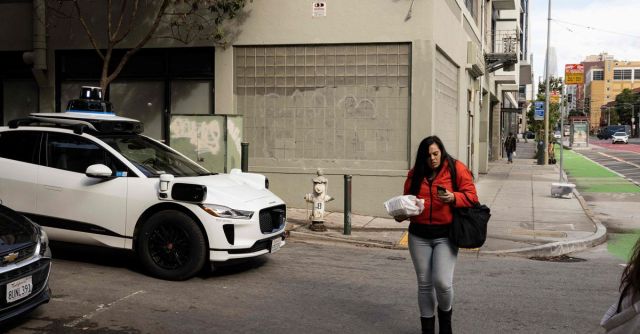
Waymo’s autonomous vehicles cause less property damage and fewer bodily injuries when they crash than human-driven vehicles, according to a study that relies on an analysis of insurance data.
The study is the product of the collaboration between Waymo and insurer Swiss Re, which analyzed liability claims related to collisions from 25.3 million fully autonomous miles driven by Waymo in four cities: Phoenix, San Francisco, Los Angeles, and Austin. They then compared those miles to human driver baselines, which are based on Swiss Re’s data from over 500,000 claims and over 200 billion miles traveled.
25.3 million fully autonomous miles
They found that the performance of Waymo’s vehicles was safer than that of humans, with an 88 percent reduction in property damage claims and a 92 percent reduction in bodily injury claims. Across 25.3 million miles, Waymo was involved in nine property damage claims and two bodily injury claims. The average human driving a similar distance would be expected to have 78 property damage and 26 bodily injury claims, the company says.
Waymo’s vehicles also performed better when compared to new vehicles equipped with all the latest safety tech, including automatic emergency braking, lane-keep assist, and blind spot detection. When compared to this group, Waymo’s autonomous driving system showed an 86 percent reduction in property damage claims and a 90 percent reduction in bodily injury claims.
Waymo says it has submitted its latest comparisons with Swiss Re’s insurance data to a scientific journal for publication.
The data is important because there is still a fierce debate about the safety of driverless cars. Companies like Waymo and others say driverless cars are necessary as an antidote to the crisis of traffic fatalities, of which there are around 40,000 a year in the US. They point out that driverless cars never get drunk, tired, or distracted and are able to avoid the human errors that so often lead to crashes and deaths.
But there is a lack of certainty around the safety of driverless vehicles, mainly because there are far fewer AVs on the road than human-driven vehicles and, thus, less data from which to draw conclusions. Humans drive close to 100 million miles between fatal crashes, so we’re likely to need hundreds of millions of miles from autonomous vehicles before we can start to make more meaningful comparisons about safety.
Many urbanists and safety advocates say the real solution is actually fewer cars altogether as well as communities that are designed to support more car-free transportation, like bikes, public transportation, and walking.
Waymo is part of a rapidly dwindling number of companies that’s convinced that autonomous vehicles will play a key role in reducing crashes and improving safety. And it’s one of the few willing to publicize its own collisions in order to make that case.
Waymo’s autonomous vehicles cause less property damage and fewer bodily injuries when they crash than human-driven vehicles, according to a study that relies on an analysis of insurance data. The study is the product of the collaboration between Waymo and insurer Swiss Re, which analyzed liability claims related to collisions…
