Trump’s tariffs put the iPhone in a tough spot

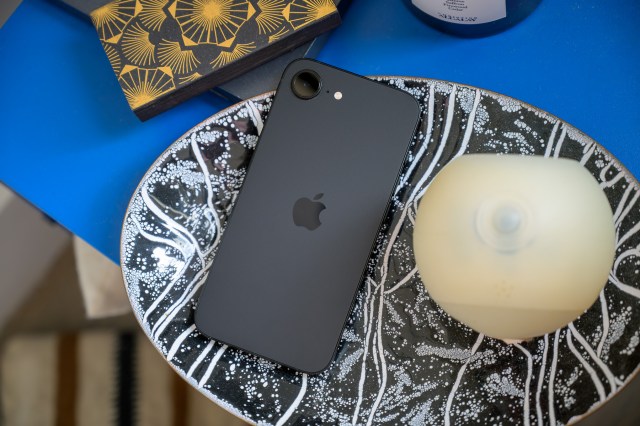
The US smartphone market is weird. Most of us buy our phones through some combination of installment plans, trade-in offers, and carrier deals, so answering the question “How much does this phone cost?” can sometimes require a little galaxy-brain math. President Trump’s 34 percent tariff increase on Chinese goods is set to take effect on April 9th, making things even more complicated. Will Apple, for instance, pass the extra cost of an iPhone right along to buyers? The market seems to think so. It’s likely why Apple’s shares are down almost 10 percent, the worst drop in about five years.
But Gerrit Schneemann, a senior analyst at Counterpoint Research, doesn’t necessarily believe we’ll see an immediate price increase.
“I don’t foresee them… on a short-term basis just raising prices unnecessarily,” Schneemann told The Verge.
He points out that Apple’s margins (historically about 38 percent) give it more wiggle room to absorb the costs of the tariffs, at least in the short term. “But I think if this sticks, then probably with the 17 we could see a price hike,” he said, referring to the iPhone 17 expected in the fall.
If the goal with these tariffs is to get Apple to start making iPhones in the US, that’s not going to happen anytime soon, either. The company would face some massive challenges doing so.
“I don’t think we see a real path to a meaningful US smartphone industry production hub,” says Schneemann. Apple does some manufacturing in the US, but is largely limited to small-scale production. The iPhone and its network of specialized component suppliers are a different beast. Even if Apple established supply chains, a workforce, and manufacturing facilities for the iPhone in the US, the costs would be prohibitively high, likely more than the impact of the tariffs. These tariffs are being carried out through an executive order rather than Congress, so a new incoming president could change them in four years.
Apple will keep making iPhones overseas and finding ways to deal with the extra taxes to import them to the US. “There’s already been reports of [Apple] trying to get the supply chain to absorb some of that additional cost, which is something Apple is good at anyway,” says Schneemann. And if Apple raises prices with the iPhone 17 series, our tendency to buy phones through carrier subsidies could cushion the blow through slightly higher monthly payments.
And yet there’s still plenty of uncertainty around these tariffs, including whether they might get pushed back yet again. Like I said, it’s complicated.
We’ve reached out to Apple for a comment and will update this story if the company responds.
The US smartphone market is weird. Most of us buy our phones through some combination of installment plans, trade-in offers, and carrier deals, so answering the question “How much does this phone cost?” can sometimes require a little galaxy-brain math. President Trump’s 34 percent tariff increase on Chinese goods is…
