Toyota’s futuristic Woven City, which is being built on the site of a former car factory in Japan, is almost ready for its first residents.
Toyota’s futuristic Woven City in Japan is ready for its first residents

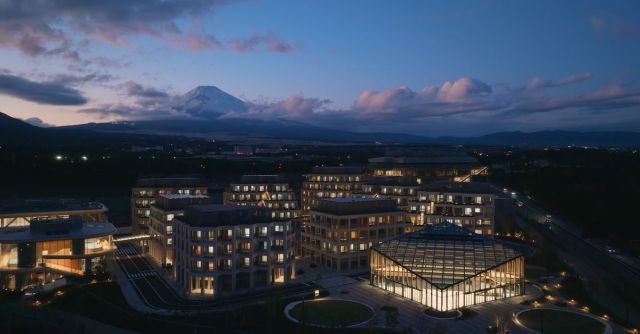
At CES this week, the Japanese auto giant updated the public on the progress of the $10 billion project, which is said to be a “living laboratory” where people can live while also testing out futuristic projects. Toyota said it completed “phase 1” of the construction, with the official launch planned for 2025.
“Woven City is more than just a place to live, work, and play,” Toyota Chairman Akio Toyoda said during today’s press conference at CES. “Woven City is a place where people can invent and develop all kinds of new products and ideas. It’s a living laboratory where the residents are willing participants, giving inventors the opportunity to freely test their ideas in a secure, real-life setting.”
Toyota first announced Woven City at CES in 2021. At the time, the company said it would be a “prototype city of the future” where it can test autonomous vehicles, innovative street design, smart home technology, robotics, and new mobility products on a population of real people who would live there full time.
Now move-in day is quickly approaching. In fall 2025, Toyota said it will welcome the first 100 residents to Woven City, all of whom will be employees of Toyota or its subsidiary, Woven by Toyota. The community will gradually expand to include “external inventors and their families” who will be invited to relocate to the new city. In total, the first phase of the city will eventually house 360 residents, Toyota says.
Toyota dubs these first residents “Weavers,” adding that they are people who “share a passion for the ‘expansion of mobility’ and a commitment to building a more flourishing society. Through their participation in co-creation activities, Weavers will contribute to realizing the full potential of Woven City.”
That said, the first “inventors” confirmed for Woven City are mostly in the food services business, including a vending machine company and a startup that wants to explore “the potential value of coffee through futuristic cafe experiences.”
Toyoda mentioned several other ideas during his press conference, including high-powered motorized wheelchairs for people with disabilities who want to experience the thrill of racing. He also pitched the idea of a personal drone that follows joggers for added security, and “pet robots” for elderly people.
The Woven City site, which is located at the base of Mount Fuji, includes buildings that are designed by famed Danish architect Bjarke Ingels. The goal, through phase 2 and subsequent phases, is to build enough housing and facilities for up to 2,000 people to live year-around, with utilities powered by the company’s hydrogen fuel cell technology. The site is private for now, though Toyota says it plans on inviting the general public to see it in 2026.
“The potential value of coffee through futuristic cafe experiences”
The name “Woven City” is a reference to weaving together three different types of streets or pathways, each for a specific type of user. One street would be for faster vehicles only. The second would be a mix of lower-speed personal mobility vehicles, like bikes and scooters, as well as pedestrians. And the third would be a park-like promenade for pedestrians only.
It’s still unclear how Woven City fits into Toyota’s plans for the future of mobility. The company, which is one of the largest producers of automobiles in the world, has been a bit of a laggard in the field of electric vehicles. The company has plenty of hybrids but only one fully electric car in the US, the BZ4X — though it did say it has a three-row SUV coming soon.
There’s nothing new about automakers using big plots of land to build proving grounds with fake city backdrops to test out new vehicles. And company towns have existed for decades; Elon Musk, for example, is building his own town in Texas to house Tesla and SpaceX employees.
But what Toyota is proposing is a dramatic escalation of that concept: a real city with real people who would live within the automaker’s amped-up vision of the future. And that’s where it could run into some problems. Google confronted something similar with its Sidewalk Labs project in Toronto, after objections from residents about surveillance and data collection led to the project’s demise.
Toyota hopes to avoid these same headaches by touting an enhanced quality of life for Woven City’s residents. The project has already earned Japan’s first “LEED for Communities Platinum certification,” the system’s highest rank.
Toyota’s futuristic Woven City, which is being built on the site of a former car factory in Japan, is almost ready for its first residents. At CES this week, the Japanese auto giant updated the public on the progress of the $10 billion project, which is said to be a…
