Thunderbolt 5 reveal makes Apple’s archaic iPhone 15 USB-C choice even more insulting

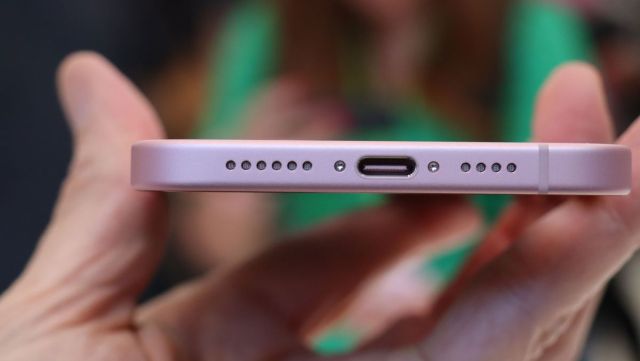
To the surprise of very few people, Apple finally announced the iPhone 15 lineup at its September Event 2023, which will be the first of the Cupertino company’s handsets to have USB-C ports – but there’s a major catch.
While the adoption of the popular USB-C port, which is used in a huge variety of tablets, smartphones and laptops, with the new iPhones is certainly welcome, the reveal that the standard iPhone 15’s USB-C port will use the USB 2.0 standard – which was first introduced way back in 2001 – is, to be blunt, a bit of an insult.
Apple’s decision to put 20 year-old hardware in an expensive, modern smartphone that starts at $799 / £799 / AU$1,499 is initially baffling. Well, until you realise that for a start, it seems that Apple’s embracing of USB-C in the new iPhones isn’t through choice – but because in 2022 the European Union passed legislation to combat “significant amounts of electronic waste caused by unused chargers and the inconvenience suffered by… users who need different cables for different devices.”
By including USB-C, but using very old tech, it really feels like Apple is only begrudgingly dropping its proprietary Lightning ports.
Also, while the iPhone 15 and iPhone 15 Plus are lumbered with USB 2.0, which has support for data transfers of just 480Mbps, the much more expensive iPhone 15 Pro and iPhone 15 Pro Max come with the more recent USB 3.0, which supports data speeds of up to 10Gbps.
So, it feels like Apple is essentially saying that if you want a new iPhone with decent data transfer speeds, which is important if you want to move photos from your iPhone to MacBook, for example, then you’re going to have to spend more money on a more expensive iPhone model.
Interestingly, the Lightning port of previous iPhones, including the iPhone 14, supported data transfers of around 480Mbps, the same as the USB 2.0 port in the iPhone 15. This might be another hint at Apple’s reasoning, as it may not want its previous insistence on using the Lightning interface to appear like it was disadvantaging its customers.
Thunderbolt 5 is coming
What makes the USB 2.0 tech inside the new iPhone 15 look even more outdated, is that – as VideoCardz reports – Intel has announced Thunderbolt 5, the next-generation of USB-C interface.
According to Intel, Thunderbolt 5 will have a potential max speed of 120Gbps – a huge increase over USB 2.0, and potentially up to 12 times faster than the USB 3.0 ports of the iPhone 15 Pro models.
Thunderbolt 5 will also be around three times faster than Thunderbolt 4, which tops out at 40Gbps, and six times faster than USB 4.
We’re still a while away from seeing Thunderbolt 5-compatible devices, with Intel-based PCs and laptops likely supporting it in 2024 with Intel’s upcoming Meteor Lake processors.
Even so, this makes Apple’s inclusion of USB 2.0 in its latest iPhones look even more archaic – especially if we’re going to have to wait until 2043 to see Thunderbolt 5 on iPhones.
You might like
To the surprise of very few people, Apple finally announced the iPhone 15 lineup at its September Event 2023, which will be the first of the Cupertino company’s handsets to have USB-C ports – but there’s a major catch. While the adoption of the popular USB-C port, which is used…
