This open source tool could save Google, Microsoft, billions by cutting CPU resources by 20% but even small businesses can benefit

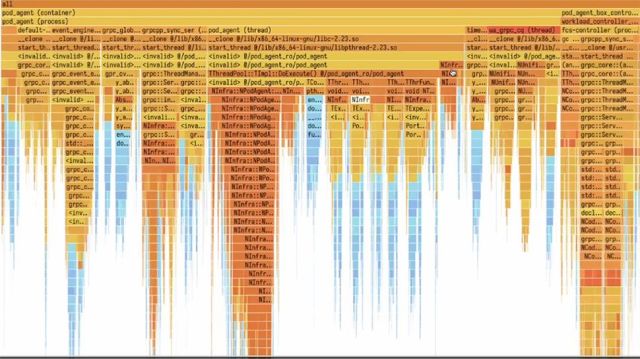
- Yandex developed and open-sourced Perforator which identifies inefficiencies in applications
- This in turn allows DevOps and SysOps to optimize applications and reduce infrastructure costs
- Savings can be billions of dollars for hyperscalers but even SMBs with on-prem servers can benefit
Yandex, Russia’s largest tech company, has released an open source tool designed to identify and evaluate code inefficiencies across an entire code base.
“Perforator” can help a range of businesses – from tech giants like Google and Microsoft to SMBs – reduce their infrastructure costs by up to 20%, the company says, helping DevOps and SysOps teams pinpoint the most resource-intensive sections of code and offers detailed suggestions for how to optimize them. Using eBPF technology it can run programs within the Linux kernel safely and without slowing down systems.
The tool supports a range of popular languages, including C, C++, Go, Rust, Python, and Java. Analytics and data visualization are offered through flame graphs, making problem diagnostics much more manageable, and use of profile-guided optimization (PGO) can accelerate C++ programs by up to 10%. Yandex says it intends to improve future versions with better integration for Python and Java, along with more precise event analysis.
Saving hyperscalers a fortune
“Perforator helps businesses get the most out of their servers without sacrificing performance,” said Sergey Skvortsov, a senior developer at Yandex who leads the team behind the tool. “Using Perforator, businesses can optimize their code, reduce server load, and ultimately lower energy and equipment costs.”
Yandex says Perforator is useful for large data centers, tech corporations, and even smaller businesses with limited resources. Instead of investing in additional equipment, they can use the tool to get more out of their existing infrastructure. Perforator also includes handy A/B testing capabilities.
The tool has been used within Yandex services for over a year and is now available globally for companies, developers, and researchers. Because it runs directly on a company’s servers, Perforator reduces reliance on external cloud providers, making it ideal for organizations with strict data security requirements.
For hyperscalers, the potential savings could be huge, but SMBs with on-prem servers can also see substantial cost reductions. “Perforator can benefit companies of all sizes, from small businesses with 10-100 servers, which can save millions of dollars per year, to larger enterprises with thousands of servers and more, where savings can reach hundreds of millions or even billions of dollars annually,” Skvortsov said.
Perforator’s source code is available for free on GitHub, alongside Yandex’s other open-source tools.
You might also like
Yandex developed and open-sourced Perforator which identifies inefficiencies in applications This in turn allows DevOps and SysOps to optimize applications and reduce infrastructure costs Savings can be billions of dollars for hyperscalers but even SMBs with on-prem servers can benefit Yandex, Russia’s largest tech company, has released an open source…
