This AI tool can solve Google’s popular anti-spam defense every time — CAPTCHA system could soon become obsolete


A group of AI researchers at ETH Zurich in Switzerland have developed an advanced tool that can solve Google’s CAPTCHA system with 100% accuracy, raising serious concerns about the future of CAPTCHA-based security.
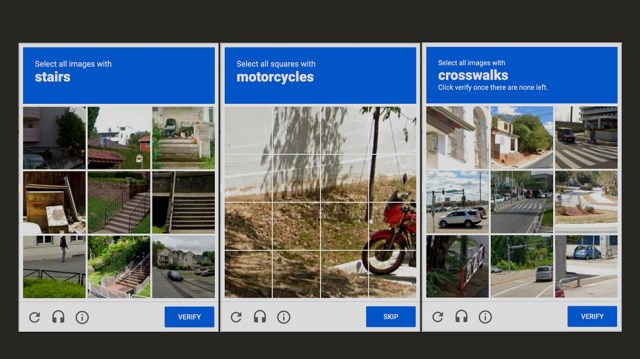
CAPTCHA, an acronym for “Completely Automated Public Turing test to tell Computers and Humans Apart,” has been a primary defense mechanism against bots for years, with Google’s reCAPTCHA being the most widely used.
This system uses image-based challenges and tracks user behavior to differentiate between humans and machines, however, advances in AI have led to these systems becoming increasingly vulnerable.
The CAPTCHA race is on
Andreas Plesner, Tobias Vontobel and Roger Wattenhofer recently modified the You Only Look Once (YOLO) image-processing model, successfully solving Google’s reCAPTCHAv2 human-testing system. The study they conducted focused on evaluating the effectiveness of reCAPTCHAv2, which has become a critical part of website security by blocking automated bots from accessing forms, purchasing products, or participating in online interactions.
This project revealed that the modified YOLO-based model achieved a 100% success rate in solving reCAPTCHAv2 image challenges, compared to earlier systems that only managed success rates of 68-71%. Additionally, the researchers found that bots required roughly the same number of challenges to solve CAPTCHAs as human users, leading to doubts about the system’s reliability in distinguishing between bots and real people. It was also discovered that reCAPTCHAv2 depends heavily on browser cookies and history data to evaluate whether a user is human, meaning that bots can bypass security features if they appear to have human-like browsing behavior.
As AI technology continues to evolve, the boundary between human and machine intelligence narrows. CAPTCHAs, designed to be solvable by humans but difficult for bots, may soon be rendered obsolete. This research underscores the challenge of creating new CAPTCHA systems that can outpace AI’s rapid advancement or the need to explore alternative forms of human verification.
The study, available on the arXiv preprint server, calls for the development of future CAPTCHA systems capable of adapting to AI advancements or the exploration of alternative methods of human verification. It also emphasizes the need for further research into refining datasets, improving image segmentation, and examining the triggers that activate blocking measures in automated CAPTCHA-solving systems.
These findings are significant because they point to an urgent need for innovation in digital security. As AI continues to progress, the traditional methods of distinguishing humans from machines become less reliable, forcing the tech industry to rethink security protocols and human verification methods in the near future.
More from TechRadar Pro
A group of AI researchers at ETH Zurich in Switzerland have developed an advanced tool that can solve Google’s CAPTCHA system with 100% accuracy, raising serious concerns about the future of CAPTCHA-based security. CAPTCHA, an acronym for “Completely Automated Public Turing test to tell Computers and Humans Apart,” has been…
