The world’s fastest EV gets even faster – Rimac Nevera R hits mind-melting performance mark

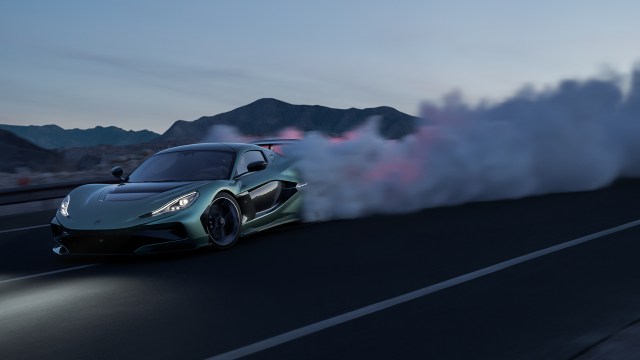
Rimac has taken the wraps off its updated Nevera model, with a new, race-focussed R edition that sports a next-generation battery pack for some staggering performance figures.
Officially the fastest production EV on the planet, the Rimac Nevera has smashed more world records than Usain Bolt and was already one of the most revered electric performance cars that ever lived.
But the company felt there was more to give and Mate Rimac, the company’s big cheese, says that despite all of the record-toppling, the standard Nevera was actually designed to be a fairly comfortable and relaxed Grand Tourer (GT).
As a result, Rimac has just unleashed a track-focussed Nevera R that comes complete with the obligatory massive rear wing, equally huge carbon ceramic brakes and updated software that prioritizes performance over sensible things, like battery range.
On the subject of batteries, there’s a new 108kWh pack that is said to be both lighter and more efficient than your regular, run-of-the-mill Nevera.
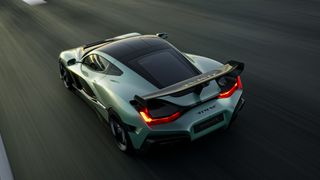
The result is a car that sprints from 0-60mph in just 1.74 seconds, the same as the “standard” car, but manages to propel itself from rest to 124mph in just 4.38 seconds and then on to 186mph in just 8.66 seconds – almost a second faster than the Nevera.
Rewind the clock a few years and a 0-60mph of 4.38 seconds would have been acceptable in many supercars, but Rimac is busy reconfiguring what it means to go fast with electric motors.
Total system output is now up to 2,107hp, an additional 193hp over the Nevera, while the official top speed is pegged at 256mph, making it the fastest production EV on the planet right now.
There’s no word on price, but it will be limited to just 40 models worldwide, so don’t expect it to be cheap.
Shockingly quick
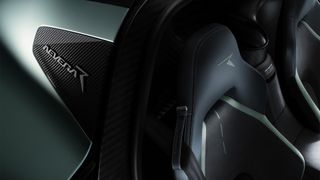
Today’s electric vehicles are busy altering what we consider fast, with even the most mundane passenger cars able to sprint from zero to 60mph in sports car-baiting times.
The Rimac Nevera has proven itself to be one the quickest EVs in the world, with only the Aspark Owl bettering its acceleration time, itself able to rocket from 0-60mph in 1.72 seconds.
However, to make an electric vehicle go fast, you typically need to add more batteries and motors, which just as quickly adds weight. This means that while EVs are rapid in a straight line, they are often pretty useless at going around corners.
But performance specialists like Rimac, are busy challenging this notion, with the Nevera R apparently lapping the Nardo Handling Track in Italy some 3.8 seconds faster than the regular model.
It is highly likely the Rimac Nevera R will now go hunting lap records around the Nürburgring Nordschleife, challenging its own time of 7:05.2 and chipping away at record times set by more specialist EVs, such as the Volkswagen ID.R Concept and the Nio EP9.
You might also like
Rimac has taken the wraps off its updated Nevera model, with a new, race-focussed R edition that sports a next-generation battery pack for some staggering performance figures. Officially the fastest production EV on the planet, the Rimac Nevera has smashed more world records than Usain Bolt and was already one…
