The US is propping up gas while the world moves to renewable energy

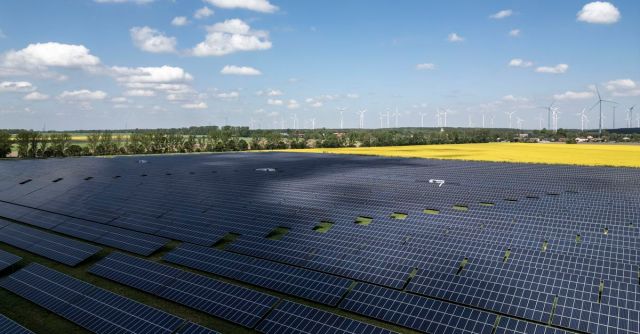
The amount of electricity and greenhouse gas emissions from fossil fuel-fired power plants likely peaked in 2023, according to the annual global electricity review by energy think tank Ember. That means human civilization has likely passed a key turning point, according to Ember: countries will likely never generate as much electricity from fossil fuels again.
A record 30 percent of electricity globally came from renewable sources of energy last year thanks primarily to growth in solar and wind power. Starting this year, pollution from the power sector is likely to start dropping, with a 2 percent drop in the amount of fossil fuel-powered electricity projected for 2024 — a decline Ember expects to speed up in the long term.
“A major turning point in the history of energy”
“The decline of power sector emissions is now inevitable. 2023 was likely the pivot point – a major turning point in the history of energy,” Dave Jones, Ember’s insights director, said in an emailed statement. “But the pace … depends on how fast the renewables revolution continues.”
It’s a transition that could be happening much faster if not for the US, which is already the world’s biggest gas producer, using record amounts of gas last year. Without the US, Ember finds, electricity generation from gas would have fallen globally in 2023. Global economies excluding the US managed to generate 62 terawatt hours less gas-powered electricity last year compared to the year prior. But the US ramped up its electricity generation from gas by nearly twice that amount in the same timeframe, an additional 115TWh from gas in 2023.
A big part of the problem is that the US is replacing a majority of aging power plants that run on coal, the dirtiest fossil fuel, with gas-fired plants instead of carbon pollution-free alternatives. “The US is switching one fossil fuel for another,” Jones said. “After two decades of building such a heavy reliance on gas power, the US has a big journey ahead to get to a truly clean power system.”
The US gets just 23 percent of its electricity from renewable energy, according to Ember, falling below the global average of 30 percent.
“Last century’s outdated technologies can no longer compete with the exponential innovations and declining cost curves in renewable energy and storage,” Christiana Figueres, former executive secretary of the United Nations Framework Convention on Climate Change, said in an emailed statement.
Ember’s report tracks closely with other predictions from the International Energy Agency (IEA), which called a transition to clean energy “unstoppable” in October. The IEA forecast a peak in global demand for coal, gas, and oil this decade (for all energy use, not just electricity). It also projected that renewables would make up nearly 50 percent of the world’s electricity mix by 2030.
The amount of electricity and greenhouse gas emissions from fossil fuel-fired power plants likely peaked in 2023, according to the annual global electricity review by energy think tank Ember. That means human civilization has likely passed a key turning point, according to Ember: countries will likely never generate as much…
