The company that has pushed to open up the deep sea for mining is cozying up to the Trump administration after years of hitting roadblocks in international negotiations.
The Trump administration could green-light deep-sea mining for the first time

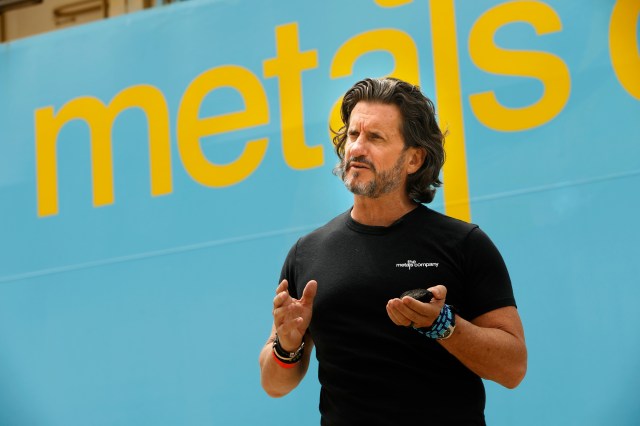
The island nation of Nauru initially sponsored The Metals Company (TMC) and its deep-sea mining effort. In 2021, that triggered a race to develop regulations before TMC or any other company could begin harvesting minerals in international waters to be used in rechargeable batteries.
Panic quickly set in among many scientists, environmental groups, and policymakers worried about the consequences of mining the ocean’s abyss. The surface of the Moon is better mapped than the world’s seafloor, and researchers are still making stunning discoveries there that raise questions about the ripple effects mining could have on ocean ecosystems and the coastal communities that rely on them.
With President Donald Trump on a crusade to roll back environmental protections and “drill, baby, drill,” the US could prove to be a more powerful ally for TMC
Talks to develop rules for deep-sea mining are still underway at the International Seabed Authority (ISA), which was established by the 1982 United Nations Convention on the Law of the Sea. Nauru and more than 160 other nations have ratified the convention, but the United States has not. And with President Donald Trump on a crusade to roll back environmental protections and “drill, baby, drill,” the US could prove to be a more powerful ally for TMC.
TMC announced yesterday that the company had “met with officials in the White House” and now plans to apply for permits under existing US mining code to begin extracting minerals from the high seas. “After extensive legal review and constructive engagement with [the National Oceanic and Atmospheric Administration (NOAA)] and other officials across the U.S. government, we believe the United States offers a stable, transparent, and enforceable regulatory path,” TMC CEO Gerard Barron said in a press release yesterday.
The news sent shockwaves through ISA meetings taking place in Kingston, Jamaica, this month. It quickly elicited criticism from groups opposed to deep-sea mining that say TMC is attempting to circumvent a multilateral process.
“The Metals Company is crossing a dangerous line by flirting with a breach of international law and a disruption of multilateralism,” Emma Wilson, a policy officer at the Deep Sea Conservation Coalition, said in a press statement.
The coalition, along with more than 30 countries, is pushing for a ban or moratorium on deep-sea mining until rules are in place to minimize the potential damage. Crafting those rules has been slow-going, in part because researchers say they need more time to study the deep sea to understand the risks.
Just last year, for instance, scientists published controversial evidence of “dark oxygen” rising from the abyssal seafloor. They still don’t know for sure how the oxygen is produced since oxygen is a product of photosynthesis, a process requiring sunlight. The paper, which was published in the journal Nature Geoscience, suggests that there’s a completely different and previously unknown process for producing oxygen, raising questions about how much life on Earth depends on that process and whether deep-sea mining might interfere with it. That research was initially funded in part by The Metals Company, which later repudiated the findings, claiming the scientists’ methods were “flawed.” Other mining companies and independent researchers have also cast doubt on the study.
Its authors hypothesized that polymetallic nodules rich in nickel, copper, cobalt, iron, and manganese that are strewn across the seafloor might be able to produce enough of an electrical charge to split seawater, releasing oxygen through electrolysis. Those nodules are exactly what TMC and other mining companies are eager to harvest to feed growing demand for the battery materials used in electric vehicles and rechargeable devices. Other recent studies have found that deep-sea mining could lead to “irreversible” damage and noise loud enough to make it difficult for whales and other sea creatures to communicate.
TMC says its own data shows that deep-sea mining would be less damaging than mining on land. In an email to The Verge, its CEO also says, “TMC remains fully compliant with international law.”
According to The New York Times, “drafts are now circulating of an executive order President Trump will be asked to sign” that would support mining in international waters on the basis that the US hasn’t ratified the United Nations Convention on the Law of the Sea. The Trump administration didn’t immediately respond to requests for comment from The Verge.
“States, civil society, scientists, companies, and Indigenous communities continue to resist these efforts,” Louisa Casson, senior campaigner for Greenpeace International, said in a press statement. “Having tried and failed to pressure the international community to meet their demands, this reckless announcement is a slap in the face to international cooperation.”
The company that has pushed to open up the deep sea for mining is cozying up to the Trump administration after years of hitting roadblocks in international negotiations. The island nation of Nauru initially sponsored The Metals Company (TMC) and its deep-sea mining effort. In 2021, that triggered a race…
