The end of ‘dead zones’? Starlink’s direct-to-cell satellite service passes big milestone

- Starlink and T-Mobile satellite partnership approved by FCC in the US
- First green-lit collaboration between satellite operator and cellular network
- Europe sees a similar test between Deutsche Telekom and Skylo
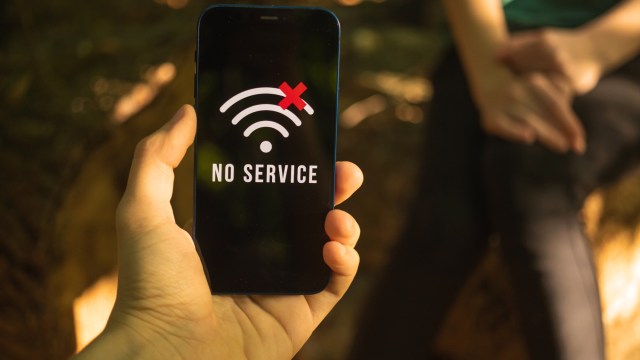
Starlink has taken a big step forward in the battle to combat so-called cellular ‘dead zones’ where a phone signal can’t be obtained, using satellites to provide the necessary coverage for areas where a mobile network can’t reach.
Over in the US, the Federal Communications Commission (FCC) has given the thumbs-up to Starlink to use its satellites in a partnership with T-Mobile, giving users on that network coverage for remote locations.
The Verge reports that this direct-to-cell satellite service is the first such collaboration between a satellite operator and cellular network to be green-lit by the FCC.
The FCC said: “The Commission recognized that satellite-to-device connectivity can support critical public interest benefits, including ubiquitous connectivity, access to 911 service from remote areas, technological advancement, and innovative spectrum use.”
Starlink and T-Mobile already got temporary clearance in October, The Verge points out, to provide service to those hit by Hurricane Helene. However, this is the FCC granting Starlink a full US commercial license for its direct-to-cell program.
Starlink first tested this satellite solution back in January 2024, just after the initial satellites were launched by SpaceX.
Ben Longmier, Senior Director of Satellite Engineering at SpaceX, further observed that: “Any telco that signs up with Starlink Direct to Cell can completely eliminate cellular dead zones for their entire country for text and data services.”
Initially, just basic text capabilities are going to be provided, and support for data or voice isn’t expected to debut until next year.
Analysis: First texts – then video chats?

Bringing cellular (and internet) coverage to remote areas where there’s no phone signal at all is a challenging problem, so it’s good to see what appears to be a viable solution moving forward to be commercially deployed.
While, as noted, this direct-to-cell satellite system can deliver text and internet services in areas not served by terrestrial cellular coverage, there’s some controversy as to where to draw the line in terms of extending this mission to facilitate real-time voice or even video calls.
Obviously, that’s ramping up the stakes bandwidth-wise, and The Verge notes that this would mean SpaceX going above current power flux-density limits – which mobile operators (AT&T and Verizon) in the US are concerned could interfere with their existing network coverage.
Meanwhile, in a similar vein on the other side of the Atlantic, there’s been a collaboration between Deutsche Telekom, Qualcomm, and Skylo, combining a mobile operator’s cellular network (Deutsche Telekom) with a satellite network (Skylo) and sending a text this way – for the first time ever in Europe (using a Qualcomm Snapdragon 5G modem).
Phone Arena noticed this development and informs us that it’s just a proof-of-concept at this point, but it’s a solid step forward towards commercializing the same kind of satellite service for remote areas in Europe. The report points out another challenge, aside from providing enough bandwidth for heavier duty services like voice or video – namely the weather and its interference with satellite coverage.
You might also like…
Starlink and T-Mobile satellite partnership approved by FCC in the US First green-lit collaboration between satellite operator and cellular network Europe sees a similar test between Deutsche Telekom and Skylo Starlink has taken a big step forward in the battle to combat so-called cellular ‘dead zones’ where a phone signal…
