Tech startup connects to two satellites in orbit from Earth via Bluetooth — using off the shelf chip and a software update

Most of us use Bluetooth every day for tasks such as streaming audio, sharing files, connecting to devices, and making hands-free calls.
That’s because Bluetooth technology is typically designed for short-range communication between devices, and while the first generations had a very limited range of up to 30 feet, it can now achieve over 200 feet in real-world conditions.
Tech startup Hubble Network, which has secured a $20 million Series A funding round from the likes of Transpose Platform and Y Combinator, has managed to stretch that even further, making a Bluetooth connection from Earth to space.
Building a network of satellites
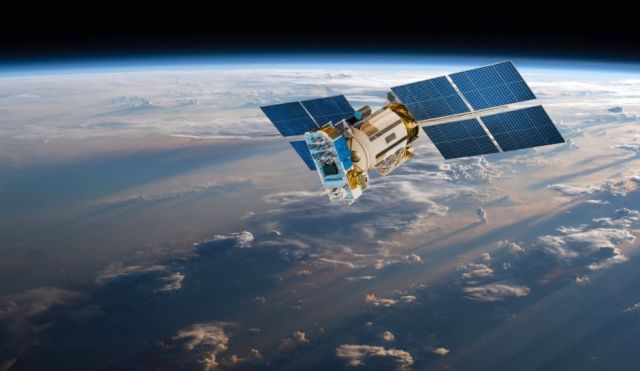
As the Hubble Network Blog explains, “On March 4, 2024, from the grounds of Vandenberg Space Force Base, Hubble successfully launched its first two satellites. These aren’t just any satellites; they’ve successfully reached their orbits and managed to receive signals [from Earth] from a simple 3.5mm Bluetooth chip over an astonishing distance of 600 km.” Yes, that’s not a typo. 600 kilometers, which is roughly the same distance from New York City to Boston, or London to Paris.
This development is significant because traditional networks often lag in delivering effective coverage in remote areas, consume too much power, and are prohibitively costly to operate at a global scale. Hubble’s approach directly tackles these problems by enabling standard Bluetooth devices to connect to their satellite network without cellular reception simply with a software update.
Hubble’s global satellite network, which any Bluetooth enabled device can connect to, reportedly delivers global coverage with 20 times less battery consumption and operating costs reduced by a factor of 50. The startup says it can be used for variety of tasks such as wildfire detection, pet, child and elderly safety, environmental monitoring, fleet management, and container and pallet tracking.
Ben Wild, co-founder and CTO of Hubble Network says, “Our innovative approach allows existing Bluetooth-enabled devices to be retrofitted to transmit data to the Hubble Network without any hardware modifications, ushering in a new era of connectivity.”
With nearly five billion Bluetooth devices sold annually, the impact of this breakthrough could be huge. Although the company only has two satellites in orbit at the moment, it plans to add two more by early next year, with 32 additional satellites to follow by Q1 2026.
More from TechRadar Pro
Most of us use Bluetooth every day for tasks such as streaming audio, sharing files, connecting to devices, and making hands-free calls. That’s because Bluetooth technology is typically designed for short-range communication between devices, and while the first generations had a very limited range of up to 30 feet, it…
