Talk about hard labor – a US prisoner complains he has to rely on floppy disks for appeal documents, and there’s a bizarre reason why

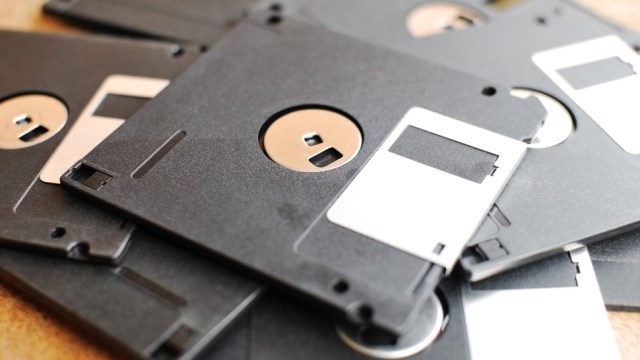
- NJ prisoners get only twenty 1.44MB floppy disks, barely enough for appeals
- Lawyers must transfer files from flash drives back to floppy disks, complicating the process
- Authorities say the ban on flash drives is a matter of security
A prisoner at New Jersey State Prison has publically voiced frustration at being forced to rely on floppy disks for critical legal work.
The US state’s prison system restricts inmates to using floppy disks, each with a maximum capacity of 1.44MB, but each prisoner is allowed 20 floppy disks, a limit which barely matches the needs of complex legal correspondence.
Writing for the Prison Journalism Project, Jorge Luis Alvarado said, “Inside New Jersey State Prison, it’s like 1985, where we rely on out-of-date word processors, electric typewriters, and floppy disks that are going extinct in the free world.”
Alvarado explains even a single legal brief can exceed this size, requiring the use of multiple disks to store one document.
Such a process becomes cumbersome, and with the added risk of corruption, the format introduces real uncertainty into how files are preserved.
In addition, since major companies like Sony stopped manufacturing floppies about 15 years ago, their scarcity only adds to the impracticality of the rule.
The reliance on floppy media seems especially arbitrary, given that they have only about a year of lifespan left and that flash drives became widely adopted more than two decades ago.
In the early 2000s, USB drives quickly eclipsed floppies, offering both speed and durability.
Today, they are inexpensive, compact, and reliable, with capacity far surpassing anything the floppy era could provide.
Even consumer SSD options now span into the terabyte range, with the largest SSD models rivaling enterprise storage.
Devices once labeled the fastest SSD can manage transfers that dwarf anything possible with legacy media.
However, authorities argue that the ban on flash drives is a matter of security, suggesting they could be misused within prison environments.
While this position explains the reluctance to modernize, it leaves prisoners disadvantaged when dealing with legal matters where technology should serve as a bridge, not a barrier.
Alvarado describes a process where lawyers must copy digital files onto flash drives, only to have them transferred back to floppy disks through a single library computer.
Delays are inevitable, with access often taking days at a time.
Some researchers estimate that between four and six percent of those incarcerated in the United States may be innocent.
Therefore, even if a fraction of these individuals face barriers to appeals due to outdated technology, the issue extends far beyond mere inconvenience.
Via Toms Hardware
You might also like

NJ prisoners get only twenty 1.44MB floppy disks, barely enough for appeals Lawyers must transfer files from flash drives back to floppy disks, complicating the process Authorities say the ban on flash drives is a matter of security A prisoner at New Jersey State Prison has publically voiced frustration at…
