Solar Storms are disrupting farmer GPS systems during critical planting time

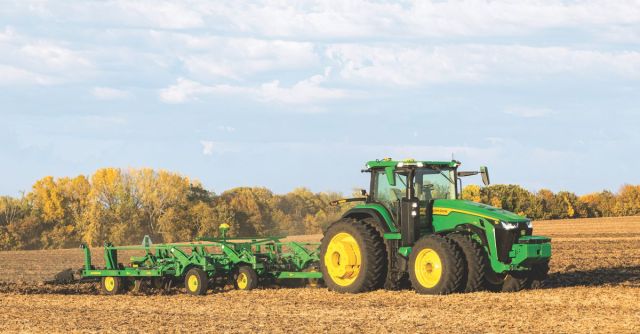
The solar storms that have been wowing people with the Northern Lights across the United States the last two nights have also been disrupting GPS satellites, crippling some Midwest farmers’ operations, reports 404 Media. The issues have forced many to stop planting just as a crucial planting deadline for corn farmers approaches.
The storms reportedly knocked “some GPS systems” offline temporarily, which messed with the accuracy of “Real-Time Kinematic” (RTK) systems. Tractors from John Deere and other brands use RTK for “centimeter-level positional accuracy” when carrying out farming work like crop-planting or fertilizing, 404 Media writes.
The “extremely compromised” systems caused “drastic shifts in the field and even some heading changes” for those who continued planting during the outages, according to a warning from Kansas and Nebraska John Deere dealer Landmark Implement over the weekend. Landmark said that planted rows won’t be where AutoPath, a tractor guidance system, thinks they are later when it’s time to tend to them, and that it could be difficult or impossible to use it in fields that were planted while GPS systems were compromised.
While the solar storms, which are some of the worst to have hit the Earth in over two decades according to the National Oceanic and Atmospheric Administration (NOAA), are expected to subside soon, it comes at a critical time for corn crops. Willie Cade of right-to-repair advocate group Repair.org told 404 Media that May 15th “is a critical date to get corn planted,” calling it “huge” if corn farmers can’t get their crops planted by then.
Organic farmer Tom Schwarz, who was also quoted in the story, said the solar storms halted their operations, and that now the weather forecast threatens to put off planting even further. His farm and others like it use RTK systems to plant crops right up to the edge of the lanes tractors use to drive between them, and if GPS was inaccurate while planting happens, they risk destroying crops later, because human drivers “can’t steer fast enough or well enough” to keep tractors between the rows.
On a broad scale, the farming that’s done today is heavily reliant on high-tech, often heavily automated tractors and other equipment. When they fail, farmers often have no recourse because the entire life cycle of their crops is wrapped up in the tech. That reliance is part of why there’s so much momentum behind right-to-repair laws now, as farmers want to be able to fix their tractors when they break, rather than be beholden to manufacturers for it.
Geomagnetic storms like the ones affecting farmers this weekend are created when plasma and magnetized particles are flung out of the sun in what’s called coronal mass ejections. The NOAA rates them on an increasingly severe scale from G1 to G5. The storm that’s been hitting the Earth the last couple of days has reached G5.
The NOAA says “severe to extreme” solar storms of G4 or higher could occur again today. So far, the storms haven’t led to widespread reports of solar storm-related disruptions, though Starlink has experienced some “degraded performance,” as Reuters writes, while some on Reddit reported issues with flight systems or HAM radio transmissions.
The solar storms that have been wowing people with the Northern Lights across the United States the last two nights have also been disrupting GPS satellites, crippling some Midwest farmers’ operations, reports 404 Media. The issues have forced many to stop planting just as a crucial planting deadline for corn…
