Samsung reveals major step forward in data center memory supply

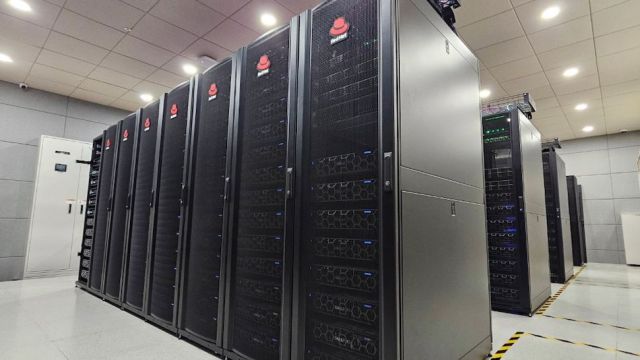
Samsung has confirmed that it has successfully verified Compute Express Link (CXL) memory operations in a real user environment with open-source software provider Red Hat.
The tech giant says that advancements in generative AI, autonomous driving, and in-memory databases have all increased data throughput and memory requirements, creating demand for greater memory bandwidth and capacity to grow.
CXL promises to tackle some of the current limitations faced by data centers, including speed, latency, and expandability.
Samsung verifies CXL for data centers
CXL is a unified standard that connects processors like CPUs, GPUs, and memory devices through a common PCIe interface, but at lower latency and higher bandwidth than before.
Samsung Electronics’ EVP for Memory Product Planning, Yongcheol Bae, said: “Our CXL partnership with Red Hat is an exemplary case of collaboration between advanced software and hardware, which will enrich and accelerate the CXL ecosystem as a whole.”
Samsung’s CXL memory has, in this instance, been optimized for Red Hat Enterprise Linux (RHEL) 9.3 and verified memory recognition, read and write operations in Red Hat’s KVM and Podman environments.
Samsung and Red Hat are now working to produce a “RHEL 9.3 CXL Memory Enabling Guide” to help users utilize Samsung’s CXL memory on RHEL 9.3 to build high-performance computing systems.
Marjet Andriesse, SVP and Head of Red Hat Asia Pacific, said: “This is an important milestone in the integration of hardware and software to build an open-source ecosystem for next-generation memory development.”
Andriesse added that the move is significant because it “opens up the applicability of the CXL Memory Expander to IaaS and PaaS-based software provided by Red Hat.”
The CXL Consortium now has an extensive list of founding members, board members, and contributing members, but the technology is one that was primarily spearheaded by Intel. CXL 1.0 and 2.0 are based on PCIe 5.0, but 2022 saw the addition of CXL 3.0, which uses PCIe 6.0.
In mid-2021, Samsung unveiled what it called the “industry’s first memory module supporting the new CXL interconnect standard” – one with AI and HPC workloads in data centers in mind. However, the subsequent 18 months have seen significant advancements in artificial intelligence, underlining the company’s commitment to progressing hardware at the same rate.
More from TechRadar Pro
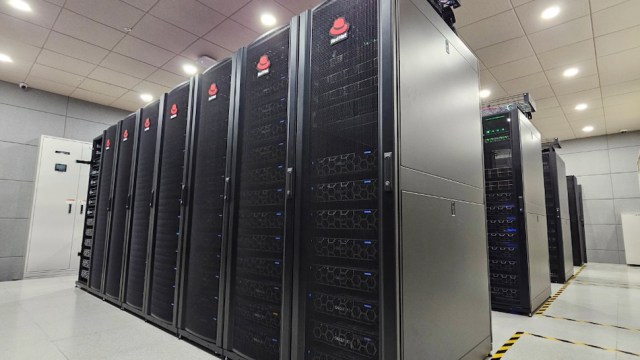
Samsung has confirmed that it has successfully verified Compute Express Link (CXL) memory operations in a real user environment with open-source software provider Red Hat. The tech giant says that advancements in generative AI, autonomous driving, and in-memory databases have all increased data throughput and memory requirements, creating demand for…
