Roku’s first OLED TVs are up to $400 off, starting at $699

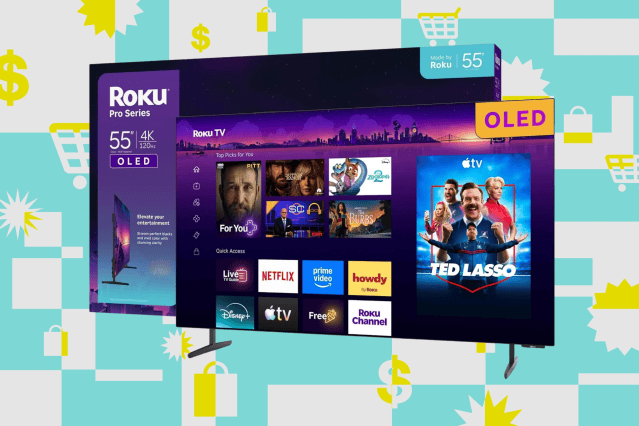
Roku recently launched its first-ever OLED TVs. The $999 starting price was already impressive for the 55-inch Pro Series model that has a 120Hz refresh rate OLED panel (with four HDMI 2.1 ports and support for Dolby Vision and HDR 10 Plus). The price is even lower right now at Amazon when you enter the code ROKUOLED300 at checkout. It knocks a clean $300 off, as the code indicates, making this the most affordable modern 55-inch OLED you can get right now.
If you’re more of a 65-inch TV kind of person, you’re in luck, as there’s a code that knocks $400 off that model to make it just $799 at checkout. Enter the code ROKUOLED400 to bring the $1,299 65-inch Pro Series down to $799. We haven’t had a chance to test either model, but they seem respectable if you want great picture quality without breaking the bank.
Given that these are Roku TVs, the company’s software is built-in, negating the need to stick a streaming device into one of its HDMI ports, unless you prefer hardware from other brands. The Pro Series includes a backlit Roku remote, and it supports auto low latency mode, and has variable refresh rate (AMD FreeSync Premium) for gaming. There’s a pricier Pro Series LX coming in October starting at $1,299 that claims to be twice as bright as the Pro Series, with a reflection-reducing polarizer and 144Hz refresh rate.
Roku recently launched its first-ever OLED TVs. The $999 starting price was already impressive for the 55-inch Pro Series model that has a 120Hz refresh rate OLED panel (with four HDMI 2.1 ports and support for Dolby Vision and HDR 10 Plus). The price is even lower right now at…
