Revolutionary Wi-Fi tech that can cover two miles and work on coin batteries for months hits key milestone — HaLow gets first hardware after an eight year of wait but rivals abound

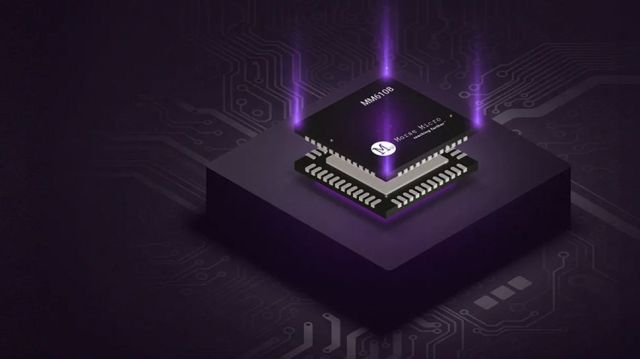
HaLow is a technology we’ve covered a few times over the years, starting in 2016, when we reported on what was a new extension of Wi-Fi aimed specifically at the Internet of Things.
Eight years on, and it seems the technology is finally reaching fruition after Morse Micro, recently demonstrated the world’s first live application of Wi-Fi HaLow, 802.11ah with a 3-kilometer reach, setting a record for a long-range video call that extended almost two miles.
HaLow is a low-power, long-reach version of Wi-Fi based on the IEEE 802.11ah standard. It operates in the sub-GHz range (850-950 MHz) which allows it to penetrate obstacles, walls and buildings, and lets it connect larger numbers of IoT devices at much longer distances and using far lower power. This equates to an impressive 10x the range, 100x the coverage area, and 1000x the volume of traditional Wi-Fi technologies.
Three kilometer reach
Morse Micro’s demonstration, facilitated by its own a system-on-chip (SoC), took place in San Francisco’s Ocean Beach neighborhood, and showcased HaLow’s ability to reach long distances in challenging, real-world conditions. By the time the test hit three kilometers, the speed had dropped from 17Mbps at the 250m mark to 1Mbps, but it was still good enough to continue the call.
HaLow isn’t just about distance. The technology’s power-saving capabilities can extend battery life significantly. This could be a game-changer, especially for devices running on coin batteries, allowing them to function for months without a battery change.
“Our successful demo of Wi-Fi HaLow video call across three kilometers in a difficult, real-world urban environment is a major milestone for Wi-Fi connectivity, showcasing the wireless protocol’s incredible reach,” said Michael De Nil, co-founder and CEO of Morse Micro. “With its unparalleled range, exceptional low power consumption and superior throughput, Wi-Fi HaLow stands as the frontrunner in the IoT landscape.”
As undeniably impressive as this is, HaLow has some rivals, most notably LoRa/LoraWAN (Long Range) which also delivers low power, wide range, cost-effective connectivity and performs well over long, difficult terrains. There’s also NB-IoT (NarrowBand-Internet of Things) which is an extension of LTE that can deliver low bandwidth communication on licensed mobile networks.
More from TechRadar Pro
HaLow is a technology we’ve covered a few times over the years, starting in 2016, when we reported on what was a new extension of Wi-Fi aimed specifically at the Internet of Things. Eight years on, and it seems the technology is finally reaching fruition after Morse Micro, recently demonstrated…
