Researchers find that millions of HDMI cables could betray their owners by transmitting data to eavesdroppers — here is what you could do to avoid data leakage
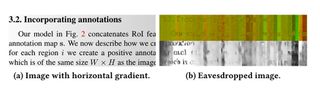
CRT monitors generate images by directing electron beams onto a phosphorescent screen, creating a pattern of light that forms the visible display. This process involves high-frequency signals that radiate from the monitor, which hackers found they could capture using specialized equipment. The shift to LED screens with HDMI cables made doing this much harder as digital signals are more complex and involve higher frequencies.
A study from a team of researchers at Universidad de la República Montevideo in Uruguay has demonstrated that, with the aid of AI, it’s possible to overcome these hurdles and eavesdrop on the signals once again.
Santiago Fernández, Emilio Martínez, Gabriel Varela, and Pablo Musé Federico Larroca published their findings on the arXiv preprint server, explaining how digital signals emitted from a computer’s HDMI cable can be captured and decoded to reproduce text on a computer screen.
TEMPEST
The research focused on the unintentional electromagnetic emissions, a phenomenon known as TEMPEST, which has historically been associated with analog video signals. Previous eavesdropping methods designed for analog signals were ineffective for digital displays, resulting in unclear images.
To address this, the researchers employed a deep learning approach to map the captured electromagnetic signals back to the original image. They framed the problem as an inverse one and trained a neural network to interpret the degraded signals. This method significantly improved the average Character Error Rate when reading text from the captured signals.
In their paper, the researchers highlight the importance of tuning the system to specific frequencies and creating training samples without the need for a real TEMPEST setup. Although it’s very unlikely anyone will use this method to eavesdrop on you – it’s governments and corporations that are at the most risk – you can protect yourself in a number of ways. These include using shielded cables, implementing physical barriers, positioning your monitor away from windows, and using signal filtering techniques.
More from TechRadar Pro

CRT monitors generate images by directing electron beams onto a phosphorescent screen, creating a pattern of light that forms the visible display. This process involves high-frequency signals that radiate from the monitor, which hackers found they could capture using specialized equipment. The shift to LED screens with HDMI cables made…
