When Pokémon TCG Pocket was first teased a few months back, it looked like yet another mobile app meant to capitalize on the physical card game’s recent wave of unexpected popularity. With Pokémon TCG Live already on the market, it was hard to suss out how The Pokémon Company envisioned Pocket fitting into the larger franchise. And while titles like Marvel Snap and Hearthstone have proven to be big hits, it wasn’t clear that Pocket would be able to appeal to newcomers and hardcore Pokémon fans alike.
Pokémon TCG Pocket wants to be a gateway to digital card collecting
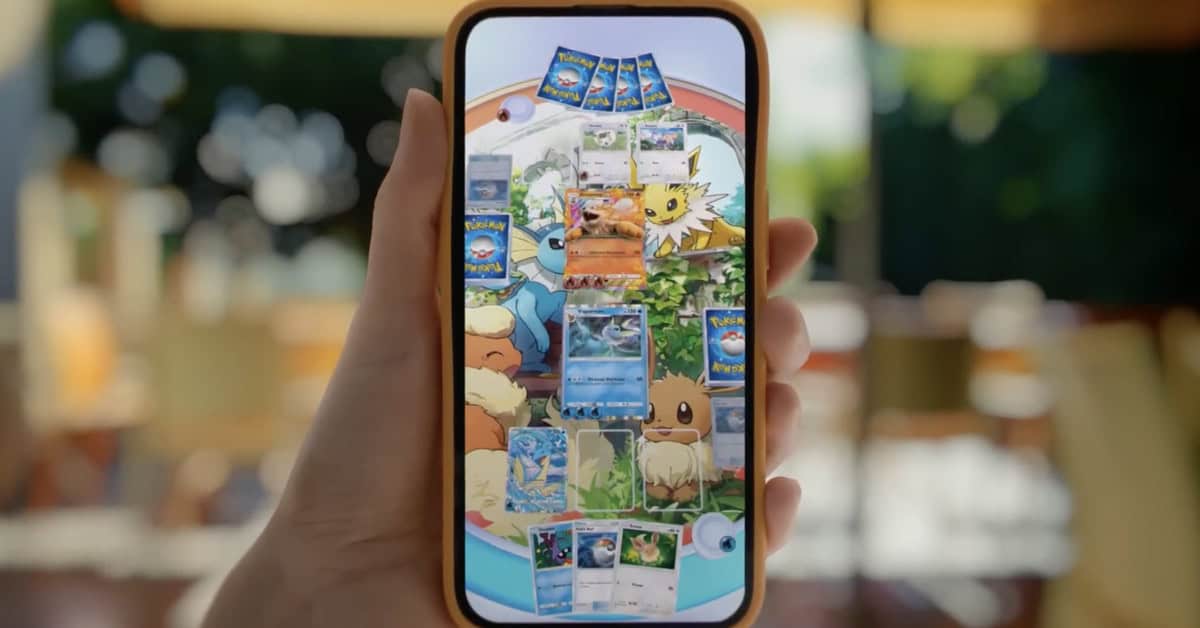
We’re still a few weeks out from Pokémon TCG Pocket’s general release. But during the hands-on time I recently spent testing the game out, it felt like a promising — if slightly daunting — attempt at reinventing the classic card collecting experience for a new generation of budding pokemaniacs. The battles are quicker, flashier, and clearly designed to be picked up with relative ease as you fill up digital binders with immaterial cards that look like the real thing.
At times, the game’s emphasis on making its virtual cards look and feel real makes it seem like The Pokémon Company’s foray into the NFT space. The big difference here, though, is that you can actually do stuff with Pokémon TCG Pocket’s collectibles besides staring at them on your phone.
At its core, Pokémon TCG Pocket is a game focused on giving people a new way of collecting cards, showing them off, and using them to battle other players in fast-paced matches. For free, players can log on every day to receive two booster packs containing five cards apiece and then show them off in customizable digital binders or specialized display boards. Like the physical card game, Pokémon TCG Pocket’s cards differ in rarity (indicated by a new diamond and star rarity system) and feature a range of increasingly elaborate illustrations from a variety of artists.
Rather than relying on different physical textures or holographic foil to convey a card’s value, though, Pokémon TCG introduces a number of new 3D effects to make rare pulls pop. Genetic Apex — the first expansion players will be able to access at launch — features over 200 cards, many of which reuse art from previously released physical sets. But the pulls most players will likely be keen on hunting for are the new immersive cards, which allow you to essentially dive into their art in order to see details that wouldn’t normally be visible.
Because collecting (rather than battling) is what initially draws a lot of people to the physical card game, Creatures Inc. and game developer DeNa wanted that to be the game’s main selling point, particularly for folks who haven’t been tapped into the franchise for a while.
“There’s a kind of a wide audience out there of people who, in general, maybe aren’t interacting with Pokemon cards right now,” Creatures creative director Ryo Tsujikawa explained during a Q&A session. “That’s what we were thinking about with [Pocket] being in a game / app form — that we would be able to reach a wider audience including people who might have played when they were younger.”
Though Pocket shares a number of similarities with Pokémon TCG Live — another mobile game where users can redeem codes from physical packs to receive digital copies — the idea for an app focused entirely on digital cards began coming into focus right around the time Pokémon Go was first released. Executive corporate officer Keita Hirobe said that making the game more approachable and keeping its barrier to entry low were two of The Pokémon Company’s biggest priorities during development. And for those simply looking for a casual way to dip a toe into the Pokémon waters, it can be as simple as opening the app and seeing what the RNG has in store.
Ripping into a pack by sliding your finger across its top edge is actually a pretty satisfying experience, accompanied by a soft rumble intended to replicate the feel of tearing into a packet of foil stuffed with shiny bits of cardboard. The packs themselves (which aren’t guaranteed to contain rare cards like their physical counterparts) can be flipped over before you open them, giving you the choice of revealing the last (rarest) card first. And while you can reveal the cards one by one to build suspense, the game also allows you to tilt them while they’re still stacked in order to sneak a peek at their borders, which are one of the indicators of a card’s rarity.
Even though Pocket will give players two packs a day (one every 12 hours) for free, folks coming from the physical card game where booster packs contain 10 randomized cards may balk at the mobile pack’s five — a number that may change in the future. But for those looking to fill out their card-dexes more quickly, the game will also offer players the option to purchase Poké Gold — an in-game currency that can be used to buy more packs or reduce the countdown timer between receiving your free packs for the day. Bundles of Poké Gold start at 99 cents. Additionally, there will be an optional monthly Premium Pass $9.99 subscription that grants players a free third daily pack and access to promotional cards.
Though Poké Gold and subscription sales sound like key components to The Pokémon Company’s plan for Pocket’s profitability, from what I’ve seen, there’s still quite a bit available to players who don’t spend. You can start learning the basics of the game’s new streamlined battle system using premade Rental Decks and fighting against computer opponents. And once you have enough cards of your own, you can start building customized decks to use against other players in the game’s online mode.
Whereas the traditional Pokémon TCG involves two people facing off with decks consisting of 60 cards each, Pocket streamlines things by making decks much smaller and simplifying battle mechanics in order to keep things moving at a brisk pace. Damage is now automatically calculated by the game’s computer, and the first player to earn three points by knocking out their opponent’s pokémon (regular pokémon count for one point while EX monsters count for two) wins.
Though Tsujikawa stressed that Pocket’s development team is mainly focusing on the game’s collection aspect at launch, they understand that more competitive play is something users may be interested in as new expansions are introduced. There are no concrete plans just yet for Pocket to become a new fixture at the Pokémon World Championships, but it’s not hard to imagine the app fitting in right alongside Pokémon Go and the physical card game.
That could be necessary for giving the game some longevity once the initial lure of pure collecting wears off. And when Pokémon TCG Pocket launches on October 30th, that might be enough to make the app a hit.
When Pokémon TCG Pocket was first teased a few months back, it looked like yet another mobile app meant to capitalize on the physical card game’s recent wave of unexpected popularity. With Pokémon TCG Live already on the market, it was hard to suss out how The Pokémon Company envisioned…
