Forget the fact that most autonomous vehicles operate each day safely, anonymously, and without fanfare. There are hundreds in operation today in California, Arizona, Texas, and elsewhere, and the numbers are only going to increase. But when they do make mistakes, people tend to notice. Numerous public opinion polls have shown declining support for autonomous vehicles (AV) over the years and a rise in outright hostility toward the technology.
People are afraid of self-driving cars — can the industry change that?

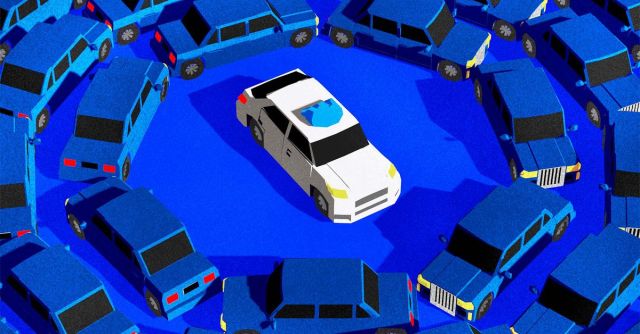
The autonomous vehicle industry’s main lobbying group — yes, of course it has one — is intent on reversing this trend before it gets much worse. The Autonomous Vehicle Industry Association (AVIA) represents Cruise, Waymo, Zoox, Motional, and others as well as the US Chamber of Commerce and the Alliance for Automotive Innovation, which lobbies for the auto industry. Today, it released something it’s calling its “TRUST Principles,” which is basically an action plan for dealing with these negative headlines and spiraling poll numbers.
“With today’s announcement, the AV industry is sending a message: we believe that public trust in autonomous vehicles is essential to their acceptance and that the AV industry must earn and maintain that trust,” Jeff Farrah, the group’s CEO, said in a statement.
The group is calling for a number of changes to the way AV operators interact with the public, including more community engagement and public education efforts as well as the creation of working groups to address some of the main concerns. For example, AVIA says it will create a “national council of law enforcement officials, first responders, and industry representatives” to improve communication between AV operators and emergency responders.
People have grown increasingly unnerved by the prospect of self-driving cars taking over the streets thanks to a lack of urgency in the industry toward building public trust. A lot of operators assumed that people would be thrilled by the futuristic concept of human-free driving and the promise of earning back lost time to driving, and that trust could come later. But several recent incidents have thrown that assumption into stark relief.
“We believe that public trust in autonomous vehicles is essential to their acceptance”
Last October, a driverless Cruise vehicle struck a pedestrian in San Francisco and then caused further injury by attempting to pull over to the curb with her still trapped underneath. California regulators accused Cruise, which is backed by GM, of withholding video footage showing the incident and suspended its operating license. The company has recently said it will redeploy vehicles in Texas — but only those that are manually driven with safety workers.
There have also been numerous incidents of driverless Waymo and Cruise vehicles blocking intersections, obstructing emergency vehicles, or generally causing chaos in the streets. In February, a driverless Waymo vehicle was vandalized and ultimately set on fire by a crowd of revelers in San Francisco’s Chinatown.
a:hover]:text-gray-63 [&>a:hover]:shadow-underline-black dark:[&>a:hover]:text-gray-bd dark:[&>a:hover]:shadow-underline-gray [&>a]:shadow-underline-gray-63 dark:[&>a]:text-gray-bd dark:[&>a]:shadow-underline-gray”>Photo by Mario Tama / Getty Images
a:hover]:text-gray-63 [&>a:hover]:shadow-underline-black dark:[&>a:hover]:text-gray-bd dark:[&>a:hover]:shadow-underline-gray [&>a]:shadow-underline-gray-63 dark:[&>a]:text-gray-bd dark:[&>a]:shadow-underline-gray”>Photo by Mario Tama / Getty Images
Running parallel to all of this is Tesla and the company’s ongoing efforts to deploy its Full Self-Driving (FSD) driver-assist system. Tesla vehicles with FSD are not autonomous in the way that Waymo and Cruise vehicles are; they still require a human driver to pay attention to the road at all times during operation.
But to most people, it’s a distinction without a difference. When a Tesla vehicle is captured behaving erratically or when there’s a crash causing injuries or fatalities, many people tend to blame all autonomous vehicles — despite the absence of any real autonomous Teslas on the road.
Tesla is not a member of AVIA, and the group often goes out of its way to draw a distinction between its members and driver-assist systems like Tesla’s FSD. But Elon Musk has said he plans to unveil a robotaxi later this year, which is sure to further muddy the waters of the public’s perceptions of autonomous vehicles.
Which is to say, AVIA is likely going to have a lot of work still to come if it wants to reverse the trend of declining public trust. Moreover, any effort to build and sustain public trust in autonomous vehicles needs to reckon with the way they are currently perceived — not with how the AV operators and its lobbyists may want them to be perceived.
Forget the fact that most autonomous vehicles operate each day safely, anonymously, and without fanfare. There are hundreds in operation today in California, Arizona, Texas, and elsewhere, and the numbers are only going to increase. But when they do make mistakes, people tend to notice. Numerous public opinion polls have…
