Nvidia’s RTX 5090 power connectors are melting
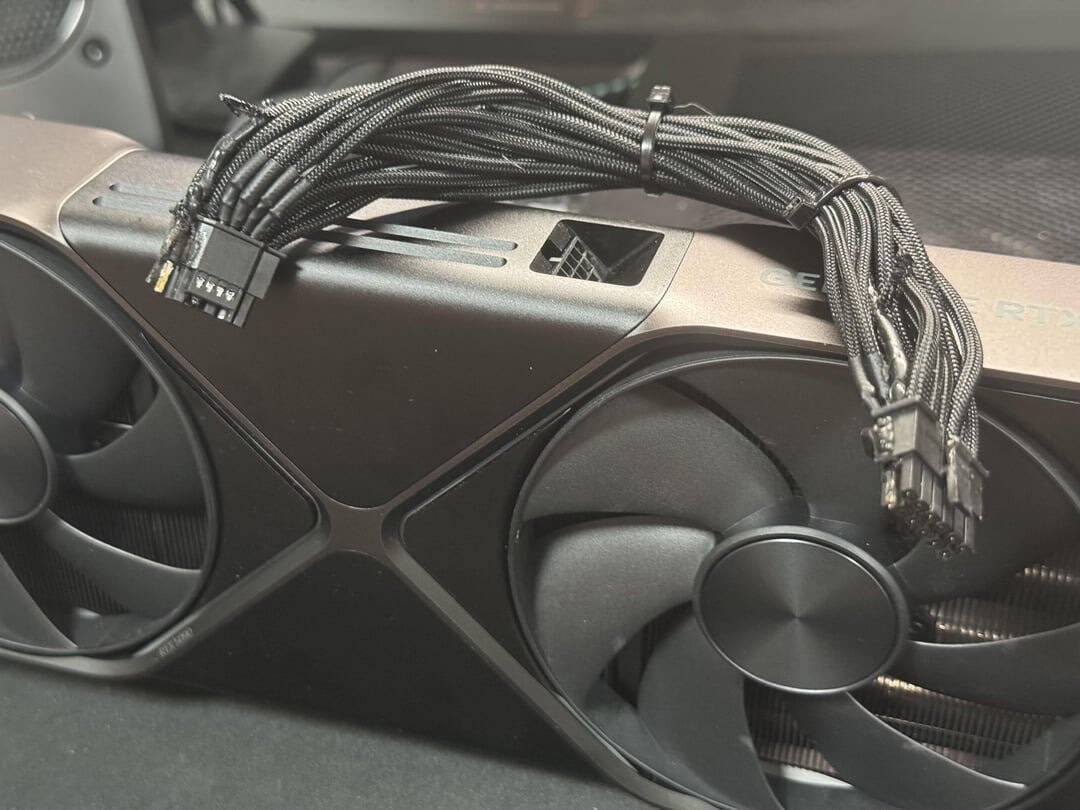
Ah shit, here we go again. Two owners of Nvidia’s new RTX 5090 Founders Edition GPUs have reported melted power connectors and damage to their PSUs. The images look identical to reports of RTX 4090 power cables burning or melting from two years ago. Nvidia blamed the issue on people not properly plugging the 12VHPWR power connection in fully and the PCI standards body blamed Nvidia.
A Reddit poster upgraded from an RTX 4090 to an RTX 5090 and noticed “a burning smell playing Battlefield 5,” before turning off their PC and finding the damage. The images show burnt plastic at both the PSU end of the power connector and the part that connects directly to the GPU. The cable is one from MODDIY, a popular manufacturer of custom cables, and the poster claims it was “securely fastened and clicked on both sides (GPU and PSU).”
While it’s tempting to blame the MODDIY cable, Spanish YouTuber Toro Tocho has experienced the same burnt cable (both at the GPU and PSU ends) with an RTX 5090 Founders Edition while using a cable supplied by PSU manufacturer FSP. Plastic has also melted into the PCIe 5.0 power connector on the power supply.
Nvidia originally introduced the 12VHPWR power connector on its RTX 40-series GPUs, and power supplies also debuted to support the new standard. The RTX 4090 Founders Edition was able to draw 450 watts over the 12VHPWR connector, while the new RTX 5090 draws up to 575 watts over a cable that’s rated up to 600 watts. After early issues with RTX 4090 connectors melting, PCI-SIG, the standards organization responsible for the 12VHPWR connector, has now updated it to a new 12V-2×6 connector on the GPU side and in some cases the PSU side, too.
The 12V-2×6 connector has shorter sensing pins and longer conductor terminals, to improve reliability. “This might not sound like a huge difference, but it matters in ensuring that the power cable has been properly connected to whatever device is going to be pulling power from your system’s power supply,” explains Corsair.
Nvidia uses the 12V-2×6 connector on its RTX 50-series GPUs, but you can still use existing 12VHPWR cables. “To be clear, this is not a new cable, it is an updated change to the pins in the socket, which is referred to as 12V-2×6,” says Corsair. PSU manufacturers like Corsair and MSI have adopted colored pins on their 12VHPWR cables so that if you can still see the yellow or grey pins it means the connector isn’t seated properly.
While Intel and AMD are both members of the PCI-SIG group that helped develop the 12VHPWR power connector, only Nvidia has adopted the standard so far. Even AMD’s upcoming Radeon RX 9070-series are using existing 8-pin PCIe connections instead. AMD even suggested the 12VHPWR connector was a fire hazard in late 2022, when the company’s gaming marketing director Sasa Marinkovic tweeted “Stay safe this holiday season” alongside a picture of 8-pin connectors.
12VHPWR has been branded a “dumpster fire,” thanks to design oversights that make it relatively easy for end users to not properly connect the cable securely. Cablemod was also forced to recall its 12VHPWR GPU power adapters last year after reports of melted adapters.
We’ve reached out to Nvidia to comment on these latest reports of RTX 5090 power connector issues, but the company did not respond in time for publication.
Ah shit, here we go again. Two owners of Nvidia’s new RTX 5090 Founders Edition GPUs have reported melted power connectors and damage to their PSUs. The images look identical to reports of RTX 4090 power cables burning or melting from two years ago. Nvidia blamed the issue on people…
