New OLED pixel breakthrough could make TVs, phones, watches and more much more energy efficient – and brighter

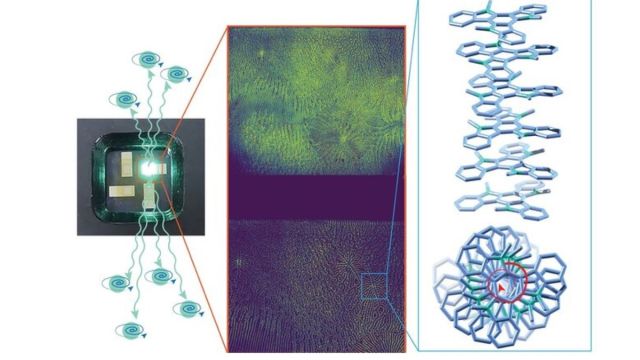
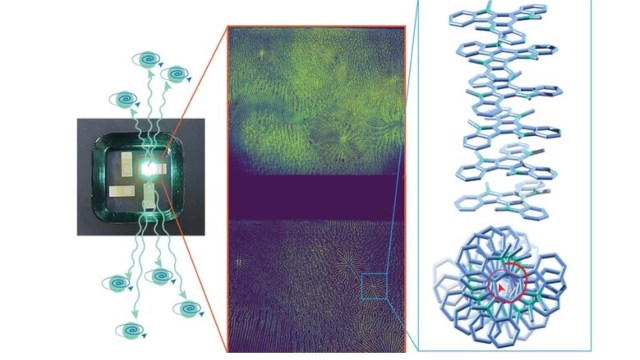
- Chiral semiconductors use a few tricks from Mother Nature
- The same brightness with much less energy usage
- Big implications for future computers as well as displays
A breakthrough new OLED technology could mean smartwatches with longer battery life, more energy-efficient TVs, and even brighter displays all around.
The breakthrough comes from researchers at the University of Cambridge and the Eindhoven University of Technology, and it revolves around what are called chiral semiconductors.
The research shows that these semiconductors can deliver “record-breaking” brightness and efficiency, and that could be a really big deal for any device with a display from the smallest smartwatch to the most massive OLED TV.
You may like
Here comes the science bit
One of the biggest energy drains in screens is the use of polarization layers, which in OLED TVs are generally used to reduce ambient light leakage, ensure the precise contrast the tech is known for. But this filtering process absorbs a lot of light – the firm American Polarizers Inc says that any polarizer absorbs more than 50% of the light going through it; that’s a lot of wasted energy.
This new technology is different because it does its own polarization.
According to Eindhoven University of Technology, the semiconductor that the researchers have developed emits circularly polarized light that “carries information about the ‘left or right-handedness’ of electrons.” Where normal silicon semiconductors are symmetrical, chiral molecules are left- or right-handed and mirror one another. The most famous example of that is in DNA, where they form the double helix we know so well.
Making chiral semiconductors has proven to be very difficult, but the researchers have found a way. Taking their inspiration from nature, the researchers created right- and left-handed spiral columns from stacks of semiconducting molecules. And those columns could transform the best OLED TVs, the best smartwatches, and everything in between.
According to Professor Sir Richard Friend from Cambridge University, who co-led the research, “Unlike rigid inorganic semiconductors, molecular materials offer incredible flexibility – allowing us to design entirely new structures, like chiral LEDs. It’s like working with a Lego set with every kind of shape you can imagine, rather than just rectangular bricks.”
The semiconductor the team has created is based on a material known as triazatruxene, or TAT for short. It self-assembles into a helix and electrons can spiral along it; the university describes it as being like the head of a screw.
Those structures can be incorporated into OLED panels, as co-first author Rituparno Chowdhury, from Cambridge’s Cavendish Laboratory, explains. “We’ve essentially reworked the standard recipe for making OLEDs like we have in our smartphones, allowing us to trap a chiral structure within a stable, non-crystallising matrix.”
The circularized, polarized LEDs demonstrated “record-breaking efficiency, brightness and polarization, making them the best of their kind,” Eindhoven University of Technology says.
We’re still years away from seeing this technology in any of the best TVs. But it’s a big breakthrough that’s relevant not just to TVs and other electronic items. According to Eindhoven University of Technology it also has big implications for quantum computing and what’s known as “spintronics”: a field of research that uses electrons’ spin to store and process information, and that one day may lead to faster, more secure computers.
You might also like
Chiral semiconductors use a few tricks from Mother Nature The same brightness with much less energy usage Big implications for future computers as well as displays A breakthrough new OLED technology could mean smartwatches with longer battery life, more energy-efficient TVs, and even brighter displays all around. The breakthrough comes…
