Move aside H100, Huawei wants Chinese hyperscalers to use its new Ascend AI chip instead of Nvidia’s workhorse, but it’s going to be tough

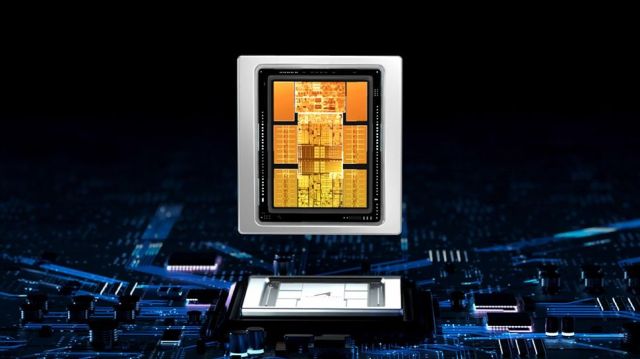
The US restrictions on exporting advanced hardware have severely impacted the AI ambitions of many Chinese firms, limiting their access to powerful chips necessary for training large-scale AI models and handling complex computations. Companies like ByteDance and Alibaba, which rely on high-end processors for their AI operations, have been forced to turn to lower-spec GPUs like Nvidia’s H20 or seek domestic alternatives.
However, not all Chinese firms are equally affected by the US clampdown. Huawei, which has been developing its own AI chipsets like the Ascend 910B, and the Ascend 910C (which the company has just begun sampling) has been enjoying some success positioning itself as a domestic alternative to Nvidia.
During his keynote speech at the recent Huawei Connect 2024 event, the company’s deputy chairman, Eric Xu Zhijun, outlined the company’s strategy of building AI systems “that are accessible to every person, home, and organization” and announced plans to heavily invest in AI ecosystem development over the next five years, according to the South China Morning Post.
Expanding its cloud services
Regarding the US sanctions, Xu admitted, “The reality is that US restrictions on AI chips for China are unlikely to be lifted any time soon.” However, he also emphasized that these challenges present an opportunity for Huawei to expand its cloud services and offer local alternatives for AI infrastructure.
Huawei’s cloud computing unit has become a crucial growth area, generating 55.29 billion yuan ($7.6 billion) in revenue in 2023, marking a 21.9% year-on-year increase. “Cloud services are the best option for many companies that are looking to incorporate AI into their business,” Xu said. “By providing Ascend and AI model services, we aim to give every company real-time access to on-demand AI computing power, and enable more efficient model training and inference.”
At the event, Huawei also announced upgrades to its AI stack, collaborations with partners like China Mobile for autonomous driving networks, and plans to develop AI solutions for the automotive sector.
More from TechRadar Pro
The US restrictions on exporting advanced hardware have severely impacted the AI ambitions of many Chinese firms, limiting their access to powerful chips necessary for training large-scale AI models and handling complex computations. Companies like ByteDance and Alibaba, which rely on high-end processors for their AI operations, have been forced…
