Most US teens say TikTok, Instagram and Snapchat aren’t hurting (or helping) their mental health

Most teens in the United States say that Instagram, TikTok and Snapchat aren't harming their mental health, though a slightly higher proportion report negative effects on their sleep and productivity, according to a new report from Pew Research. The report offers fresh insights into how teens perceive the effects of social media at a time when there are increasing calls to ban younger teens from social platforms altogether.
The report is based on a survey of 1,458 teens between the ages of 13 and 17. Teens were asked about their use of Instagram, Snapchat and TikTok and how those apps affect them. Pew also asked the teens' parents to weigh in.
Relatively few teens reported negative mental health effects, with 9 percent of Snapchat and TikTok users and 11 percent of Instagram users saying they thought the services had hurt their mental health. More teens reported negative effects on sleep and productivity, however, especially when it comes to use of TikTok. Thirty-seven percent of teens said their use of the app had hurt their sleep and 29 percent reported that it had affected their productivity. Even so, the majority of teens responded that the apps had "neither helped nor hurt" their mental health, sleep or productivity.
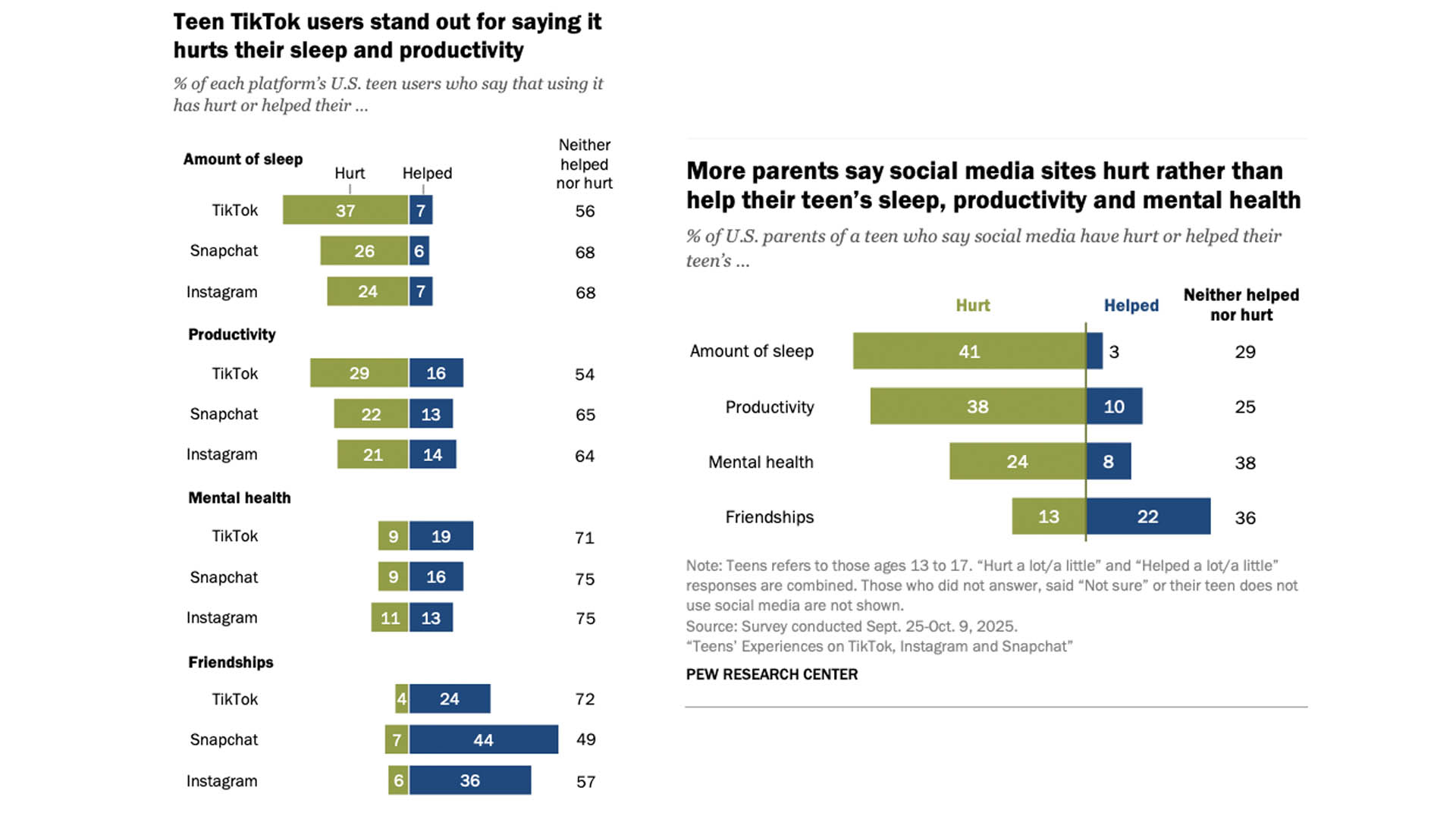
A significant number of teens did say that social media apps had helped their friendships, particularly Snapchat. At the same time, the app had a "somewhat higher rate" of bullying and harassment compared with the other services.
While the self-reported data is hardly a definitive answer to whether social media is harming teens, the numbers do offer a somewhat different narrative than the one that lawmakers, regulators and other critics have used to pursue social media bans and civil litigation against major companies. Meta, Snap and TikTok are all facing lawsuits that claim the platforms have purposefully created addicting features and enabled other harms to teen users,
Perhaps unsurprisingly, when researchers surveyed those same teens' parents, they had a more negative view of the apps' impact on their children. About four in ten parents said that social media hurts their kids' sleep and productivity and about a quarter thought it hurt their mental health. Forty-four percent of parents whose teens use TikTok said they thought their child was spending "too much" time in the app.
"The share of parents who say the same of Snapchat and Instagram is lower," the researchers note. "But the same pattern continues for both, with parents being more likely than teens to describe their teens’ use of these sites as excessive."
The report isn't the first time Pew has polled teens on their relationship with social media. Last year, a separate report found that teens were becoming more worried about social media, though they were less likely to say they had been negatively impacted on a personal level.
This article originally appeared on Engadget at https://www.engadget.com/social-media/most-us-teens-say-tiktok-instagram-and-snapchat-arent-hurting-or-helping-their-mental-health-140000912.html?src=rss
Most teens in the United States say that Instagram, TikTok and Snapchat aren't harming their mental health, though a slightly higher proportion report negative effects on their sleep and productivity, according to a new report from Pew Research. The report offers fresh insights into how teens perceive the effects of…
