Microsoft wants to move Windows fully to the cloud

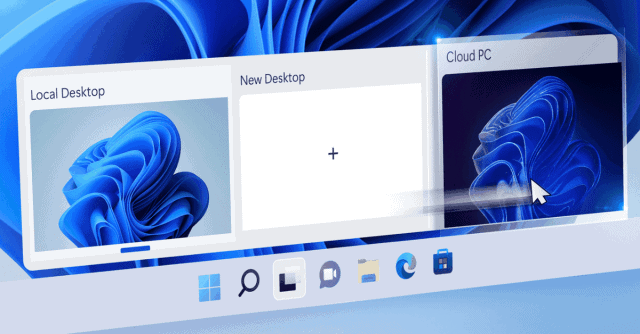
Microsoft has been increasingly moving Windows to the cloud on the commercial side with Windows 365, but the software giant also wants to do the same for consumers. In an internal “state of the business” Microsoft presentation from June 2022, Microsoft discuses building on “Windows 365 to enable a full Windows operating system streamed from the cloud to any device.”
The presentation has been revealed as part of the ongoing FTC v. Microsoft hearing, as it includes Microsoft’s overall gaming strategy and how that relates to other parts of the company’s businesses. Moving “Windows 11 increasingly to the cloud” is identified as a long-term opportunity in Microsoft’s “Modern Life” consumer space, including using “the power of the cloud and client to enable improved AI-powered services and full roaming of people’s digital experience.”
Windows 365 is a service that streams a full version of Windows to devices. So far, it’s been limited to just commercial customers, but Microsoft has been deeply integrating it into Windows 11 already. A future update will include Windows 365 Boot, which will enable Windows 11 devices to log directly in to a Cloud PC instance at boot instead of the local version of Windows. Windows 365 Switch is also built into Windows 11 to integrate Cloud PCs into the Task View (virtual desktops) feature.
The idea of moving Windows fully to the cloud for consumers is also presented alongside Microsoft’s need to invest in custom silicon partnerships. Microsoft has been doing some of this for its ARM-powered Surface Pro X devices. Bloomberg also reported in late 2020 that Microsoft was looking at designing its own ARM-based processors for servers and maybe even Surface devices. More recently we’ve heard Microsoft could be working on its own AI chips, too.
In another slide in the presentation, Microsoft mentions the need to “shore up Windows commercial value and respond to Chromebook threat” for its “Modern Work” priorities in its 2022 financial year. Long term opportunities on the commercial side include growing the usage of cloud PCs with Windows 365.
Microsoft has recently announced Windows Copilot, an AI-powered assistant for Windows 11. Windows Copilot sits at the side of Windows 11, and can summarize content you’re viewing in apps, rewrite it, or even explain it. Microsoft is currently testing this internally and promised to release it to testers in June before rolling it out more broadly to Windows 11 users.
Windows Copilot is part of a broader AI push for Windows. Microsoft is also working with AMD and Intel to enable more Windows features on next-gen CPUs. Intel and Microsoft have even hinted at Windows 12 in recent months, and Windows chief Panos Panay claimed at CES earlier this year that “AI is going to reinvent how you do everything on Windows.” All of this is part of Microsoft’s broad Windows ambition, detailed in its internal presentation, “to enable improved AI-powered services” in Windows.
Microsoft has been increasingly moving Windows to the cloud on the commercial side with Windows 365, but the software giant also wants to do the same for consumers. In an internal “state of the business” Microsoft presentation from June 2022, Microsoft discuses building on “Windows 365 to enable a full…
