Microsoft inches closer to glass storage breakthrough that could finally make ransomware attacks impossible in the data center and hyperscalers — but only Azure customers will benefit from it

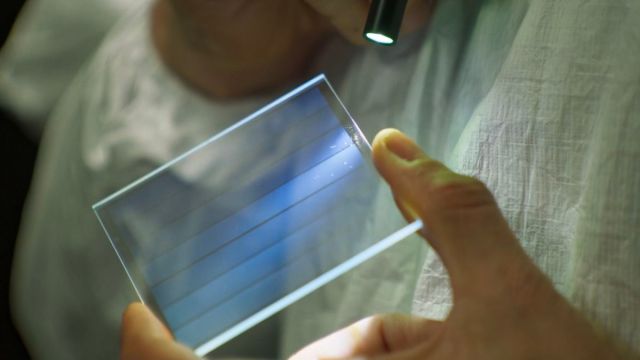
Microsoft has released a paper for the widely-anticipated glass-based storage technology it’s backing to replace the conventional technology that’s fitted into the best hard drives and best SSDs out there today.
The 16-page academic paper, presented at the 29th ACM Symposium on Operating Systems Principles, outlines the principles behind the company’s plans to build a longlasting and highly efficient storage systems.
Made from quartz glass, the storage units will be primed for use in the cloud – which means Azure customers will be the first to benefit, and likely the only ones to benefit so long as the technology is embryonic in nature.
Project Silica has been years in the making – with Microsoft teaing a prototype as far back as 2019. It’s since expanded on its work ahead of designing a system that works in a remarkably similar fashion to the ceramics-based storage that Cerabyte is building.
How does glass-based storage work?
“This paper presents Silica: the first cloud storage system for archival data underpinned by quartz glass, an extremely resilient media that allows data to be left in situ indefinitely,” the authors wrote.
“The hardware and software of Silica have been co-designed and co-optimized from the media up to the service level with sustainability as a primary objective.”
Data is written in a square glass platter with ultrafast femtosecond lasers through voxels. These are permanent modifications to the physical structure of the glass, and allow for multiple bits of data to be written in layers across the surface of the glass. These layers are then stacked vertically in their hundreds.
To read data, they employ polarization microscopy technology to image the platter, while the read drive scans sectors in a Z-pattern. The images are then sent to be processed and decoded, which leans on machine learning model to convert analog signals to digital data.
The medium is suitable for a host of sensitive industries including finance, scientific research and healthcare, due to the secure nature of archival glass storage – meaning organizations in these sectors may be able to withstand ransomware attacks targeting data being stored in the cloud.
Microsoft is currently exploring how best to configure the physical library in which the glass is stored, in light of Azure cloud storage usage patterns.
More from TechRadar Pro
Microsoft has released a paper for the widely-anticipated glass-based storage technology it’s backing to replace the conventional technology that’s fitted into the best hard drives and best SSDs out there today. The 16-page academic paper, presented at the 29th ACM Symposium on Operating Systems Principles, outlines the principles behind the…
