Microsoft dips toes into DPU with Azure Boost: Data Processing Unit market gets further validation as Microsoft seeks to disaggregate the data center

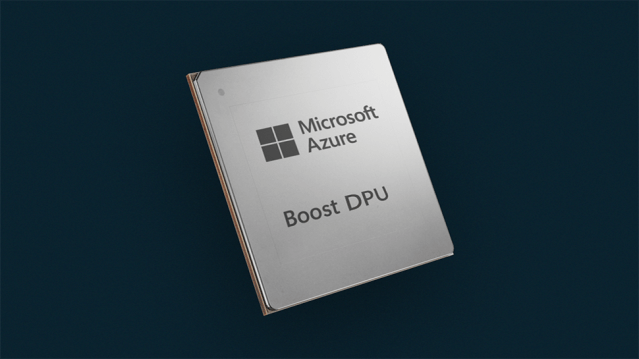
- Microsoft introduces Azure Boost DPU to handle data-centric workloads
- Specifically for Azure, integrates compute, storage, and networking
- Custom hardware-software design boosts efficiency, lowers power needs
Traditional CPUs excel at general-purpose tasks but struggle to manage multiplexed streams from millions of network connections. GPUs, while effective for AI computations, are similarly not well-suited to these specialized workloads. To address this, the Data Processing Unit (DPU) was developed as a new class of silicon to complement CPUs and GPUs in large-scale data centers and efficiently handle high-volume processes.
At its recent Ignite event, Microsoft announced the Azure Boost DPU, a new SoC created in-house specifically for Azure.
The company’s new DPU is designed to tackle challenges in cloud and AI environments, improve security, and efficiently manage large-scale workloads across networks. Its introduction marks a key step toward the disaggregation of the data center, a growing trend that separates compute, storage, and networking functions into specialized hardware to improve efficiency and scalability.
Hardware and software co-design
“As part of our comprehensive approach to optimizing Azure infrastructure, we are working hard to remove infrastructure constraints that stand in the way of delivering customer value – whether from performance bottlenecks or resource limitations,” said Pradeep Sindhu, Corporate VP Silicon at Microsoft.
“We are innovating at every layer of the stack, from silicon to systems to software, to enhance the security, efficiency, performance, agility, and scale of our infrastructure.”
Azure Boost DPU integrates high-speed Ethernet, PCIe interfaces, storage engines, and security features into a single, fully programmable SoC. Its custom hardware-software co-design delivers higher performance and lower power consumption, enabling the DPU to handle cloud storage workloads with three times less power and four times the performance of traditional CPUs, according to Microsoft.
By addressing key bottlenecks, Azure Boost DPU can meet the evolving demands of cloud and AI applications, while improving security through its tightly integrated data protection, and cryptography engines.
“Azure Boost DPU is the newest addition to our family of infrastructure enhancements through hardware innovation. As we continue to push the boundaries of what’s possible, we remain committed to delivering innovations that make our infrastructure more capable, efficient, and scalable to meet the evolving needs of our customers,” Sindhu said.
You might also like
Microsoft introduces Azure Boost DPU to handle data-centric workloads Specifically for Azure, integrates compute, storage, and networking Custom hardware-software design boosts efficiency, lowers power needs Traditional CPUs excel at general-purpose tasks but struggle to manage multiplexed streams from millions of network connections. GPUs, while effective for AI computations, are similarly…
