Meet Japan’s bright new idea for boosting EV range – wireless charging at traffic lights

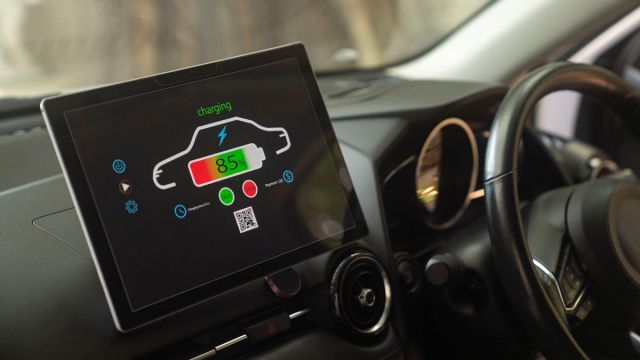
Researchers in Japan are preparing a pilot program that will see wireless charging technology embedded into the road surfaces in Kashiwa City, Chiba Prefecture, just outside of Tokyo.
As reported by University Journal (via Eletrek), the idea is that electric vehicles (fitted with the appropriate tech) waiting at traffic signals will be able to wirelessly receive a 10-second charge, which could add around 1km (or 0.6-miles) of range.
That may not sound like a lot, but if the trials are successful, it could see the technology implemented at all traffic signals in the city, which could equate to 10-20 miles of extra range, depending on how many red lights you hit.
According to Japan’s University Journal, the in-motion power supply system features vehicle-detection technology that minimizes the standby power wasted by always-on transmission coils in the road. What’s more, it’s an exercise in testing durability and toughness, as these bespoke coils will have to be able to withstand the weight of daily traffic.
Wireless charging for EVs is not a new concept, as BMW, Mercedes-Benz and Nissan have experimented with and offer the technology in some form, but it requires precision parking over a specific wireless charging plate – typically involving semi-autonomous driving functionality to get everything lined up perfectly. Previous tests have proved that is clunky and charging speeds are typically slow.
In the UK, the government has funded a trial in Nottingham that sees electric taxis wirelessly top up batteries while they wait at the taxi rank outside the city’s main railway station. Nine hackney cabs have been specially adapted so they charge up when parked in the rank.
Volvo launched a similar incentive in Gothenburg, aiming to charge electric XC40 taxis as they waited for a fare. Volvo says its wireless tech can handle charging speeds up to 50kW, which is almost five-times faster than some of the domestic wireless charging pads currently available.
But the University of Tokyo’s research, which is partnering with companies including Bridgestone, Mitsui Fudosan, ROHM, and NSK, appears to be the first where charging coils are physically built into the road surface, rather than relying on pads that sit atop the tarmac.
The Tokyo pilot program will run from this month until March next year, where the partners hope to prove the concept.
Wireless is the way
If successful, wireless charging could prove a huge boon for the EV industry and EV owners, as manufacturers could get away with fitting lighter and cheaper battery packs safe in the knowledge owners will receive small doses of charge as they go about their business, helping to bring the cost of entry down.
Similarly, the charging infrastructure wouldn’t just be limited to bulky charging stations that require a lot of land, are currently often busy or out of order. Owners would be able to top up while waiting at traffic lights or when parked in public spaces, without the need to trail wires.
What’s more, the prevalence of card-less payment systems in vehicles could also solve the payment issue, as the vehicle would be able to keep a running tab of all the minor top-ups and then settle the bill at the end of the month, for example.
However, despite tests from the likes of Stellantis (above), wireless charging technology is still very much in its infancy and the current systems available are clunky and slow. We still have some way to go before the ultimate goal of electric vehicles that charge as they drive along the road.
Also, imagine the road works we will all have to face as they tear up the roads to install all of infrastructure. Sheesh.
You might also like

Researchers in Japan are preparing a pilot program that will see wireless charging technology embedded into the road surfaces in Kashiwa City, Chiba Prefecture, just outside of Tokyo. As reported by University Journal (via Eletrek), the idea is that electric vehicles (fitted with the appropriate tech) waiting at traffic signals…
