Lotus Emeya sets new EV record by fast-charging faster than an iPhone

More so than ever, the EV business is a game of numbers: more range, more spacious ‘frunks’, faster acceleration times, bigger battery capacities and ever-increasing levels of ‘recycled’ or planet-friendly materials.
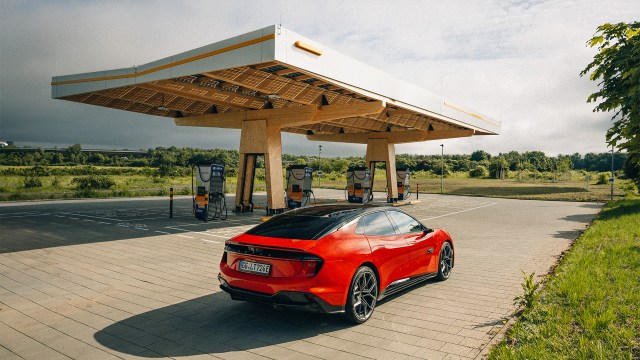
Another figure you can add to the growing list is charging times, and a new report from P3, a global consultancy company that specializes in EV charging times, found that the Lotus Emeya topped the list of rapid top-ups with a 10-80 per cent charge time of just 14 minutes. That’s pretty impressive considering an iPhone takes about half an hour to do the same.
During testing, P3 found that the large electric ‘hyper GT’ was capable of drawing a peak power of 402kW and average a staggering 331kW throughout the charging process – a figure that surpassed even Lotus’s original estimates for the model.
It is worth noting that consulting firm P3 hooked said Emeya up to a 400kW DC fast charger, which aren’t exactly widely available at the moment, while some of its closest rapid-charging rivals – including the Porsche Taycan – have been shown to charge from 10-80 per cent in just 16 minutes from a slower 350kW station.
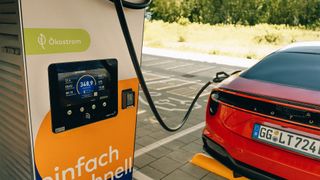
Regardless, EV companies are keen to brag about numbers and the recent Lotus achievement is a figure worth shouting about, especially given that company is arguably at the forefront of what is currently achievable with clever battery structure and cooling methods, and is only destined to innovate further.
During the comparison test, P3 found that the Emeya’s closest run rival was the Xpeng G9, which peaked at 320kW – a figure that matches that of the Porsche Taycan’s Performance Plus battery.
Analysis: The trickle-down effect of EV charging tech

There are a number of easy arguments for taking these recent charging speed feats with a pinch of salt – chief among those is the fact that the Lotus Emeya starts at $116,000 / £94,950 (or around AU$250,000).
Alongside the Porsche Taycan and other rapid-charging rivals, it’s clear that this technology is currently only reserved for the wealthiest customers, but that will change as the technology becomes cheaper.
The second caveat revolves around the availability of 350kW charging infrastructure, which is still fairly scant throughout the UK, Europe and North America.
That said, Lotus is pushing for ever-more powerful charging outlets that showcase the full potential of its potent 800-volt electrical architecture. Last year, the Chinese-owned company announced that it was developing and deploying chargers that are capable of 450kW outputs.
Should 300kW and above charging stations become more commonplace at motorway services and other busy traffic corridors, the notion that EVs will soon hit ‘refuel parity’ with internal combustion engine counterparts is not too far off.
The recent P3 study, for example, backs up the claim from Lotus that its Emeya can add almost 200-miles of range in as little as 10 minutes. That’s in quick-coffee-and-a-toilet-break territory, which is a far cry from the Netflix bingeing that many current EV owners report of.
You might also like
More so than ever, the EV business is a game of numbers: more range, more spacious ‘frunks’, faster acceleration times, bigger battery capacities and ever-increasing levels of ‘recycled’ or planet-friendly materials. Another figure you can add to the growing list is charging times, and a new report from P3, a…
