Looking Glass takes 3D holograms to the next level with new Spatial Displays
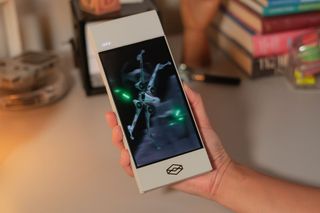
Looking Glass, a hologram company founded in 2014, has released a lineup of 3D holography devices that look to stretch the boundaries of viewing and interacting with 3D content.
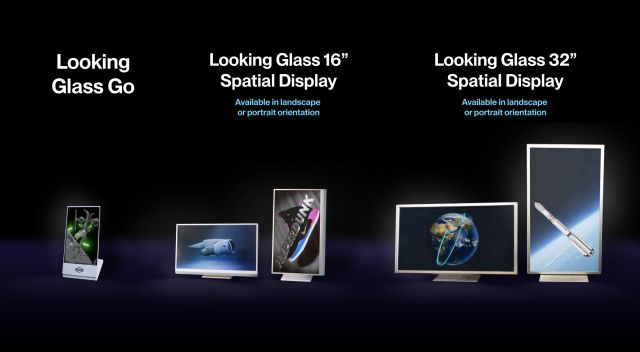
The Looking Glass Go, along with the larger Looking Glass 16-inch and 32-inch “Spatial Displays” allow for real-time simultaneous 3D visualization of apps, videos, and digital images from multiple angles, meaning workers no longer need to cluster in a physical space to view or make relevant changes to an app or video.
The Looking Glass Go is available for $299 but will commence shipping in August 2024. The 16-inch Spatial Display costs $4,000, and the price of the 32-inch model will be made available on request.
Visualize 3D creations
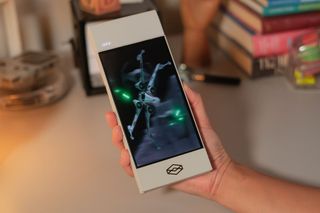
The Looking Glass Go is nearly 10 times thinner than previous models and boasts twice the pixel density, making images sharper and more vibrant. It is also a powerful tool for those working with 3D models, holographic art, and even generative AI.
The portable holographic display can transform 2D images into 3D holograms without requiring any prior tech knowledge or 3D modelling skills and features a 6-inch display with a high pixel density of 1440 x 2560 (491ppi) for lifelike and vivid holograms.
The Go supports Wi-Fi connectivity to easily share spatial content and receive holograms from the cloud. It also has built-in buttons for controlling slideshows, a 3.5mm audio jack with a foldable base, and a weight of 235g.
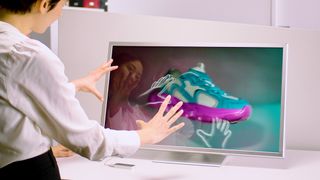
The Spatial Displays, in both 16-inch and 32-inch configurations, offer a 3D multiview experience allowing groups to view 3D images from multiple angles making them especially useful in collaborative work environments. For projects that have experts in multiple locations, the device can be used to simultaneously visualize a project in 3D with independent control over the viewing angle.
Both the Looking Glass 16-inch and 32-inch displays are compatible with popular 3D creation tools like Unity, Unreal, Blender, and WebXR with the devices able to convert FBX, OBJ, GLTF, STL, PLY, or 3MF models into holograms.
With support for touchless gesture control and other interactive technologies, the immersive experience goes beyond looking, but allows interacting with 3D content in a way that feels natural and intuitive.
“Our goal has always been to put holograms in the hands of everyone,” noted Co-founder and CEO of Looking Glass, Shawn Frayne. “Over the years we’ve gotten closer to this goal…and today we’re taking an even bigger step by bringing the power of headset-free holograms to individuals and enterprises with all sizes of Looking Glass spatial display.”
More from TechRadar Pro
Looking Glass, a hologram company founded in 2014, has released a lineup of 3D holography devices that look to stretch the boundaries of viewing and interacting with 3D content. The Looking Glass Go, along with the larger Looking Glass 16-inch and 32-inch “Spatial Displays” allow for real-time simultaneous 3D visualization…
