The Kids Online Safety Act (KOSA) has surpassed 60 Senate co-sponsors, enough supporters for it to pass through the chamber, the bill’s authors announced on Thursday.
Kids Online Safety Act gains enough supporters to pass the Senate
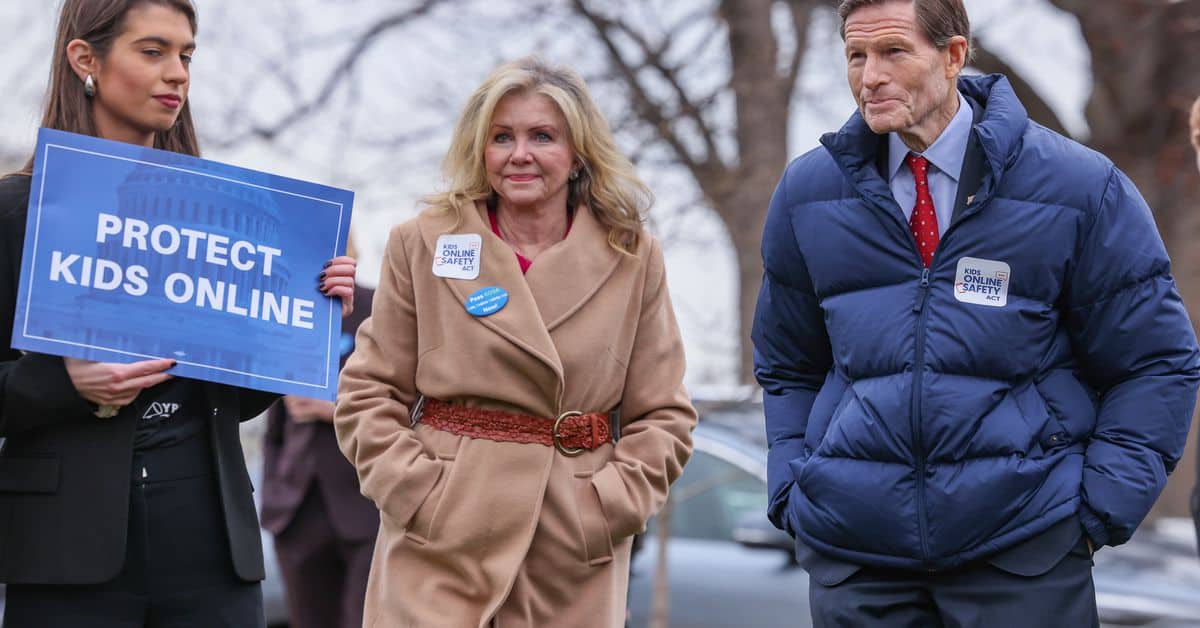
The support marks a major milestone for the legislation, which seeks to create a duty of care for tech platforms to mitigate certain dangers to young users and allow them to opt out of algorithm-based recommendations. If it becomes law, it would be among the most significant kids’ online safety statutes since the Children’s Online Privacy Protection Act, which went into effect in 2000.
The bill’s lead champions, Sens. Richard Blumenthal (D-CT) and Marsha Blackburn (R-TN), also announced new changes to the text of the legislation, which seem aimed at addressing concerns that the bill would allow politicians and law enforcement to censor content online.
The new version includes a specific definition of a “design feature” as something that will encourage minors to spend more time and attention on the platform, including infinite scrolling, notifications, and rewards for staying online. The lead sponsors’ offices said they aimed to focus on design features that seek to keep kids returning to the platforms and clarify the focus on social media’s business models, rather than the content they choose to host.
The new text also removes the ability of state attorneys general to enforce the duty of care, leaving that power to the Federal Trade Commission. That concession seems aimed at mitigating a key concern of LGBTQ+ groups, which feared that some Republican AGs would use the law to take action against resources for LGBTQ+ youth that the enforcers deemed inappropriate. State attorneys general can still enforce other portions of the law, including its provisions on safeguards for minors, disclosure, and transparency.
KOSA still needs to be brought to a floor vote, and even if it passes through the Senate, the bill would still need to work its way through the House. A companion bill in that chamber does not yet exist.
Still, a statement from Senate Majority Leader Chuck Schumer (D-NY) committing to working with the bill’s lead sponsors to “advance this bill in the Senate” marks significant progress.
Schumer is one of 15 new co-sponsors of the bill, which also include Sens. Martin Heinrich (D-NM), Susan Collins (R-ME), Mazie Hirono (D-HI), Mitt Romney (R-UT), J.D. Vance (R-OH), Michael Bennet (D-CO), Tommy Tuberville (R-AL), Laphonza Butler (D-CA), Thom Tillis (R-NC), Sherrod Brown (D-OH), Angus King (I-ME), Ted Cruz (R-TX), Jack Reed (D-RI), and Kevin Cramer (R-ND).
Blumenthal’s office said the changes had assuaged many of the concerns of leading LGBTQ+ advocacy groups. The office pointed to a letter dated Thursday from groups including GLAAD, Human Rights Campaign, and The Trevor Project stating they would not oppose the new version of the bill if it moves forward.
“The considerable changes that you have proposed to KOSA in the draft released on February 15th, 2024, significantly mitigate the risk of it being misused to suppress LGBTQ+ resources or stifle young people’s access to online communities,” the groups wrote.
The bill has also picked up the support of the NAACP and Nintendo of America, Blumenthal’s office said. The latest version of the text includes new language to make clear that video games don’t need to abruptly interrupt natural gameplay in order to implement the required safeguards, among other assurances for the industry.
Still, some who have spoken out against the bill in the past have notably yet to comment, or have reiterated their concerns.
Evan Greer, director of digital rights group Fight for the Future, which has opposed KOSA, welcomed some of the changes but maintained her underlying fears about the bill.
Fight for the Future was “glad to see the attorney general enforcement narrowed” and agrees the change “will somewhat reduce the immediate likelihood of KOSA being weaponized by politically motivated AGs to target content that they don’t like.”
She also said Fight for the Future appreciated the clarification that the duty of care should apply to design features, but added that it should be further clarified to apply in a “content neutral manner.”
“As we have said for months, the fundamental problem with KOSA is that its duty of care covers content specific aspects of content recommendation systems, and the new changes fail to address that,” Greer said, adding that even simply showing a users’ posts to a follower could be considered an algorithmic recommendation.
As a result, Greer fears platforms under this bill would respond “by engaging in aggressive filtering and suppression of important, and in some cases lifesaving, content.”
Nonprofit Electronic Frontier Foundation also maintained its opposition. Activism director Jason Kelley said KOSA “remains a dangerous and unconstitutional censorship bill” and advocated instead for comprehensive privacy protections for all.
KOSA, Kelley said, “would still let federal and state officials decide what information can be shared online and how everyone can access lawful speech. It would still require an enormous number of websites, apps, and online platforms to filter and block legal and important speech. It would almost certainly still result in age verification requirements.”
The American Civil Liberties Union (ACLU) was also notably absent from the letter of groups that withdrew opposition. The group did not immediately respond to a request for comment on the new text, but it has previously written in opposition to the bill, including alongside several of the LGBTQ+ advocacy group signatories.
As of the Senate Judiciary Committee hearing late last month about kids’ online safety, several leading tech platforms withheld their support of the bill. But Snap, Microsoft, and X all said they would back it.
The Kids Online Safety Act (KOSA) has surpassed 60 Senate co-sponsors, enough supporters for it to pass through the chamber, the bill’s authors announced on Thursday. The support marks a major milestone for the legislation, which seeks to create a duty of care for tech platforms to mitigate certain dangers…
