Apple’s M1 and M2 devices have become many reviewers’ default recommendations for popular classes of laptops. Slim and light? Try the 13-inch MacBook Air. Big and powerful? Get the 16-inch MacBook Pro. But in between those two is one of few form factors still firmly dominated by the Windows PC: the 15-inch ultralight.
It’s time to start paying attention to 15-inch laptops

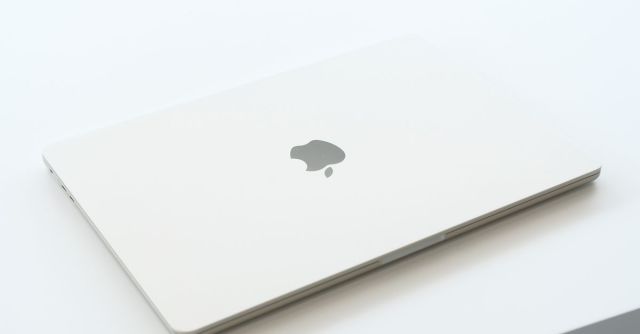
Until, perhaps, next week. Apple has announced that a 15-inch MacBook Air, powered by its M2 chip, will hit shelves on June 13th. I’m excited to try it out because I’m madly curious to know what a 15-inch MacBook Air feels like. But more importantly, I’m excited to see the impact it has on the 15-inch lightweight space. Because I think it could be huge.
Since the advent of the M1 chip in 2020, Apple has gone on to dominate many of the biggest segments of the laptop market. Apple’s chips offer a vastly superior combination of performance and battery life compared to anything that Intel has been able to put forward over the past few generations for Windows machines. In the 13-inch ultraportable category, for example, the M2 MacBook Air is so far ahead of the competition that it has been genuinely difficult for me to recommend anything else for office and productivity work, despite the shortcomings of its port selection and the webcam notch that makes me irrationally angry. Similarly, the 14-inch and 16-inch MacBook Pros have been my hands-down recommendation for video editors since they were released, to the point where there are no other creator-focused workstations on my best laptops list.
But someone who wants a large-screen laptop that’s not in that luxury, professional sphere (the 14-inch MacBook Pro starts at $1,999) hasn’t had an Apple option for quite some time. What they have had was Windows options aplenty. The LG Gram. The Microsoft Surface Laptop. The Samsung Galaxy Book. The Dell XPS 15, in some models. These are all portable, well-built devices with a lot of function to offer. And since the advent of the M1 chip back in 2020, they’ve been among few Windows PCs that have remained on top.
This 3.3-pound, 15-inch MacBook Air looks poised to change that.
At the moment, big-screen lightweights are a niche product in the laptop sphere. I constantly hear from office workers looking for a solid, portable 13-incher or 14-incher and rarely hear from anyone looking for an ultraportable 15. Larger devices command over half of laptop market revenue, but many companies (such as Asus and Acer) derive huge portions of their share from gaming devices. I think there’s a general understanding in our current zeitgeist that big screen equals big power, and small screens are for everyone else.
But it doesn’t have to be that way. A big screen means more room for everything from Netflixing to Tweetdecking to Excel spreadsheeting. People love gigantic phones, after all. And one wonders if a household name like the Air taking a gander at the 15-inch size might help consumers see those use cases in a way they haven’t before.
But perhaps more importantly, I hope that a giant Air will elevate the 15-inch category overall. I hope it might do to its competition what the 13-inch Air did to the ultraportable space. That is: Put the pressure on. Make them sweat. Make companies figure out how they can make their top lines stand out.
A couple years after the M1 MacBooks launched, we got the Dell XPS 13 Plus, an ultra-thin version of the XPS 13 we’d been seeing for years with an LED function row, an OLED screen, an invisible touchpad, and a truly striking design. While it certainly had its flaws, it was still something new and different, with the potential to reach new audiences and change the way the laptop, as a gadget, is viewed. It was an effort to stand out — to keep the PC exciting outside of Apple land. It may be what we start to see in the 15-inch space.
And meanwhile, the pressure is on for Intel’s Meteor Lake generation, expected closer to the end of this year. Assuming that Apple’s M2 performs as well and efficiently in the 15-inch Air as it has in previous MacBooks we’ve tested, Windows OEMs will likely be looking for more — more battery life, more performance — out of Intel’s offerings. I hope Meteor Lake is competitive. That’s when the consumer will really win.
Photography by Dan Seifert / The Verge
Apple’s M1 and M2 devices have become many reviewers’ default recommendations for popular classes of laptops. Slim and light? Try the 13-inch MacBook Air. Big and powerful? Get the 16-inch MacBook Pro. But in between those two is one of few form factors still firmly dominated by the Windows PC:…
