It’s broadband, Jim, but not as we know it: Japanese tech giants are developing a broadband optical SSD for data centers

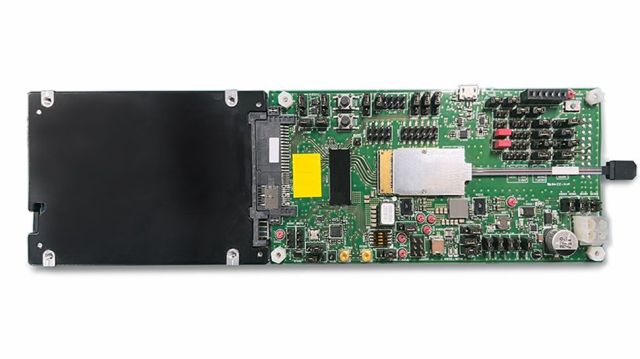
- Broadband Optical SSDs may be key to development of town-sized mega data centers
- Opting for optical SSDs allow distance between compute and storage to grow far more
- The other advantage of going optical is the energy savings associated with moving petabytes of data around
A trio of Japanese tech giants, Kioxia, AIO Core, and Kyocera, have announced the development of a prototype broadband SSD with an optical interface that works with the PCIe 5.0 standard.
The optical SSD prototype has reportedly achieved “functional operation” using PCIe 5.0, which offers double the bandwidth of PCIe 4.0.
This was made possible through a combination of AIO Core’s IOCore optical transceiver and Kyocera’s OPTINITY optoelectronic integration module.
Going optical
This optical SSD was created to handle the demands of modern applications like generative AI, which rely on moving large amounts of data quickly.
The use of optical connections in SSDs could help reduce the physical limitations tied to traditional electrical interfaces, especially in large-scale data center environments.
The three firms say they plan to continue developing the technology and apply it to proof-of-concept testing aimed at future real-world use.
One of the major benefits of going optical is the ability to increase the physical distance between compute and storage without losing performance or energy efficiency. This is expected to be especially useful for data centers that span wider areas.
There’s also the added advantage of reduced energy use when shifting petabytes of data, which could help meet growing environmental goals in the tech industry.
The project’s aim is to ultimately create new digital infrastructure technologies that cut energy use in data centers by over 40% compared to current systems.
This work is part of Japan’s “Next Generation Green Data Center Technology Development” project, JPNP21029, which receives funding from the New Energy and Industrial Technology Development Organization (NEDO) through the Green Innovation Fund Project.
Each company brings specific expertise to support the shared goal of building more efficient and capable data infrastructure for the future. Kioxia is focusing on broadband optical SSD development, AIO Core is working on optoelectronic fusion devices, and Kyocera is creating optoelectronic packaging.
You might also like
Broadband Optical SSDs may be key to development of town-sized mega data centers Opting for optical SSDs allow distance between compute and storage to grow far more The other advantage of going optical is the energy savings associated with moving petabytes of data around A trio of Japanese tech giants,…
