Is it quantum-resistant? Researchers create ‘uncrackable’ encryption system by pairing AI and holograms produced by laser
- High-power lasers and ethanol create scrambled holograms to encrypt data
- AI was trained to decrypt the data with 90-95% accuracy
- The optical encryption tech won’t hit the market soon as some shortcomings inhibit its practicality
A team of Greek scientists has developed an optical encryption system that could potentially render traditional hacking methods obsolete.
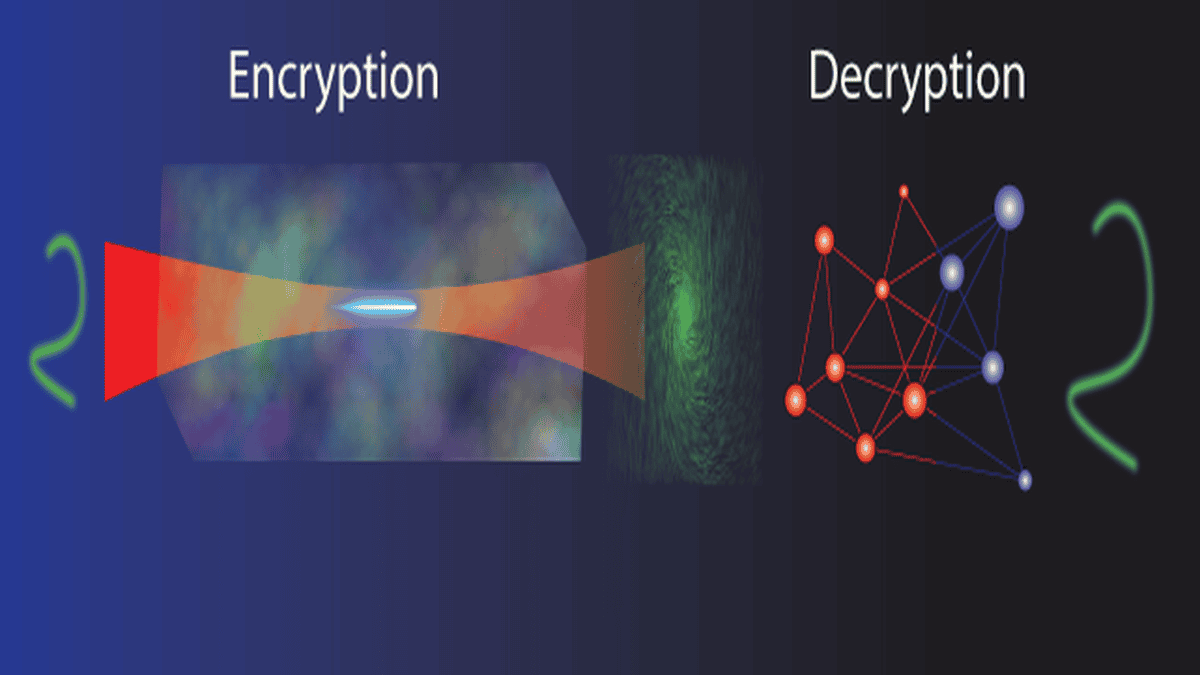
In a research paper published by Optica, the researchers behind the system revealed it combines artificial intelligence (AI) and laser-generated holograms to provide high-level data protection that could be virtually impossible to crack.
Unlike traditional encryption methods, which rely on mathematical algorithms, this optical approach uses the physical properties of light, making it resistant to attacks from even the most advanced computers, including quantum machines.
How it works: scrambling light for security
“From rapidly evolving digital currencies to governance, healthcare, communications and social networks, the demand for robust protection systems to combat digital fraud continues to grow,” said research team leader Stelios Tzortzakis, from the Institute of Electronic Structure and Laser, Foundation for Research and Technology Hellas and the University of Crete.
To this end, the team’s optical encryption system relies on the chaotic pattern produced when a high-power laser interacts with a small container of ethanol due to scrambled light beams. This process, enhanced by thermal turbulence within the liquid, ensures that the original information is hidden beyond recognition, making it nearly impossible to decode using conventional methods.
For a way to retrieve the encrypted data, the researchers turned to AI. By training a neural network to recognize and decode the scrambled holograms, they achieved a 90-95% accuracy rate in retrieving the original images.
“We came up with the idea of training neural networks to recognize the incredibly fine details of the scrambled light patterns,” Tzortzakis continued.
“By creating billions of complex connections, or synapses, within the neural networks, we were able to reconstruct the original light beam shapes. This meant we had a way to create the decryption key that was specific for each encryption system configuration.”
“The method we developed is highly reliable even in harsh and unpredictable conditions, addressing real-world challenges like tough weather that often limit the performance of free-space optical systems.”
Finally, he said that “[the team’s] new system achieves an exceptional level of encryption by utilizing a neural network to generate the decryption key, which can only be created by the owner of the encryption system.”
The team has tested the system by encoding and decoding thousands of images, including of animals, tools, everyday objects, and handwritten digits. However. the technology isn’t quite ready for commercialization, as the current laser system used in the encryption process is bulky and expensive, thereby limiting its practicality and affordability.
You may also like
High-power lasers and ethanol create scrambled holograms to encrypt data AI was trained to decrypt the data with 90-95% accuracy The optical encryption tech won’t hit the market soon as some shortcomings inhibit its practicality A team of Greek scientists has developed an optical encryption system that could potentially render…
