Is AI bad for music or is it just another step in the auto-tune timeline?

Music has always had a love-hate relationship with technology. Every time a new tool shows up, there are some who are concerned that it will be the end of real music.
The same questions arose when the synthesizer appeared, when the drum machine became popular, and any time auto-tune is used on a popular song. But Cher proved that there was music after auto-tune, just as there is life after love.
Claims about the death of authenticity are almost always exaggerated, and accusations of ‘cheating’ sound absurd in retrospect. Eventually, people learn to sing along to the new tune, or at least admit that electric guitars didn’t go around smashing up every acoustic version.
All that is overture for people playing the theme from Psycho over AI’s presence in music. I’m not discounting the seriousness of a report by French streaming platform Deezer that 18% of songs being uploaded these days are entirely AI-generated. That’s over 20,000 robot-made tracks per day. Twice the number from just a few months ago. Cue the dramatic sting (you know the one, Dun, Dun, Dun!)
It’s easy to look at numbers like that and feel a little nervous. After all, the music industry already runs on razor-thin margins for most artists, and now the meager streaming revenue is going to go to robots? Add in the fact that major players like Universal, Sony, and Warner are actively suing AI music platforms like Suno and Udio for allegedly training on copyrighted songs, and you can see how high the stakes are.
The music industry is not the entirety of music, however. I firmly believe in robust protection for artists who face AI stealing their work or training on it to mimic them. But that’s a business battle, not a war for the fate of human creativity.
AI has a place in the recording studio. Once upon a time, many people proclaimed that sampling portended the end of music, with a future of nothing but artists stealing other artists’ work. Now it’s the backbone of entire genres of music. Auto-tune has evolved from a gimmick to a legitimate tool across many music styles. And the aforementioned electric guitar was dismissed for being too loud within many people’s lifetimes.
Nonetheless, here we are enjoying music made by people pushing buttons, twisting knobs, and bending sound in new ways. AI is just the latest tool. And like any tool, it’s only as good or bad as the person using it.
Allegro AI
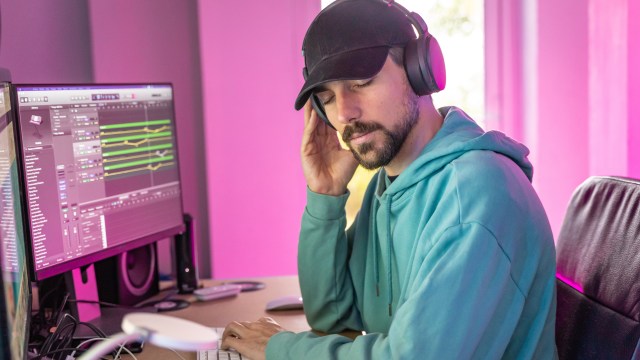
What worries me isn’t the existence of AI music. It’s the idea that we might start mistaking it for a replacement instead of a collaborator. Left to its own devices, AI doesn’t make bad music, but it can feel empty or just a warmed-over imitation of real music. It’s elevator music, but more expensive.
That’s not to say it’s useless, far from it. AI can be a brilliant creative assistant. Stuck on a chord progression? It can help. Need to experiment with a new genre you’ve never written in? Fire it up. Want to turn a poem into a melody just to see what happens? Absolutely. AI can help bring the song in your head to life, but it won’t do so without you as the source of the ideas.
The real debate should be about how to use AI in music, not whether to ban it outright. I’d be worried about the sheer number of AI songs appearing on streaming services if I were a musician, but not because AI created them. I’d be more concerned about where they are coming from, who’s profiting from them, and if any artists’ work was illicitly used to train the AI behind the songs.
And it’s not like every human track is a unique snowflake. A lot of music shares DNA, and the most popular songs sometimes come across as only slightly tweaked versions of each other. Trends are trends, and algorithms have already been shaping what we listen to, nudging us toward the familiar, the market-tested, the sonically safe. AI isn’t creating that dystopia, though it may be speeding up the process.
Still, AI could be a boon to music as a whole. Imagine a rural teenager with few resources who can’t hire a band, a piano teacher, or a recording studio. With a phone and some imagination, they could use free AI music tools to experiment and share the music in their minds.
AI music isn’t the death of music as a concept. It’s a powerful tool that should be handled carefully. It can be a shortcut, but it shouldn’t be a thief, and it can’t give a song any soul.
You might also like
Music has always had a love-hate relationship with technology. Every time a new tool shows up, there are some who are concerned that it will be the end of real music. The same questions arose when the synthesizer appeared, when the drum machine became popular, and any time auto-tune is…
