Intel’s new chips have the latest video format that could solve streaming service’s biggest issue, but it might be a while before your TV gets it

What if I told you that there was a way to make the quality of movies and TV shows you watch through the best streaming services better, even if your Wi-Fi isn’t the greatest? It sounds ideal, right? Well, I’ve got some good news and bad news…
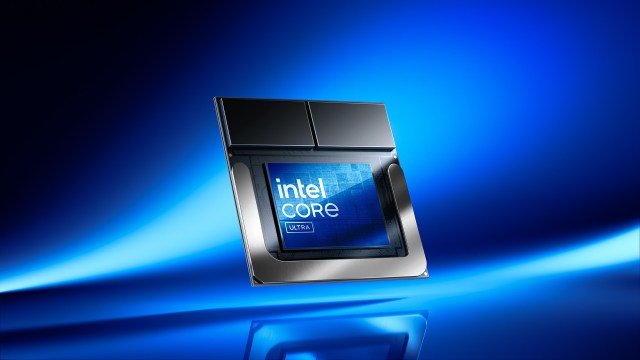
The good news is that the next-gen video codec, Versatile Video Codec (VVC), also known as H.266, has arrived in Intel’s latest chips (as reported by FlatpanelsHD). The bad news? These chips, which are part of the Intel Core 200 series launched at IFA 2024 (also known as Lunar Lake, which are set to do battle with AMD and Qualcomm), are coming first to a range of “AI PC’s” from the likes of Lenovo, Asus, Acer, Dell, Samsung and more at the end of September 2024.
While no official announcement has been made about when these chips will arrive in TVs, we’re hopeful that it will eventually, because it would improve video encoding by making it more efficient, which would result in better quality video streaming, even for those with sub-par Wi-Fi strength. The unfortunate reality, however, is that we’re unlikely to see VVC in TVs any time soon.
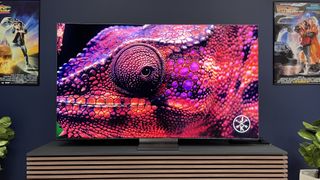
Currently, TVs use the older High Efficiency Video Encoding (HEVC), or H.265, and in some cases the higher quality AOMedia Video 1 (AV1) video codec. These video codecs compress video files to make them easier to send over the internet, with the AV1 offering higher efficiency and better video quality over lower bitrates, which results in smoother streaming. But, AV1 does perform at a slower speed and have longer encoding times due to its complex algorithms.
HEVC has been in use on TVs for years and AV1 was eventually introduced first to 8K TVs – like the best 8K TVs – in 2020 and then in 4K TVs in 2021. Some of the best TVs from the likes of Sony and Samsung also support it, while others continued to use HEVC. With that being said, just how much better could VVC be and what impact could it make?
A hope for the future of streaming
According to the report by FlatpanelsHD, VVC has been found to offer 30-50% more compression efficiency than HEVC and 10-20% more than AV1 at 4K resolution. Meanwhile, with 8K resolution, VVC is said to offer 50-60% more efficiency than HEVC and 20-30% more than AV1. Bitmovin tested HEVC against VVC on its own Bitmovin Player app and found that VVC performed better with faster moving scenes and showed more detailing when compared with the same scene via the HEVC codec.
This reduction in bitrate means that higher quality videos can be played back without taking up as much data, which once again means people with weaker Wi-Fi can still enjoy high-quality 4K and 8K (when it becomes available) streaming. But, it also should mean an improvement in performance, with less buffering for those with slower Wi-Fi as well. Plus, it’s great news for streaming services as the improved efficiency of VVC means less bandwidth costs, which will likely be welcomed with open arms.

One of the most frustrating things about streaming is the sometimes inconsistent video quality. If you’re watching one of the best Netflix movies, for example, the last thing you want is a drop in quality, resulting in fuzzy textures and washed out colors and contrast.
As I discovered when I tested Blu-ray vs Netflix and Disney Plus, streaming already has a disadvantage, usually topping out at a bitrate of 25Mbps during a 4K stream (Apple TV Plus can do 40Mbps), compared to a 4K Blu-ray, which runs at about 128Mbps. This means 4K streams run at about the same quality as a HD (1080p) Blu-ray, so imagine that being affected even further by a less efficient codec. The implementation of VVC won’t automatically mean 4K streaming is as high a quality as 4K Blu-ray, but it could at least make 4K, and even 8K streaming in future, a better experience.
Worth the wait
Although it is estimated that it could be a while before we see VVC implemented fully across TVs and streaming platforms, potentially years, VVC on the surface looks like it will be worth the wait. With streaming service prices consistently rising, with the likes of Disney Plus, ESPN Plus and Hulu increasing prices, another expected Netflix price hike and Max also raising its own prices just to name a few examples, the least we can expect is consistent performance and quality.
With the VVC codec, it sounds like we could be heading in the right direction. General tests have found that its higher efficiency over the HEVC are significant and although it’s a closer competition between AV1 and VVC (according to reports from WinXDVD) , VVC looks more likely to be adopted by TVs in future, which is good news for streaming services looking to improve efficiency and in turn costs.

This is of course excellent news for users as well. If you’re sitting at home with one of the best OLED TVs, you’re going to want the best quality possible when streaming. So, although it may not be on the horizon just yet, the integration into Intel’s Lunar Lake chips is a good sign of wider commercial use and that hopefully mean TVs are next. Now, we play the waiting game.
You might also like…
What if I told you that there was a way to make the quality of movies and TV shows you watch through the best streaming services better, even if your Wi-Fi isn’t the greatest? It sounds ideal, right? Well, I’ve got some good news and bad news… The good news…
