Intel says the future of chips will depend on the same material you’re looking at right now

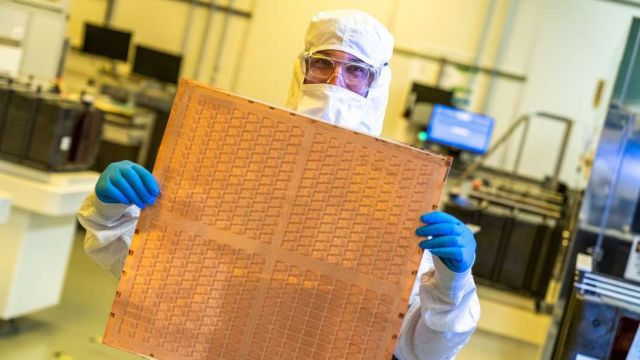
Intel will be using glass in its manufacturing process by the end of the decade to pack up to 30 trillion transistors into a single chip.
The hardware breakthrough, announced at Intel Innovation 2023, will see the ‘glass core substrate technology’ replacing the organic resin it currently uses as the foundation for the components it builds.
Using glass will give Intel a 50% larger chip area so it can, for example, fit more CPU tiles into a single package. Alongside innovations like 3D stacking, Intel will foresee 30 trillion transistors packaged into a glass substrate. This means the fastest CPUs, like those used for high-performance computing and data centers, are about to get even faster. It also means the industry will stay on course to follow Moore’s Law – which predicted the number of transistors on a chip would double every few years.
Why is Intel pursuing a glass-centric future?
“After a decade of research, Intel has achieved industry-leading glass substrates for advanced packaging,” said Intel’s senior vice president and general manager of Assembly and Test Development, Babak Sabi.
“We look forward to delivering these cutting-edge technologies that will benefit our key players and foundry customers for decades to come.”
Using glass is necessary because the industry standard organic substrate will reach its limits in the next few years, according to the chipmaking giant.
Many current system-in-packages (SiPs) use four chiplets, but Intel expects glass to pave the way for 24 x 24 SiPs – which will vastly expand the capabilities of the fastest processors, especially for high-performance computing (HPC).
Beyond simply packing more transistors into a system, glass substrates will also improve power delivery to the chips, which will inevitably be more power hungry.
Their flatness allows for better depth of focus for lithography, alongside better dimensional stability for interconnects – basically allowing more chiplets to connect with one another.
They can also endure much higher temperatures, too, which will be needed if Intel sees through its aims to build its massive 24 x 24 SiPs.
Intel will begin using glass core substrates in packaging by the end of the decade, the company has confirmed, and it’ll be a shock if the rest of the industry doesn’t follow sooner than later.
More from TechRadar Pro
Intel will be using glass in its manufacturing process by the end of the decade to pack up to 30 trillion transistors into a single chip. The hardware breakthrough, announced at Intel Innovation 2023, will see the ‘glass core substrate technology’ replacing the organic resin it currently uses as the…
