I upgraded my Sennheiser HD 660S2 wired headphones with a more powerful iFi DAC to unlock the highest quality audio — but I honestly wasn’t expecting these results
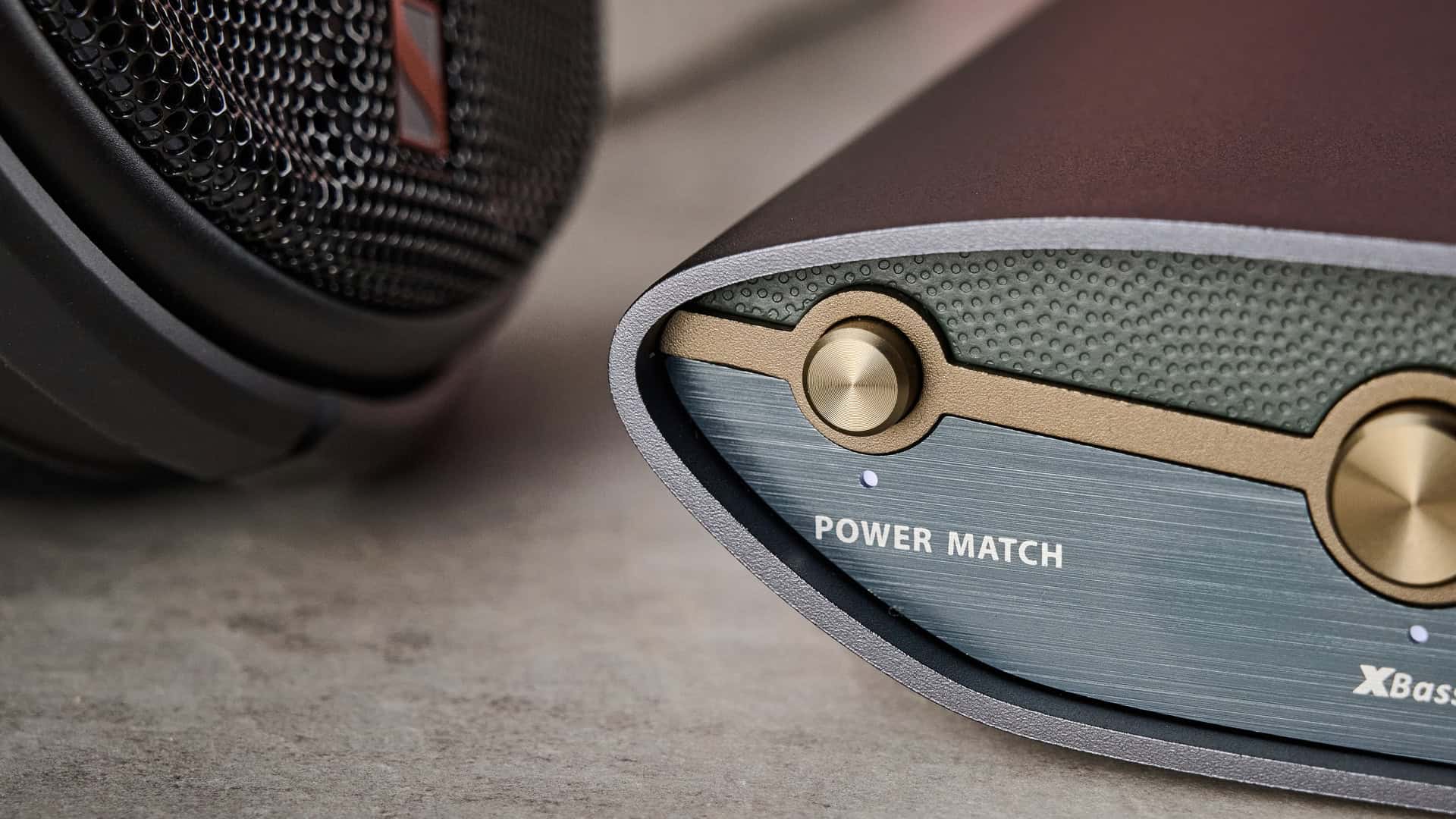
Sound quality is important to me. Whether I’m listening to hi-res mixes on Tidal or making music of my own, I want to hear it in the absolute best detail I can. That’s why, during Prime Day this July, I finally pulled the trigger and bought the Sennheiser HD 660S2. But since then, I’ve started to wonder whether getting a DAC is essential to unlocking the loftiest realms of sonic sophistication.
While the Sennheiser HD 660S2 aren’t the most expensive headphones I’ve ever owned, I’d argue they are the most premium, sonically speaking. Compared to wireless headphones where a decent chunk of your spend is going on Bluetooth chipsets, ANC and fancy features, wired headphones such as the HD 660S2 are a pure audio play. Pretty much every cent you spend goes towards their engineering for sound quality.
As a result, it’s not surprising that my initial response to these cans has been positive. They don’t have the most strongly flavored sound profile — for example, there wasn’t throbbing bass pounding my ear drums like Neil Peart trying to slaughter a fleet-footed fly crawling across his skins. But their frequency balance is as judicious as any of the best headphones, neglecting no part of the spectrum.
Latest Videos FromTechRadar
Another huge factor is their open-backed design. As they let in near enough every perceivable external sound, the idea of using them on the subway brings me out in a cold sweat — ain’t nobody there to hear fellow passengers discuss nasty medical ailments in graphic detail before breakfast. But that same transparency gives them a seriously spacious sound that allows each element a decent amount of room to breathe, already making them a great upgrade over their closed-back cousins.
Perhaps the biggest win in their corner is the very fact that they’re wired. As they don’t have to contend with the limited bit- and sample rates of Bluetooth headphones, they’re free from lossy compression (in themselves at least — they can’t help your source material if it’s not up to the job), meaning they can maintain the original source’s resolution and detail. While that might matter less when you’re using a flimsy $30 / £20 / AU$40 pair of cans, in more premium headphones, you can absolutely hear lossless formats the way they’re meant to be heard.
This all comes with a pretty serious asterisk though. As alluded to above, unlike their wireless rivals, wired headphones aren’t packing their own DAC, meaning those digital files you’re listening to need to be converted to analog audio before passing along that wire. And while laptops — and the few phones that still have 3.5mm jacks — have their own built-in DACs, these usually lack the power to drive heavy duty cans like the HD 660S2.
Don’t get me wrong: while I knew the Sennheisers wouldn’t necessarily be giving me their A-game without a DAC, their sound has still been impressive, which is no mean feat. But it has started me wondering: what am I missing? Could one of the best DACs help me unlock the loftiest realms of audio quality?
I resolved to find out.
DAC-seat driver

Given iFi created many of our picks for our best DACs guide, it seemed a sensible place to start and I eventually settled on the iFi Zen DAC 3. Not only is this portable DAC capable of audio resolutions of up to 32-bit/768kHz, its 390mW amplifier should have plenty of power to drive the 300-ohm resistance of the Sennheiser HD 660S2.
Setting it up is simplicity itself. All I had to do was hook it up to my laptop with a USB-C cable, plug the HD 660S2’s chonky 6.3mm jack in its front port and I was all set to start comparing the quality of some tunes.
Mid-range frequencies fared surprisingly well, even without a DAC. During Diamonds On the Soles of Her Shoes by Paul Simon, I felt like I was sat right at the heart of Ladysmith Black Mambazo’s choir and there was some really tasty detail to the low toms in the percussion. Once I’d plugged in the iFi, there was some improvement, with a little more dynamism to those vocals and a bit more spaciousness in the mix, but the changes were very subtle.
Treble is a similar story. Before I plugged the DAC in, Go Your Own Way by Fleetwood Mac sounded bright and crisp — the strumming of the guitars felt suitably tight and had a decent amount of bite, without feeling brittle. Hooking the the HD 660S up to the DAC didn’t substantially transform the treble, but the iFi did allow for even more low-end heft to the track without overshadowing the pinpoint definition of those guitars. Honestly, this is probably the first time I’ve ever felt like this track actually sounded bassy.
In light of this, you won’t be surprised to hear that low-end performance is where iFi’s DAC made the biggest difference, making Otomo by Bonobo sound truly ridiculous. Even without the DAC, the HD 660S2 made the bass sound warm and punchy, without harming the clarity of the percussion or those tribal choral vocals. But when using Zen DAC 3, the impact bass during the drop was unreal — the sub bass is so strong it feels like it hits you right in the brain stem.
This increased low-end clarity and dynamism also helps when it comes to precision and separation too. Deprived of DAC, the HD 660S2 did an excellent job of rendering I Need the Night by London Grammar — those reverberant vocals sounded wonderfully detailed and gorgeously expressed, even when the beat kicked in. But with a DAC picking up the slack, the sustained guitars and bass were able to shine more without encroaching on the vocals, while the beat still felt suitably punchy.
So the iFi Zen DAC 3 definitely added some spit and polish to my tunes.
DAC to reality

Still, all of the improvements I’ve noted above feel incremental at best. Attempting to jack up my listening experience with a DAC resulted in what I’d class more as a 5% improvement, rather than the revolutionary experience I was expecting. So what gives?
Turns out, some sacred cows need to be put out to pasture. While there are plenty of people who will swear blind that you need a discrete DAC for a pair of high-impedance headphones like the HD 660S2 (which come with a rating of 300 ohms), that’s not actually always true. Because, if you’re lucky, you may find that your gear’s built-in DAC is plenty powerful enough on its own.
I should have dug into the specs of my hardware a little more. Both the MacBook Air M5 I use at home and the MacBook Pro M4 I use at work have a pretty sophisticated DAC built-in — if you’re driving some low-impedance wired earbuds, it’ll deliver a far lower voltage but when you pop in a pair of audiophile-grade headphones like the Sennheiser HD 660S2, it’ll deliver substantially more power. That’s why these cans sounded so great out of the box to me.
While that’s great news for me — and for anyone else who’s happy to drop $1,299 / £1,299 / AU$2,099 on a MacBook just as an expensive network audio player — it’s not that illuminating on whether your more humble devices will benefit from the help of an external device.
So I guess it’s DAC to the drawing board.
To hell and DAC

Like all great technologists, I know every catastrophic failure is just a fantastic opportunity to pivot. So I redesigned my experiment on the fly. I grabbed one of our testing smartphones — the skilled yet affordable OnePlus Nord CE5 — plugged in a USB-C to 3.5mm adapter and jacked in the Sennheiser HD 660S2. And boy, was it a… whatever the opposite of a revelation is.
When drip-fed on the meager power a phone outputs, the HD 660S2 sound like a completely different pair of headphones. As you’d expect, their output is much quieter and mids lack impact. On Painted Wolf by O’Flynn, the Rhodes-style keyboard and strings sounded far more hollowed out than when listening with the DAC, which gave that fiddle part real body and texture.
Without the Zen DAC, the phone struggled to deliver much treble either. Thanks to its bright presentation, Crash into Me by Dave Matthews Band quickly shows up any glassiness or sibilance in a pair of headphones high-end, yet here it sounded rolled off and lacking in confidence. Conversely, once hooked up to iFi Zen DAC 3, the HD 660S2 made each of those densely layered guitar parts feel distinct and detailed — I could practically hear the vibration of the plectrum as it scrapes over the strings.
One area I’ll give the Sennheisers their due though is when it comes to bass. Even without a lot of power behind them, the low end of Listen by Pola & Bryson and Goddard. still sounded pretty tasty — those snarling D&B bass warps still felt deep and beautifully detailed and there was a soupçon of sub beneath it all. The DAC still delivered here too though, swaddling you in lush pads, while that bassline genuinely sounds like you’re being hit full-force in the chest by a Funktion One rig.
It isn’t just the frequency balance that felt off either: the lack of DAC limited the HD 660S2’s to present its soundstage with quite as much dynamism or distinction. Playing Breathe This Air by Jon Hopkins with the Zen DAC 3 plugged in, I found the wonderful interplay of piano strikes across the stereo field to be genuinely breathtaking. Thanks to the Sennheisers’ open-back design, they were still able to get a decent stereo spread without the iFi’s help but the pinging of each element across the soundstage felt considerably less dynamic than before.
So a DAC absolutely makes a huge difference. If you’re playing music off a cheaper or more portable device, any increased investment in higher-quality headphones may well be wiped out if you don’t pair it with a discrete DAC. But don’t assume you need one by default, as the days of all built-in DACs being dreadful are well behind us.

Follow TechRadar on Google News and add us as a preferred source to get our expert news, reviews, and opinion in your feeds.

The best headphone DACs for all budgets

Sound quality is important to me. Whether I’m listening to hi-res mixes on Tidal or making music of my own, I want to hear it in the absolute best detail I can. That’s why, during Prime Day this July, I finally pulled the trigger and bought the Sennheiser HD 660S2.…
