I finally tried Samsung’s Project Moohan Android XR headset, and it was Google Gemini that stole the show

Google and Samsung’s Project Moohan Android XR headset isn’t entirely new – my colleague Lance Ulanoff already broke down what we knew about it back in December 2024. But until now, no one at TechRadar had the chance to try it out.
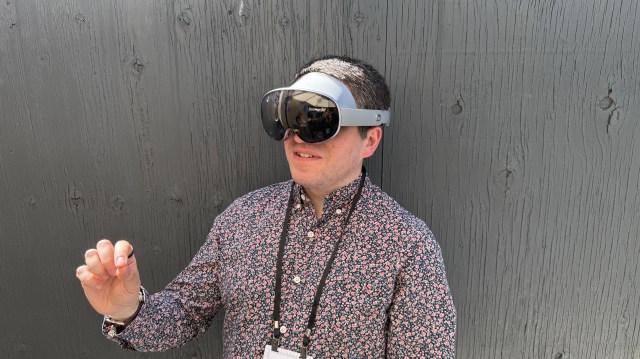
That changed shortly after Sundar Pichai stepped off the Google I/O 2025 stage. I had a brief but revealing seven-minute demo with the headset.
After scanning my prescription lenses and matching them with a compatible set from Google, they were inserted into the Project Moohan headset, and I was quickly immersed in a fast-paced demonstration.
It wasn’t a full experience – more a quick taste of what Google’s Android XR platform is shaping up to be, and very much on the opposite end of the spectrum compared to the polished demo of the Apple Vision Pro I experienced at WWDC 2023.
Project Moohan itself feels similar to the Vision Pro in many ways, though it’s clearly a bit less premium. But one aspect stood out above all: the integration of Google Gemini.
“Hey Gemini, what tree am I looking at?”
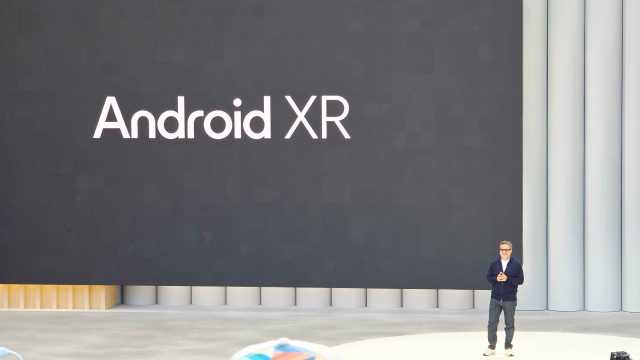
Just like Gemini Live on an Android like the Pixel 9 – Google’s AI assistant takes center stage in Project Moohan. The launcher includes two rows of core Google apps – Photos, Chrome, YouTube, Maps, Gmail, and more—with a dedicated icon for Gemini at the top.
You select icons by pressing your thumb and forefinger together, mimicking the Apple Vision Pro’s main control. Once activated, the familiar Gemini Live bottom bar appears. Thanks to the headset’s built-in cameras, Gemini can see what you’re seeing.
In the press lounge at the Shoreline Amphitheater, I looked at a nearby tree and asked, “Hey Gemini, what tree is this?” It quickly identified a type of sycamore and provided a few facts. The whole interaction felt smooth and surprisingly natural.
You can also grant Gemini access to what’s on your screen, turning it into a hands-free controller for the XR experience. I asked it to pull up a map of Asbury Park, New Jersey, then launched into immersive view – effectively dropping into a full 3D rendering akin to Google Earth. Lowering my head gave me a clear view below, and pinching and dragging helped me navigate around.
I jumped to a restaurant in Manhattan, asked Gemini to show interior photos, and followed up by requesting reviews. Gemini responded with relevant YouTube videos of the eatery. It was a compelling multi-step AI demo – and it worked impressively well.
That’s not to say everything was flawless. There were a few slowdowns, but Gemini was easily the highlight of the experience. I came away wanting more time with it.
Hardware impressions
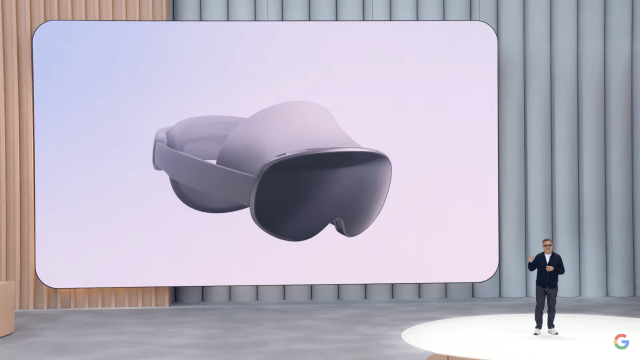
Though I only wore the headset briefly, it was evident that while it shares some design cues with the Vision Pro, Project Moohan is noticeably lighter – though not as high-end in feel.
After inserting the lenses, I put the headset on like a visor—the screen in front, and the back strap over my head. A dial at the rear let me tighten the fit easily. Pressing the power button on top adjusted the lenses to my eyes automatically, with an internal mechanism that subtly repositioned them within seconds.
From there, I used the main control gesture – rotating my hand and tapping thumb to forefinger – to bring up the launcher. That gesture seems to be the primary interface for now.
Google mentioned eye tracking will be supported, but I didn’t get to try it during this demo. Instead, I used hand tracking to navigate, which, as someone familiar with the Vision Pro, felt slightly unintuitive. I’m glad eye tracking is on the roadmap.
Google also showed off a depth effect for YouTube videos that gave motion elements—like camels running or grass blowing in the wind – a slight 3D feel. However, some visual layering (like mountain peaks floating oddly ahead of clouds) didn’t quite land. The same effect was applied to still images in Google Photos, but these lacked emotional weight unless the photos were personal.
Where Project Moohan stands out
@techradar
♬ original sound – TechRadar
The standout feature so far is the tight Gemini integration. It’s not just a tool for control – it’s an AI-powered lens on the world around you, which makes the device feel genuinely useful and exciting.
Importantly, Project Moohan didn’t feel burdensome to wear. While neither Google nor Samsung has confirmed its weight – and yes, there’s a corded power pack I slipped into my coat pocket – it remained comfortable during my short time with it.
There’s still a lot we need to learn about the final headset. Project Moohan is expected to launch by the end of 2025, but for now, it remains a prototype. Still, if Google gets the pricing right and ensures a strong lineup of apps, games, and content, this could be a compelling debut in the XR space.
Unlike Google’s earlier Android XR glasses prototype, Project Moohan feels far more tangible, with an actual launch window in sight.
I briefly tried those earlier glasses, but they were more like Gemini-on-your-face in a prototype form. Project Moohan feels like it has legs. Let’s just hope it lands at the right price point.
You might also like
Google and Samsung’s Project Moohan Android XR headset isn’t entirely new – my colleague Lance Ulanoff already broke down what we knew about it back in December 2024. But until now, no one at TechRadar had the chance to try it out. That changed shortly after Sundar Pichai stepped off…
