How to make hard drives faster? Simple, just bunch dozens of them together, Toshiba says
- Toshiba’s new European HDD Innovation Lab can improve storage tech
- Lab offers architecture testing, proof-of-concept setups, and benchmarking
- Toshiba claims combining dozens of HDDs can boost overall performance
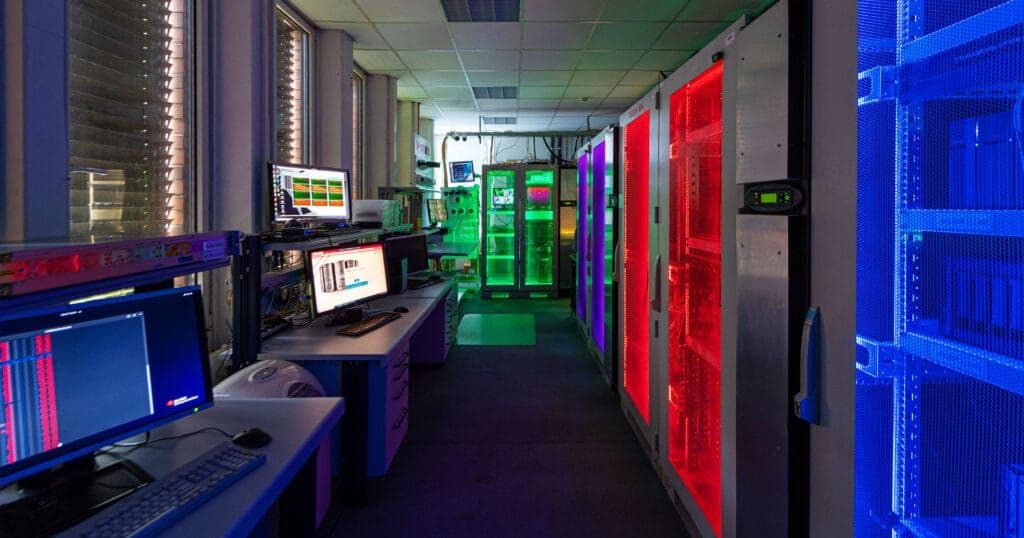
Toshiba Electronics Europe has opened a new HDD Innovation Lab at its Düsseldorf site, expanding its storage evaluation services across Europe and the Middle East.
The new facility (it already has a smaller one in Dubai) is designed to support customers and partners in optimizing hard disk drive configurations for a range of applications, including cloud storage, surveillance systems, and NAS environments.
Toshiba’s lab will focus on assessing HDD setups for broader IT systems such as storage area networks (SAN), providing a space where hardware configurations can be tested and refined. It will be able to evaluate customer-specific architectures and offer a platform for proof-of-concept testing and performance benchmarking.
You may like
Combining hard drives
“This new HDD Innovation Lab represents a significant leap forward in providing bespoke solutions and advancing HDD technology,” said Rainer Kaese, senior manager for HDD business development.
“It demonstrates Toshiba’s commitment to drive the industry forward and support customers and partners with technical expertise and resources. We look forward to strengthening existing collaborations and exploring the future business opportunities the new facility will bring.”
To carry out these evaluations, the lab brings together servers, JBoDs, chassis, controllers, cables, and a variety of software tools. It also includes equipment to accurately measure energy consumption.
While SSDs have a clear speed advantage over HDDs, they are expensive and, according to Kaese via Blocks & Files, “The flash industry is not be able to manufacture enough capacity to satisfy the growing demand, and still will not be for a significant while.”
The solution to that problem, Kaese suggested, is to bunch HDDS together.
“We have demonstrated that 60 HDDs in ZFS software defined storage can fill the entire speed of a 100GbE network,” he said, adding, “[We] found that a typical configuration of four HDDs (ie. in small Soho NAS) can fill the 10GbE networks. 12 HDDs match the 25GbE of Enterprise networks, and 60 HDDs would require high end 100GbE network speed to unleash the full performance of the many combined HDDs.”
Beyond technical testing, the HDD Innovation Lab aims to support knowledge sharing. Insights from evaluations will be passed directly to customers, and Toshiba says it will conduct its own internal assessments of its HDD product lines, publishing the findings as whitepapers and lab reports.
You might also like

Toshiba’s new European HDD Innovation Lab can improve storage tech Lab offers architecture testing, proof-of-concept setups, and benchmarking Toshiba claims combining dozens of HDDs can boost overall performance Toshiba Electronics Europe has opened a new HDD Innovation Lab at its Düsseldorf site, expanding its storage evaluation services across Europe and…
