Google’s super powerful Arm-based CPU is now available — but this data center mystery chip will never go on sale, and Google won’t say how many cores powers it

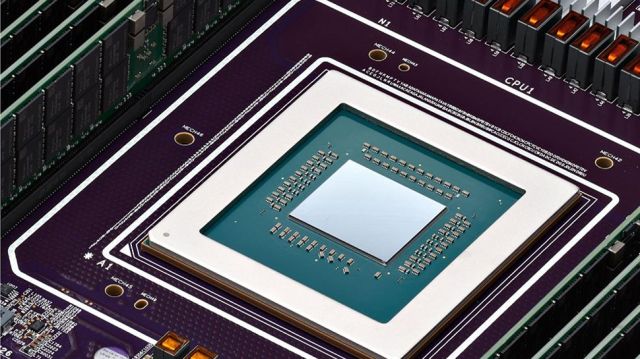
Google unveiled its Axion processors at Google Next ’24, revealing custom Arm-based CPUs built on Neoverse V2 architecture and designed to support a wide range of data center workloads, including web servers, media processing, and AI applications.
Google’s main cloud rivals, Amazon and Microsoft, already have their own CPUs based on Arm technology, but at launch, Google stated its chips would offer up to 30% better performance than current Arm instances and up to 60% higher energy efficiency compared to similar x86-based options.
Fast forward to now, and Google Cloud has begun offering C4A virtual machines powered by Axion processors. The instances are optimized for various general-purpose workloads, such as web and app servers, containerized microservices, databases, and AI inference.
The core count mystery
With its Titanium technology – a system of custom silicon microcontrollers and tiered scale-out offloads designed to optimize performance for customer workloads – Google reports up to 65% better price-performance and 60% greater energy efficiency than comparable x86-based VMs, along with 30% better price-performance for MySQL and 35% for Redis workloads.
Although certain key details of the Axion processors remain unknown, such as core count, Google confirms the chips have been designed exclusively for its data centers, with no plans for commercial sale. Google services – including Bigtable, Spanner, BigQuery, F1 Query, Blobstore, Pub/Sub, Google Earth Engine, and the YouTube Ads platform – have already begun deploying Axion-based servers.
“Spanner is one of the most critical and complex services at Google, powering products including YouTube, Gmail, and Google Ads,” noted Andi Gutmans, VP/GM of Databases at Google. “In our initial tests on Axion processors, we’ve observed up to 60% better query performance per vCPU over prior-generation servers. As we scale out our footprint, we expect this to translate to a more stable and responsive experience for our users, even under the most demanding conditions.”
C4A VMs are currently available in Google Cloud regions across the US, Europe, and Asia, with multiple configuration options. By keeping Axion exclusive to its own platform and not bringing the chip to the open market, Google aims to strengthen its own cloud ecosystem, appealing to enterprises looking for more powerful, energy-efficient options.
More from TechRadar Pro

Google unveiled its Axion processors at Google Next ’24, revealing custom Arm-based CPUs built on Neoverse V2 architecture and designed to support a wide range of data center workloads, including web servers, media processing, and AI applications. Google’s main cloud rivals, Amazon and Microsoft, already have their own CPUs based…
